6 Best Long Glue Sticks For Extended Crafting Worth Using
Stop wasting time on small refills. Discover the 6 best long glue sticks for extended crafting projects and keep your workspace productive. Click to read more!
Whether mounting a finished needlepoint project or securing delicate felted wool embellishments, the right adhesive is as crucial as the needle used to knit the piece. Constant interruptions to reload a glue gun can disrupt the creative flow, especially when handling intricate details that require precise timing. Long glue sticks act as the secret weapon for uninterrupted craft sessions, allowing for a steady, consistent application that smaller sticks simply cannot provide. Selecting the appropriate size and formula ensures that every structural element remains intact for the lifespan of the garment or home decor item.
Surebonder All-Temp Sticks: Best Overall Value


Surebonder All-Temp sticks serve as the reliable workhorse for those who switch between low-temperature delicate tasks and high-temperature structural repairs. The primary advantage here is the versatility provided by the formula, which manages to hold firm on both natural fibers and synthetic embellishments.
When attaching leather labels to a wool cardigan or securing ribbon to a gift bag, these sticks maintain a consistent flow without the dreaded stringy mess. The cost-to-performance ratio makes these a staple in any well-stocked sewing or knitting studio where quick fixes are frequent.
Ultimately, these represent the safest bet for those who prefer keeping a single inventory of supplies rather than stocking multiple specialized types. For general crafting needs, the reliability of a consistent melt is worth more than any specialized, high-priced alternative.
Gorilla Hot Glue Sticks: Maximum Strength Bond
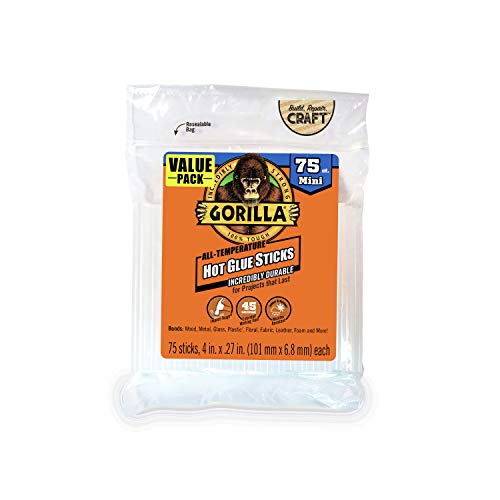
Gorilla sticks are engineered for scenarios where the bond must withstand significant physical stress, such as reinforcing heavy bag handles or securing metal hardware to knitted accessories. The formula features a higher viscosity than standard sticks, which translates to a thicker, more durable bead of adhesive.
This strength comes with a caveat: the glue requires a higher operating temperature to reach its ideal state. Attempting to use these in a low-heat gun often results in incomplete melting, leading to a brittle bond that may snap under tension.
For projects where durability is the priority—such as attaching wood or heavy decorative elements to fiber arts—this is the clear industry leader. If the project requires a permanent hold that won’t give way when a bag is filled with heavy items, choose this for the extra peace of mind.
AdTech Multi-Temp Sticks: The Fabric & Ribbon Hero
AdTech Multi-Temp sticks are uniquely suited for the fiber artist who spends significant time working with delicate textiles and satin ribbons. The adhesive cures with a slight flexibility, preventing the stiff, cracking sensation that can occur when cheap glue is applied to woven fabrics.
Because these sticks melt cleanly at lower temperatures, they reduce the risk of singeing sensitive fibers like mohair or silk. They leave behind minimal residue, which is essential when working with light-colored yarns that might otherwise show dark glue marks.
If the goal is to attach lace trim or delicate appliques without compromising the drape of the fabric, these sticks are the superior choice. They strike an ideal balance between holding power and aesthetic discretion.
Artellius 10-Inch Sticks: For Marathon Crafting
Marathon crafting sessions, such as assembling dozens of felted holiday ornaments or complex dioramas, require tools that don’t quit. The 10-inch length of these sticks drastically reduces the frequency of stops to feed new glue into the chamber.
Extended glue sticks are a significant convenience for anyone who struggles with the hand fatigue often associated with constant reloading. By minimizing the mechanical movement required to push a new stick into the gun, the process remains fluid and rhythmic, much like maintaining a steady tension while knitting.
These are an investment in efficiency for high-volume makers who find standard 4-inch sticks frustratingly short. They are particularly useful when using a heavy-duty glue gun that consumes adhesive rapidly, ensuring the craft stays moving without constant equipment management.
Elmer’s CraftBond Less Mess: Cleanest Application
Few things are more aggravating than thin, spider-web-like strings of glue marring the surface of a beautifully blocked piece. Elmer’s CraftBond Less Mess formula is designed specifically to minimize those stray, annoying filaments during the cooling process.
The consistency allows for a cleaner application, which is vital when working with textured yarns or open-work lace where cleaning up glue residue is nearly impossible once it catches in the fibers. It sets quickly, meaning there is less time for the adhesive to bleed into surrounding stitches.
For projects that require a professional, finished look with zero cleanup, this is the optimal choice. It is the perfect companion for precise detail work where cleanliness is just as important as the strength of the bond.
Any-Temp Clear Sticks: The Most Versatile Choice
Any-Temp clear sticks function as the universal solvent of the crafting world, bridging the gap between various temperatures and material types. They turn completely transparent upon cooling, making them ideal for projects where the glue might be visible from certain angles.
While they may not possess the extreme industrial-strength bond of specialized formulations, they offer sufficient hold for most decorative fiber projects. Their biggest strength is their adaptability; they function well across different gun models, preventing the need for gear-specific inventory.
Choose these when working on multi-media projects where the substrate changes from wood to fabric to plastic. They are the ultimate “keep-on-hand” item that prevents the need to guess which formula to pull from the drawer during a project.
Choosing Your Glue Stick: All-Temp vs. High-Temp
Choosing between All-Temp and High-Temp is primarily about the heat sensitivity of the materials being joined. All-Temp glue is designed to melt at lower temperatures, making it the safer option for delicate fibers, light fabrics, and heat-sensitive plastics that might melt or warp under high heat.
High-Temp glue requires a specialized gun to reach its functional state, but it rewards the user with a much stronger, more permanent bond. This type is generally reserved for structural work, such as bonding metal, wood, or heavy-duty canvas, where a light-duty glue would likely fail over time.
Consider the thermal tolerance of the material before selecting a stick. Using high-temp glue on fine lace or loose-weave wool will almost certainly result in damage to the fibers, while all-temp glue may be too weak to support a heavy, weight-bearing repair.
Can You Use Hot Glue on Yarn and Fabric Safely?
Hot glue is a common tool for fiber artists, but it is not a replacement for traditional sewing or needle-felting. When applying glue to yarn, apply it to the base structure rather than the fibers themselves to avoid creating stiff, unnatural patches.
Always test the adhesive on a scrap piece of the same yarn or fabric first to check for heat sensitivity and potential discoloration. Remember that hot glue is a permanent adhesive; once it penetrates the fibers of a wool or acrylic yarn, it becomes nearly impossible to remove without damaging the piece.
Use glue for embellishments or structural reinforcements where the bond is hidden, but rely on needle and thread for structural joins in garments that will experience wear and tear. Proper application avoids the “plastic” look that often comes from over-applying adhesive.
Tips for a Clean and Lasting Hot Glue Application
To avoid the mess, always wait until the glue gun reaches its full operating temperature before pulling the trigger. A partially melted stick creates a thick, clumpy mess, whereas a fully molten stick flows smoothly and evenly.
Keep a silicone mat or a piece of parchment paper under the work area to catch any inevitable drips. If glue strings appear as the nozzle is pulled away, quickly rotate the gun in a circular motion to wrap the string back into the bead before it sets.
If an error is made, do not pull at the glue while it is hot, as it will likely pull loose fibers with it. Allow the adhesive to cool completely, then carefully use a pair of tweezers or a dull needle to peel the hardened bead away from the yarn.
How to Properly Store Your Extra Glue Sticks
Glue sticks are surprisingly sensitive to their environment and should be stored in a cool, dry place away from direct sunlight. High temperatures can cause the sticks to become tacky, leading them to fuse together inside the storage container.
Avoid storing them near heat sources or in sheds where the temperature fluctuates significantly between seasons. Keep them in a closed bin or drawer to prevent dust and debris from accumulating on the surface, which can lead to sputtering or nozzle clogs inside the glue gun.
Proper storage keeps the adhesive chemistry stable, ensuring that the sticks melt consistently every time they are used. A little organization in the supply closet saves a great deal of frustration at the workbench.
Finding the right long glue stick simplifies the assembly phase of any fiber art project, turning a tedious task into an efficient part of the process. By matching the glue type to the material and the project’s structural needs, every maker can ensure their finished pieces are as durable as they are beautiful.