6 Best Desktop Caddies For Daily Craft Essentials
Organize your workspace with the 6 best desktop caddies for daily craft essentials. Streamline your supplies and boost your creativity—shop our top picks today.
A cluttered workspace is the silent enemy of a consistent knitting gauge and a peaceful creative process. When essential notions like stitch markers, cable needles, and tapestry needles vanish into the depths of a sofa cushion, the rhythm of a complex lace pattern or intricate colorwork is easily broken. Finding the right desktop caddy isn’t just about tidiness; it is about creating a dedicated sanctuary that keeps every tool within reach. These six organizers represent the gold standard for maintaining a functional and efficient fiber arts station.
Della Q Canvas Cubby: Best for Stylish Crafters
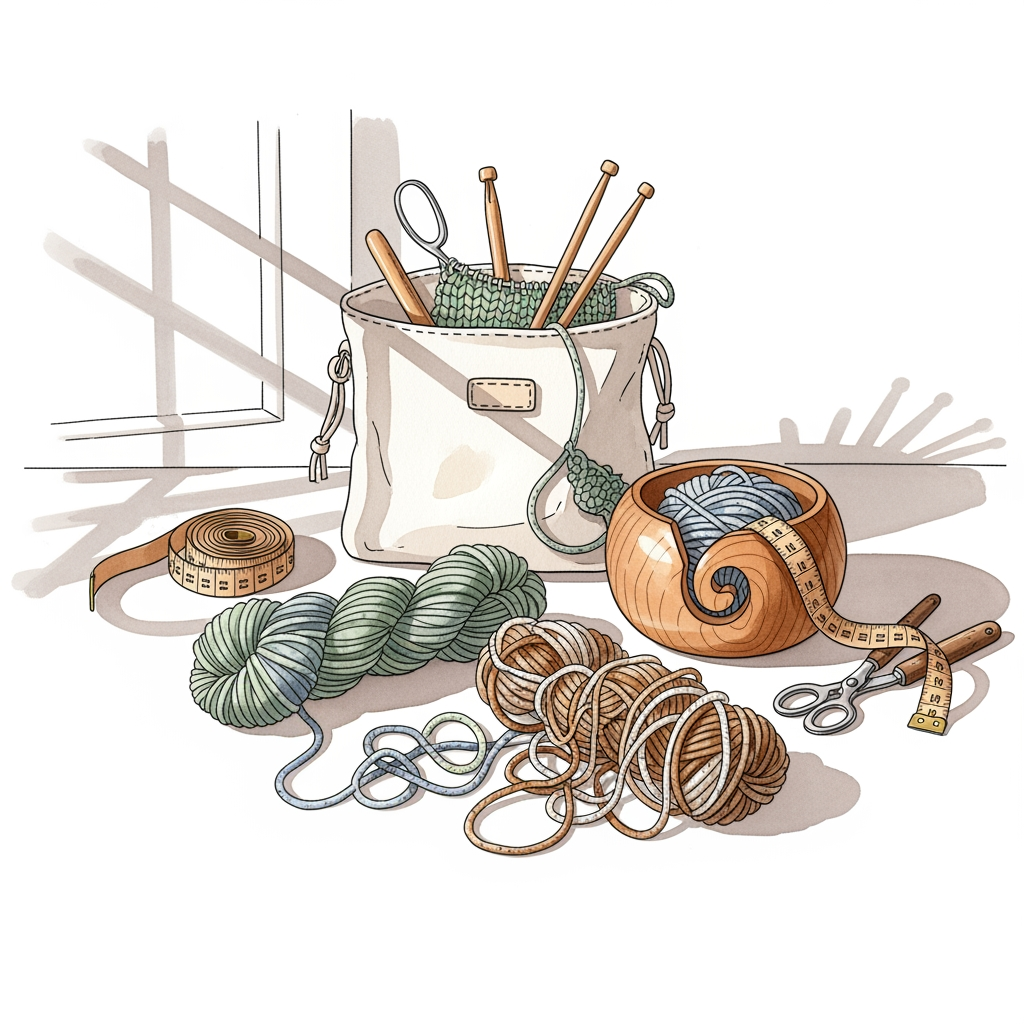
The Della Q Canvas Cubby elevates the craft station by combining durable waxed canvas with a sophisticated aesthetic that feels more like home decor than utility storage. Its structured shape ensures it stands upright even when empty, providing a reliable anchor for scissors, measuring tapes, and needle gauges.


The interior pockets are intelligently sized to hold circular needles in their original packaging, preventing the dreaded “bird’s nest” of coiled cables. For the knitter who values both form and function, this caddy offers a clean visual environment that reduces the mental clutter often associated with large-scale projects.
Be mindful that the canvas material requires spot cleaning and is not machine washable, so avoid keeping oil-based lubricants or sticky adhesives near it. If you prefer your workspace to look curated rather than clinical, this remains the premium choice.
Yazzii Petite Organizer: Top Pick for Portability
For the knitter who frequently transitions between a desk, a favorite armchair, and travel, the Yazzii Petite Organizer offers a modular solution that keeps notions categorized by function. Its clear, zippered compartments allow for an immediate visual check of inventory, ensuring that essential tools like point protectors and row counters are never left behind.
The slim profile is particularly useful for those working on delicate projects with thin needles or specialized fingering-weight yarns, as it keeps sharp tools securely contained. Because it zips closed, it acts as a secondary protective layer for expensive notions that might otherwise be lost in transit.
While it lacks the rigid capacity for heavy-duty tools, its ability to lie flat or fit into a project bag makes it superior for workshops or retreats. This is the ultimate accessory for the knitter who treats their notions collection as a mobile toolkit.
mDesign Craft Caddy: Best Budget-Friendly Choice
The mDesign Craft Caddy offers a straightforward, utilitarian approach to organization using clear, durable plastic that withstands the occasional spill of tea or water. Its transparent design is a distinct advantage, as it eliminates the need to rummage through opaque containers to find a specific needle size or a spare set of stitch markers.
The compartmentalized tray is ideal for separating fine-gauge tools from bulky supplies like swatching yarn or blocking pins. Its open-top design facilitates quick grab-and-go access, making it highly effective for intense, multi-hour knitting sessions where speed and efficiency are paramount.
Since plastic can occasionally become brittle over time, keep this caddy out of direct, prolonged sunlight to maintain its structural integrity. It is the most practical entry point for knitters building their first comprehensive notions kit.
ArtBin Store-In-Tote: Most Durable Option
The ArtBin Store-In-Tote is designed for the serious maker who hoards everything from multiple sizes of interchangeable needle sets to bulky finishing tools. Its heavy-duty construction protects your investment from the accidental drops or bumps that can happen in a busy household.
The interior space is generous enough to house full needle cases, which is essential if you possess multiple sets in different materials like nickel, bamboo, or carbon fiber. By keeping your entire collection in one high-capacity container, you prevent the scattering of needles that often leads to mismatched pairs.
Keep in mind that the depth of the unit can lead to “item burial,” where smaller notions get pushed to the bottom. Pair this with small accessory tins inside the tote to keep your row counters and tapestry needles accessible.
IKEA Moppe Mini Chest: The Customizable Classic
The IKEA Moppe Mini Chest is a beloved staple in the fiber arts community because it allows for total customization of storage space. The wooden drawers can be labeled, painted, or lined with felt to create a bespoke system that fits your specific workflow perfectly.
Knitting often requires managing hundreds of small pieces, and the drawer system excels at keeping items categorized by size or utility. You can dedicate one drawer exclusively to needle tips, another to stitch markers, and a third to finishing accessories like crochet hooks used for picking up dropped stitches.
Since the raw wood can be slightly rough, consider sanding the interior edges to prevent delicate yarns or wooden needle cases from snagging. This is the ideal choice for the knitter who treats their desk as a long-term project headquarters.
Erin Lane E-Caddy: Designed Just for Knitters
The Erin Lane E-Caddy recognizes that the specific needs of a knitter—such as keeping needles upright and accessible—differ from the needs of general crafters. Its vertical storage orientation is perfect for keeping your current project needles at the ready, preventing the bends and kinks that can occur when circular cables are folded incorrectly.
The fabric construction is gentle on delicate needle tips, including those made from hand-turned wood or soft resins that might scratch in a metal or plastic organizer. The dedicated pockets for stitch markers and measuring tapes are sized with the actual scale of knitting notions in mind.
If you are working on a massive project with many different sizes of needles in play simultaneously, this caddy will keep your workspace from becoming a chaotic pile of cables. It is a purpose-built tool that respects the physical realities of the craft.
What to Look For in a Desktop Craft Caddy
When choosing an organizer, prioritize accessibility over sheer volume. You want a caddy that keeps your most-used items—your primary needle set, scissors, and current project markers—at eye level.
Consider the footprint on your desk. If your desk is already occupied by pattern printouts and a yarn swift, look for a vertical storage solution rather than a wide, sprawling tray.
- Visibility: Can you see the contents without digging?
- Accessibility: Are the most frequent tools in the easiest-to-reach spot?
- Capacity: Does it grow with your notions collection?
- Stability: Will it tip over when you pull out a pair of long needles?
Caddy Materials: Fabric, Plastic, and Wood
The material of your caddy directly impacts the safety of your tools and the aesthetic of your space. Fabric caddies are soft, portable, and gentle on delicate finishes, making them ideal for storing polished needles that scratch easily. Plastic is the champion of hygiene and visibility; it is easy to wipe clean after a spill and allows you to locate small items at a glance. Wood offers a sturdy, heirloom-quality presence that can be modified to fit specific drawers or shelves, though it requires more careful handling regarding moisture.
How to Organize Your Caddy for Knitting Flow
Divide your caddy into “High Frequency” and “Low Frequency” zones. The High Frequency zone should hold your active needles, your current stitch markers, and your scissors—these are the items you touch every single time you sit down. The Low Frequency zone should house things like extra cables, spare end caps, or tapestry needles for weaving in ends. This separation keeps your active workspace clear of “noise,” allowing you to maintain focus on your stitches without being distracted by items you won’t need until the bind-off.
Essential Caddy Features: A Quick Checklist
Before purchasing, ensure your caddy meets these functional requirements to support your knitting: * Verticality: Does it provide a place to stand needles up rather than stacking them? * Compartmentalization: Are there small bins or pockets for tiny items like stitch markers? * Stability: Is the base wide enough to prevent tipping? * Accessibility: Is it open enough that you don’t have to unzip or unsnap anything to grab a pair of scissors?
Selecting the right caddy is the final step in turning a pile of yarn and tools into a true fiber arts workshop. By curating your space to match your specific knitting habits, you remove the barriers between you and your project, letting you focus entirely on the rhythm of your craft.