7 Best Silk Threads For Anchoring Embellishments
Discover the top 7 silk threads for securing delicate embellishments. This guide evaluates strength, sheen, and durability to ensure your projects last.
Adding beads and sequins to a hand-knit garment transforms a simple project into a true heirloom piece. However, the thread you choose to anchor these embellishments is just as critical as the yarn itself. Using the wrong thread can lead to sagging, premature breakage, or unsightly knots that ruin your hard-earned gauge. Here are seven silk threads that offer the strength and finesse required to make your embellishments stand the test of time.
YLI Silk Thread: The Gold Standard for Embroidery


YLI Silk is often the first thread recommended in professional finishing because of its incredible consistency. It possesses a high tensile strength that resists snapping even when pulled taut against the tension of a knitted fabric.
This thread is a staple because it doesn’t fray easily as you pass it through the eye of a needle or the center of a bead. For those working on delicate lace, its smooth finish ensures it slides through the yarn fibers without snagging or pulling at your stitches.
The only real tradeoff is its slight stiffness compared to softer filament silks. If you are working on a very fluid drape, ensure you don’t pull your anchor stitches too tight, or you might create a localized stiff spot in the fabric.
Prym Silk Sewing Thread: Best for Delicate Fabrics

When you are working with fine-gauge wool or silk blends, you need an anchor thread that disappears into the work. Prym silk is exceptionally thin and supple, making it nearly invisible once the bead is seated.
Because it is designed for fine sewing, it has a gentle hand that mimics the drape of luxury knitting yarns. It won’t fight against the natural elasticity of your knitted fabric, which is vital if you are embellishing a garment that needs to stretch, like a sock cuff or a sweater neckline.
Be aware that because it is so fine, it can be slightly more difficult to thread if your eyesight is tired after a long session of cable knitting. Use a high-quality needle threader to save yourself the frustration.
Gutermann Silk Thread: Top Choice for Durability

If you are anchoring heavier embellishments like glass crystals or metal charms, durability becomes your primary concern. Gutermann silk is renowned for its resilience and ability to hold its shape under the weight of decorative elements.
It is a spun silk, which gives it a slightly more matte appearance than filament silks. This makes it a fantastic choice if you want the thread to blend into the background of a rustic, woolly project rather than providing a high-sheen contrast.
It is a workhorse thread that handles the friction of being pulled through dense stitch patterns remarkably well. It is my go-to when I know the piece will be worn frequently and needs to survive the rigors of occasional hand washing.
Au Ver à Soie Soie d’Alger: Best Color Selection
Sometimes, the thread itself is part of the aesthetic, especially if you are using translucent beads. Au Ver à Soie offers an unparalleled color palette that allows you to match your anchor thread exactly to your yarn.
This is a spun silk that is soft and slightly fuzzy, which helps it grip the surrounding yarn fibers more effectively. It creates a very secure bond, preventing the "spinning" effect where a bead rotates around the yarn strand instead of staying put.
Because of its texture, it can be more prone to tangling if you work with long lengths. Always cut your thread to a manageable 12-18 inches to keep your tension consistent and your sanity intact.
Kreinik Silk Mori: Best for Textured Embellishment
Kreinik Silk Mori is a multi-strand thread that allows you to customize the thickness of your anchor. You can pull a single strand for fine work or use several strands for larger, heavier beads that require more surface area for stability.
This adaptability is a lifesaver when you are working on projects with varying yarn weights. It is incredibly soft and lacks the "memory" of synthetic threads, meaning it won’t kink or loop while you are trying to set your bead.
The trade-off is that it is a bit more delicate than the tighter-twisted sewing silks. Treat it with care and avoid pulling it across sharp decorative edges, which could fray the fibers over time.
Tire Silk Buttonhole Thread: Superior for Anchoring
Buttonhole silk is significantly thicker and stronger than standard sewing silk, making it the ultimate choice for heavy-duty anchoring. If you are attaching large buttons or dense clusters of beads to a heavy-weight sweater, this is the thread you want.
It has a beautiful, lustrous sheen that looks intentional if it happens to show. It resists snapping under the pressure of heavy embellishments, ensuring your work doesn’t "droop" or sag after a few hours of wear.
Because it is thicker, it requires a larger needle eye. Make sure your bead holes are wide enough to accommodate both the thread and the needle before you commit to your project.
Superior Threads Kimono Silk: Best for Fine Detail
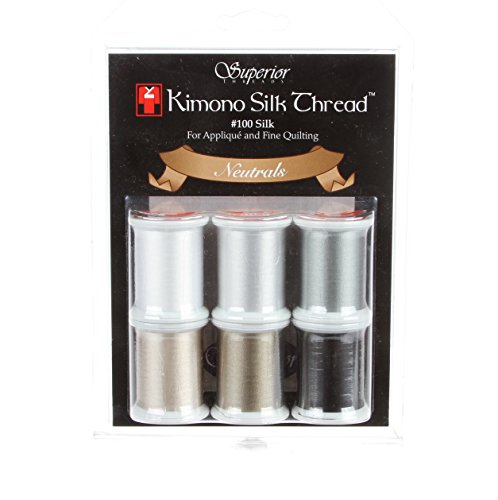
Kimono Silk is an ultra-fine thread that is surprisingly strong for its diameter. It is designed to be virtually invisible, making it the best choice for intricate beadwork where you want the focus to be entirely on the embellishment.
It is exceptionally smooth, which reduces the friction against your primary yarn. This is essential when working with delicate fibers like mohair or cashmere, which can be easily damaged by coarser, high-friction threads.
While it is strong, it is not meant to hold heavy weight. It is best suited for small seed beads or light sequins where finesse is more important than sheer structural strength.
How to Select Silk Weight for Specific Bead Sizes
- Seed Beads (11/0 – 15/0): Use fine-weight threads like Kimono Silk or Prym. These beads have tiny holes that require a thin, flexible thread to pass through twice.
- Medium Beads (6/0 – 8/0): Standard sewing silks like YLI or Gutermann are ideal. They provide enough strength to hold the bead securely without crowding the hole.
- Large/Heavy Embellishments: Opt for buttonhole silk or multiple strands of Silk Mori. You need a thicker diameter to distribute the weight across the knit fabric.
- General Rule: Always test your thread by passing it through the bead hole before you start sewing. If it’s a tight squeeze, you will likely fray the thread or break the bead.
Techniques for Securing Beads Without Knot Bulks
The biggest mistake knitters make is creating large, bulky knots on the wrong side of the work. Instead, try "weaving in" your thread through the back loops of your stitches for an inch before and after the bead.
If you must knot, use a "surgeon’s knot" (looping the thread twice through the final pull) to keep the knot as small as possible. You can then pull the knot slightly into the center of a stitch to hide it from view.
For extra security, you can use a tiny dab of clear fabric glue on the knot, but be careful—it can make the fabric stiff. Always practice your anchoring on a swatch first to ensure the thread doesn’t show through to the right side.
Proper Storage to Prevent Silk Thread Degradation
Silk is a natural protein fiber, which means it is susceptible to light, moisture, and even pests if stored incorrectly. Keep your threads in a cool, dark place, preferably in an airtight container to prevent dust buildup.
Avoid storing silk in direct sunlight, as UV rays can weaken the fibers and cause the colors to fade over time. A dedicated sewing box or a drawer away from heat sources is perfect for maintaining the integrity of your thread stash.
If you live in a particularly humid environment, adding a small silica gel packet to your thread storage can prevent mold and mildew. Proper care ensures that your silk remains as strong and vibrant as the day you bought it.
Choosing the right silk thread is the final, vital step in elevating your knitting from a craft to an art form. By matching the strength and weight of your thread to the specific requirements of your beads, you ensure your work remains beautiful for years to come. Take the time to test your materials, and your finished projects will reflect the care and precision you put into every stitch. Happy embellishing!