
6 Best Sewing Clips For Attaching Brims For Precise Work
Struggling with uneven brims? Discover the 6 best sewing clips for attaching brims with professional precision. Read our expert guide and upgrade your kit today.
Attaching a brim to a knitted hat or a structured accessory requires precision that pins often fail to provide. When working with finished knitted fabric, steel pins can snag delicate plies or leave permanent gaps in the stitch structure. Sewing clips serve as a superior, damage-free alternative, holding layers in exact alignment while ensuring the fabric remains relaxed and tension-free. This guide explores the most effective tools to secure your work without compromising the integrity of the fibers.
Clover Wonder Clips: The Gold Standard Choice
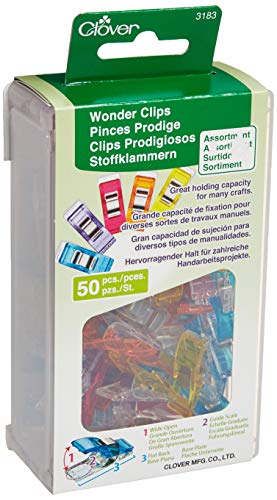

Clover Wonder Clips are the industry benchmark for a reason. Their flat-base design ensures that fabric sits flush against the sewing table, which is vital when aligning a circular brim to a hat crown.
The strong, stainless steel spring provides consistent pressure without being so aggressive that it stretches out elastic yarn fibers. If the project involves a mix of wool and synthetic blends, these clips provide enough tension to hold the weight of the fabric without slipping.
These are the most reliable option for almost any project. Their consistent performance makes them the foundational tool for any crafter’s kit.
MumCraft Multipurpose Clips: Best Budget Pick

MumCraft clips offer a high-value alternative for those who need a large volume of tools for extensive projects. They provide a surprisingly firm grip that performs well on most medium-weight knitted fabrics.
These clips are slightly lighter in construction than premium options, which can be an advantage when managing long, heavy brims where extra weight might cause the fabric to sag. While they may lack the refined finish of more expensive brands, they are perfectly functional for securing edges during the final assembly.
If the goal is to stock a workstation for a reasonable price, these clips deliver results. They are the ideal choice for bulk applications where having fifty clips on hand is more important than luxury aesthetics.
Dritz Flat Head Quilting Clips: For Low Bulk

Dritz Flat Head clips excel when the project demands a very low profile. Their unique shape is designed to stay out of the way of the sewing machine foot or hand-sewing needle.
When joining two thick layers of a brim, traditional clips can create a “hump” that disrupts the flow of the seam. These flat-headed tools minimize that interference, allowing the needle to move across the seam line without catching.
These clips are best suited for fine-gauge knitting or projects using delicate fingering-weight yarns. They prevent the bulky displacement that occurs when thicker clips force the fabric layers apart.
Clover Mini Wonder Clips: For Delicate Curves
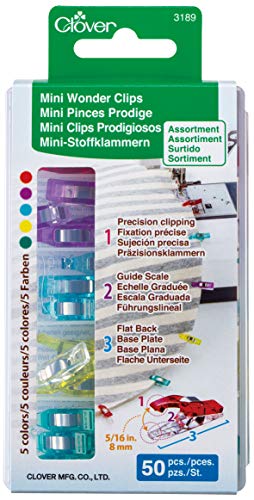
Mini Wonder Clips are essential for tight, intricate curves where standard clips are simply too large. When the curvature of a hat brim is sharp, standard clips tend to bridge the gap and lose their grip.
These smaller versions hug the curve, maintaining contact points exactly where they are needed. They are particularly useful when sewing small decorative elements or precise brim turnings on infant-sized hats.
Precision is the primary benefit here. Use these whenever the project geometry is complex or the scale of the work is exceptionally small.
Taylor Seville Magic Clips: For Thick Layers
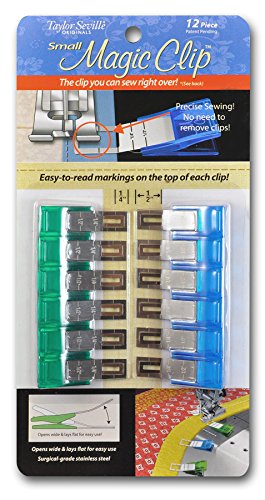
Taylor Seville Magic Clips feature a soft-touch coating that is specifically designed to prevent slipping on slick or high-twist fibers. This is a game-changer when working with superwash wools or slippery luxury blends like silk and bamboo.
The grip is exceptionally secure, making them ideal for holding multiple layers of heavy, felted, or cabled fabric together. Because they are designed to be “magic” in their ease of use, they open wide to accommodate significant fabric thickness without straining the hand.
These are the heavy lifters of the sewing kit. If the current project involves a bulky brim that refuses to stay put, these clips offer the necessary mechanical advantage.
I-BEADS Metal Clips: Best for Heavy-Duty Grip
I-BEADS metal clips offer a level of durability that plastic alternatives simply cannot match. Constructed from solid, corrosion-resistant metal, they provide a biting grip that is virtually impossible to shift once locked into place.
They are the preferred choice for heavy-duty applications, such as attaching leather or stiffened felt brims to knitted bases. The metal construction ensures they do not flex or lose tension over time, which is common with thinner plastics.
These are tools intended for long-term reliability. They are the final answer for projects that demand high-tension holding power.
How to Choose the Right Clip Size for Your Brim
Selection should be based on the thickness of the fabric and the severity of the curve. Heavier, bulkier wools require the wide-mouth opening of large clips, while fine-gauge items demand the finesse of mini versions.
Always consider the “ease” or stretch of the knit. If the brim is highly elastic, choose a clip with a gentler spring to avoid distorting the stitches during the sewing process.
- Small/Mini: Best for tight curves and fine-gauge yarn.
- Medium/Standard: The go-to for most wool-weight projects.
- Heavy-Duty/Metal: Reserved for thick, felted, or multi-layered structures.
Using Clips vs. Pins: Which is Better for Brims?
Clips are almost universally superior to pins when working with knitwear. Pins create physical holes in the fabric, which can cause pilling or laddering if the knit is loose or made of long-staple luxury fibers.
Furthermore, pins require careful handling to avoid accidental pricks during the assembly of a large brim. Clips sit on the surface, making them easy to identify, remove, and replace without disturbing the tension of the surrounding stitches.
Pins have their place in precision tailoring with woven fabrics, but for the knitwear enthusiast, clips are safer and more ergonomic. Transitioning to clips will result in cleaner seams and less stress on the finished garment.
Technique: Evenly Spacing Clips on a Curved Edge
To ensure a smooth transition on a curved brim, start by securing the center point and the two ends of the seam. This anchors the fabric and prevents it from shifting as you fill in the gaps.
Work from the center outwards, placing clips at regular intervals. Aim for an inch to an inch-and-a-half between clips, adjusting closer if the fabric is slippery or prone to bunching.
If the fabric begins to ripple between clips, the spacing is too wide. Add more clips to distribute the tension more uniformly across the curve.
Do You Need Different Clips for Fabric vs. Knits?
While many clips are multipurpose, the nature of knitting requires a focus on surface protection. A clip that works fine on a tight-weave cotton may be too sharp or rigid for a delicate hand-knit mohair blend.
Look for clips with smooth, rounded edges and interiors to avoid snagging the yarn. Avoid any clips with teeth or rough textures, as these will inevitably fray the fibers of your hard work.
Consistency is key. Once a set of clips is found that works for a particular fiber type, keep them dedicated to that weight and fiber structure to maintain the best results.
Mastering the use of sewing clips transforms the final assembly of a project from a source of anxiety into a controlled, professional process. By choosing the right tension and size, the structural integrity of your knitwear is preserved, ensuring your finished brim looks as intentional and polished as the stitches themselves.

