6 Best Felting Needle Variety Packs for Experimental Textures
Explore six versatile felting needle packs designed for unique textures. Learn how varied gauges enhance your creative projects with precision and control.
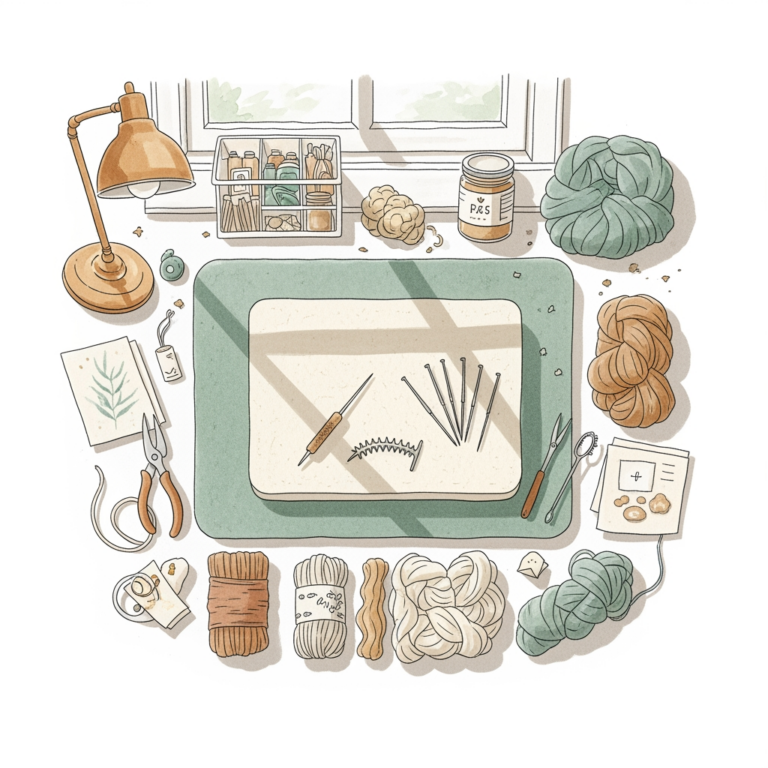
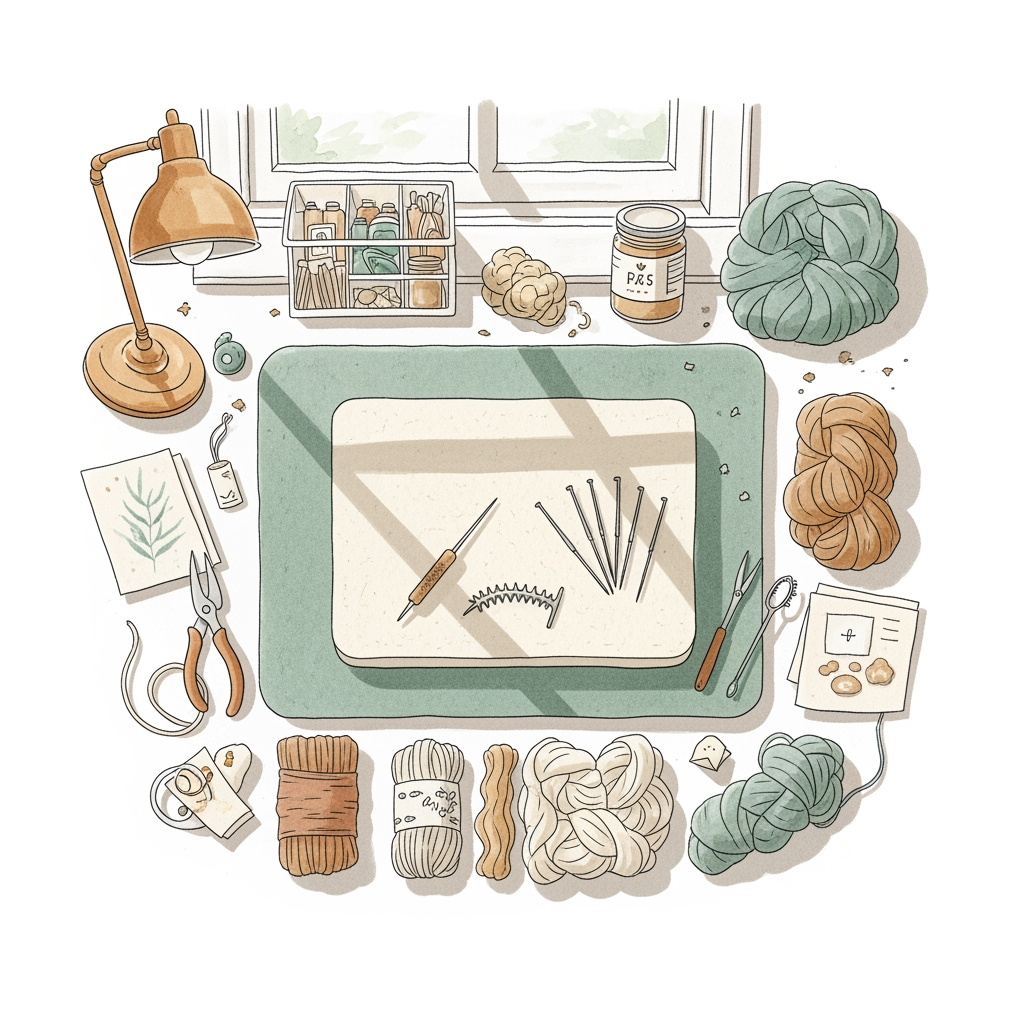
Needle felting is the sculptural cousin to knitting, transforming loose wool roving into dense, three-dimensional art through the rhythmic piercing of barbed needles. Whether you are adding dimension to a knitted sweater or crafting standalone figures, the right toolset is the difference between a smooth finish and a broken needle. This guide explores the best variety packs to help you master experimental textures and refine your fiber work. Selecting the proper needle is as crucial as choosing the right yarn weight for your gauge, so let’s dive into the mechanics of these essential tools.
Clover Felting Needle Tool: Best All-Rounder


The Clover Felting Needle Tool is the industry standard for a reason, acting much like a reliable set of interchangeable circular needles in your knitting bag. Its ergonomic handle makes long sessions of sculpting comfortable, reducing the hand fatigue that often accompanies detailed work.
This tool typically holds three needles, allowing you to cover more surface area when blocking or firming up a project. It is perfect for those who want a consistent, professional-looking finish without the guesswork of managing single needles.
The tradeoff here is the lack of precision for tiny, intricate details. While it excels at general shaping, you will still want to keep a single-needle tool nearby for the final, delicate touches on your fiber sculptures.
Hamanaka Felt Needle Set: Precision Mastery

If you appreciate the fine-tuned control of double-pointed needles when working on a complex lace project, the Hamanaka set will feel like a natural extension of your hands. These needles are renowned for their refined barbs, which are engineered to minimize surface holes.
Precision is the primary benefit here, as the needles are designed to work with finer wools and delicate experimental textures. They allow you to manipulate individual fibers without tearing the structure you have already built.
Be aware that these needles are sharper and slightly more fragile than heavy-duty alternatives. Treat them with the same care you would accord a set of expensive carbon fiber knitting needles; they are precise instruments, not pry bars.
Woolbuddy Felting Needles: Beginner Friendly

Starting your felting journey can be as intimidating as learning to read a complex cable chart for the first time. Woolbuddy needles are designed to be forgiving, providing a balanced entry point for those still learning how much pressure to apply.
These needles are color-coded, which is a massive help when you are just learning to identify which gauge is needed for which stage of the project. They provide enough resistance to feel the fiber "locking" together, giving you immediate tactile feedback.
The downside is that they may not offer the longevity of professional-grade sets if you are working with extremely coarse or synthetic fibers. They are, however, the best way to develop the muscle memory required for consistent felting.
Sullivans Multi-Needle Tool: Speed Focused

When you are working on a large-scale project—like felting a thick, decorative border onto a wool blanket—you need speed. The Sullivans Multi-Needle Tool functions like a bulky-weight needle, allowing you to move through large volumes of fiber quickly.
This tool is designed to hold multiple needles in a configuration that maximizes density. It is highly effective for "tacking" large pieces of roving into place before you move on to the finer, slower work of detailing.
Do not expect this tool to handle delicate, sculptural work. Using a multi-needle tool for fine details is like trying to knit a delicate shawl with size 10mm needles; you will lose all the nuance and likely damage your base material.
Dimensions Needle Pack: Texture Variety

Dimensions offers a fantastic variety pack that functions like a sampler set of different yarn weights. By including needles with varying barb counts and sizes, they encourage the maker to experiment with different surface textures.
This pack is ideal for the knitter who likes to "play" with their materials. You can swap needles to achieve a smooth, felted surface on one area and a rough, rustic texture on another, much like mixing different yarn plys in a single garment.
The main challenge is keeping track of which needle is which once they are out of the packaging. I recommend using a small pin cushion or a labeled magnet strip to organize them by gauge so you don’t accidentally use a coarse needle for a fine finish.
Bear Creek Felting Set: Durable Options

If you have a heavy hand—the type of knitter who grips their needles so tightly they leave indentations—you need durability. Bear Creek needles are known for their resilience and ability to withstand the rigors of dense, experimental felting.
These needles are less prone to snapping, which is a common frustration when working with stubborn, high-twist fibers. They provide a sturdy, reliable experience that lets you focus on the sculpture rather than the tool.
While they are robust, they still require a perpendicular entry and exit to avoid bending. Even the toughest needle will snap if you twist it while it is embedded deep within your wool project.
Understanding Needle Gauges and Barbs
Needle gauges in felting are inversely related to their size, much like wire gauges in jewelry or standard knitting needle sizing. A higher number indicates a thinner needle, while a lower number indicates a thicker, more aggressive needle.
The barbs are the "teeth" of the needle, catching the scales of the wool fibers and pulling them into the core of your project. Coarser needles have larger, deeper barbs that move fiber quickly but leave larger holes behind.
Fine needles have smaller, shallower barbs that are perfect for finishing work. When choosing your tool, think about the "weight" of your fiber; coarser wools like Border Leicester require a sturdier needle, while fine Merino benefits from a smaller gauge.
Choosing Fiber Types for Needle Felting
Not all wool is created equal, and your fiber choice will dictate the success of your project. Just as you wouldn’t use a mohair lace for a structured cable sweater, you shouldn’t use a slippery, long-staple fiber for dense felting.
- Corriedale: A fantastic all-purpose fiber that felts consistently and is easy for beginners to handle.
- Merino: Extremely soft and fine; it creates beautiful, smooth surfaces but requires a higher needle gauge to avoid overworking.
- Jacob or Shetland: These are "rustic" wools that felt quickly and provide a great, textured look for experimental projects.
Always consider the "crimp" of the wool. Higher crimp fibers tend to felt faster and more densely, which is excellent for structural pieces but can be harder to manipulate if you make a mistake.
Essential Safety Tips for Needle Felting
Felting needles are incredibly sharp, and because you are often working with your hands close to the puncture site, accidents happen. Always work on a dense foam pad or a dedicated wool brush mat to provide a safe "exit" for the needle tip.
Never hold your project in your hand while felting. If the needle misses the wool, it will find your skin, and these needles are designed to grab and pull fibers—or skin—with equal efficiency.
If you are teaching a child or a beginner, consider using a needle guard or a multi-needle tool that provides a wider, more stable base. Treat the needle with the same respect you would a pair of sharp, high-quality embroidery scissors.
Maintenance and Care for Felting Needles
Felting needles are consumables, but proper care can extend their lifespan significantly. The most common cause of breakage is lateral stress; always pull the needle out at the exact same angle you pushed it in.
If you notice your needle "dragging" or feeling dull, it may be time to replace it. Just like a dull knitting needle tip can snag delicate yarn, a dull felting needle will struggle to catch the fiber, leading to uneven, frustrating results.
Store your needles in a dry place to prevent rust, which can compromise the integrity of the steel. A simple magnetic needle minder or a cork board is an excellent way to keep them organized and protected between projects.
Mastering the needle-to-fiber relationship is a journey that rewards patience and experimentation. By building a collection of varied needles, you gain the ability to manipulate wool with the precision of a master sculptor. Remember that the best tool is always the one that matches your specific technique, your fiber choice, and your desired final texture. Happy felting, and may your projects always hold their shape.