6 Best Yarn Guides For Multi-Strand Knitting Reviewed
Master multi-strand knitting with our expert guide. We review 6 top tools designed to prevent tangles, improve tension, and streamline your complex projects.
Knitting with multiple strands simultaneously creates a luxurious, custom fabric that single-ply yarn simply cannot replicate. However, managing two or more balls of yarn without them turning into a tangled mess is the primary hurdle for most makers. This guide explores the essential tools and techniques to keep your multi-strand projects smooth and stress-free. With the right setup, you can focus on your stitch pattern rather than fighting your yarn supply.
Yarn Butler Yarn Dispenser: Best Overall Pick


The Yarn Butler is a deceptively simple tool that solves the "yarn rolling away" problem with elegant physics. By placing your ball on a weighted, rotating base, it feeds yarn at the exact speed you knit without the jerky resistance of a stationary bowl.

For multi-strand projects, having two or three of these side-by-side on your table creates a smooth, consistent feed. Because they don’t rely on a center-pull mechanism, you avoid the dreaded "yarn barf" that happens when a center-pull cake collapses near the end.
Bottom line: If you value a snag-free experience and have the desk space, this is the gold standard for keeping multiple strands flowing independently.
Stanwood Needlecraft Yarn Ball Winder Review
Stanwood has earned its reputation through sheer durability and a heavy-duty gear system that handles even the chunkiest wool. When you are prepping for a multi-strand project, you need cakes that are wound tightly enough to hold their shape but loose enough to prevent stretching the fiber.
The metal crank and robust clamp mean this winder won’t shift or wobble during long winding sessions. It creates a professional-looking "center-pull" cake that sits perfectly on a Yarn Butler or inside a yarn bowl.
Bottom line: It is an investment piece, but for a knitter who winds yarn weekly, the build quality justifies the price tag.
Nancy’s Knit Knacks Yarn Ball Winder Review
This winder is the enthusiast’s choice, known for its precision and the ability to wind massive quantities of yarn without overheating the gears. If you are preparing a sweater-quantity project using two strands of lace-weight mohair held with a strand of fingering wool, you need a winder that won’t skip a beat.
The tension control on this unit is highly adjustable, which is critical when working with delicate fibers like silk or alpaca. You can wind your yarn with just enough tension to keep it neat, without compromising the loft or "bloom" of the fiber.
Bottom line: Choose this if you frequently work with luxury fibers that require a gentle, consistent touch during the winding process.
Fiber Artist Supply Co. Yarn Swift Review

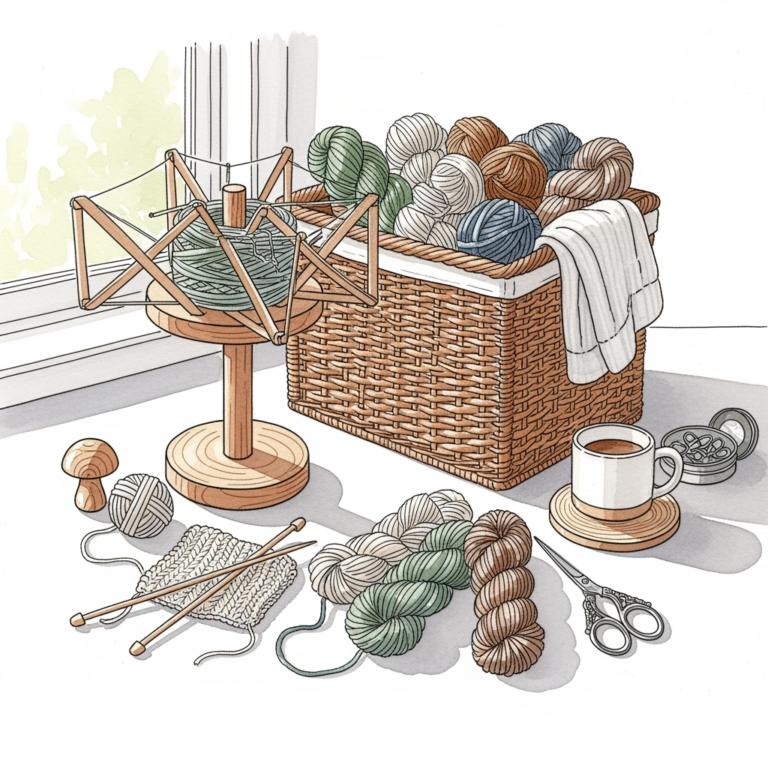
A swift is non-negotiable if you buy your yarn in hanks, which is where the best hand-dyed wools live. This model features a smooth, snag-free wooden construction that protects delicate fibers from friction damage.
When you are setting up for multi-strand knitting, you often need to wind multiple hanks into cakes simultaneously. The stability of this swift allows you to move quickly without the constant fear of the yarn jumping off the arms and tangling.
Bottom line: Its sturdy base and smooth rotation make it a reliable workhorse for any knitter who prefers artisanal hanks over commercial balls.
Lacis Wooden Umbrella Swift: Top Value Choice
The umbrella-style swift is a classic for a reason: it is compact, effective, and gets the job done without unnecessary bells and whistles. This Lacis model is a favorite for knitters who want a reliable tool that doesn’t take up half the craft room.
While it lacks the heavy-duty bearings of more expensive models, it handles standard fingering and worsted weights with ease. It is perfect for the knitter who needs to convert a few hanks into cakes before starting a new project.
Bottom line: It is the best entry-level choice that provides professional results without the high-end price point.
Amish Style Wooden Yarn Swift: Best Portable
Amish-style swifts, or "yarn trees," are unique because they don’t fold up like an umbrella; instead, they use a rotating peg system. They are incredibly portable and can be disassembled in seconds, making them perfect for knitting retreats or travel.

Because they are stationary, they are less likely to "walk" across your table while you are winding. They are also much quieter than umbrella swifts, which is a blessing if you wind yarn while others are watching TV or sleeping nearby.
Bottom line: If you need a tool that packs down flat into a project bag or drawer, this is the most space-efficient solution available.
Understanding Multi-Strand Tension Control
Tension is the secret language of the knitter, and when you double or triple your strands, the math changes. If one strand is pulled slightly tighter than the other, your finished fabric will look lumpy or uneven, a problem known as "looping" or "laddering."
To maintain even tension, ensure that all your yarn sources have the same amount of drag. If you are using one ball on a winder and one sitting on the floor, the difference in resistance will be visible in your finished stitches.
Bottom line: Always aim for a uniform setup—either all balls on dispensers or all balls in bowls—to keep your stitch gauge consistent.
How to Prevent Tangling When Holding Strands
The biggest mistake knitters make is letting their strands twist around each other as they knit. This creates a "plying" effect that can change the look of your yarn and cause the strands to bind up near your needles.
To prevent this, try keeping your yarn balls separated by a physical barrier, like a divider in a knitting bag or two separate bowls on opposite sides of your chair. If you notice them twisting, simply rotate your project or your body to untwist the strands every few rows.
Bottom line: Keep your yarn sources physically distinct from one another to ensure the strands remain parallel rather than twisted.
Choosing the Right Swift for Your Yarn Skeins
Not all hanks are created equal, and the size of your swift matters. If you try to force a large, loose hand-dyed hank onto a small swift, the yarn will constantly slide off and tangle.
Measure your hanks before buying a swift; most standard umbrellas accommodate hanks up to 60 inches in circumference. If you frequently buy "jumbo" hand-dyed skeins, ensure your swift has the arm span to hold them securely.
Bottom line: Match your swift size to your typical yarn purchase to avoid the frustration of yarn slipping off the arms.
Essential Tips for Managing Multiple Yarns
When knitting with multiple strands, your gauge will naturally tighten, so you may need to go up one or two needle sizes. Always knit a swatch with all strands held together to see how the fabric drapes; what looks good on the ball might be too stiff for a garment.

- Check the WPI (Wraps Per Inch): Hold your strands together and wrap them around a ruler to estimate the new weight of your combined yarn.
- Avoid mixing fibers with different elasticity: Pairing a high-stretch wool with a non-stretchy cotton can lead to fabric distortion over time.
- Use stitch markers: If you are alternating between strands, use markers to keep track of where you are in your pattern.
Bottom line: Treat your multi-strand combination as a brand-new yarn and swatch accordingly to ensure your final project fits as intended.
Mastering multi-strand knitting opens up a world of creative possibilities, from custom color gradients to enhanced fabric durability. By investing in the right tools like yarn butlers and reliable swifts, you eliminate the mechanical frustrations that often discourage knitters. Remember that patience with your setup is just as important as patience with your stitches. With these tools in your kit, your multi-strand projects will be as enjoyable to create as they are to wear.