7 Best Blocking Boards For Lace Blocking Worth Trying
Discover the 7 best lace blocking boards to perfect your projects. This guide evaluates top materials and features to help you achieve professional results.
Lace knitting is a transformative craft where the true beauty of your hard work is only revealed once the stitches are stretched and set. Without a reliable blocking board, those intricate yarn-overs and delicate decreases remain hidden in a crumpled heap. Investing in a quality surface ensures your hard-earned lace opens up to its full, airy potential. These seven options represent the gold standard for turning a finished object into a professional-looking masterpiece.
Knitter’s Pride Lace Blocking Mats: Best Overall
These mats have become a staple in my studio because they strike the perfect balance between firmness and ease of use. The dense foam construction provides enough resistance to hold pins securely without them popping out halfway through the drying process.
They feature a convenient grid pattern printed directly onto the surface, which is a lifesaver for ensuring symmetry in a crescent shawl or a rectangular scarf. When you are working on a complex lace pattern, having that visual guide prevents the dreaded "lopsided block" that can ruin a project’s drape.
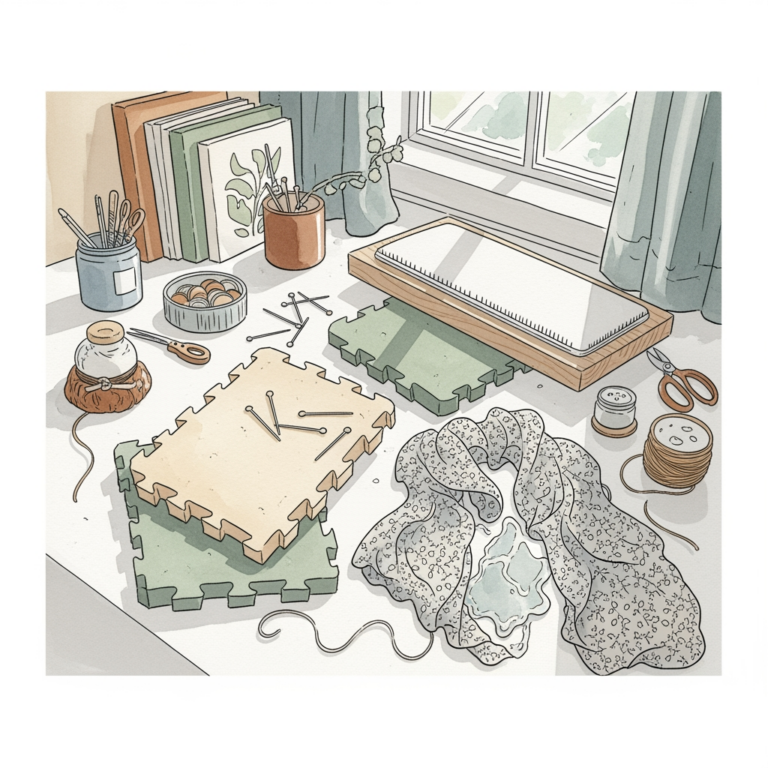
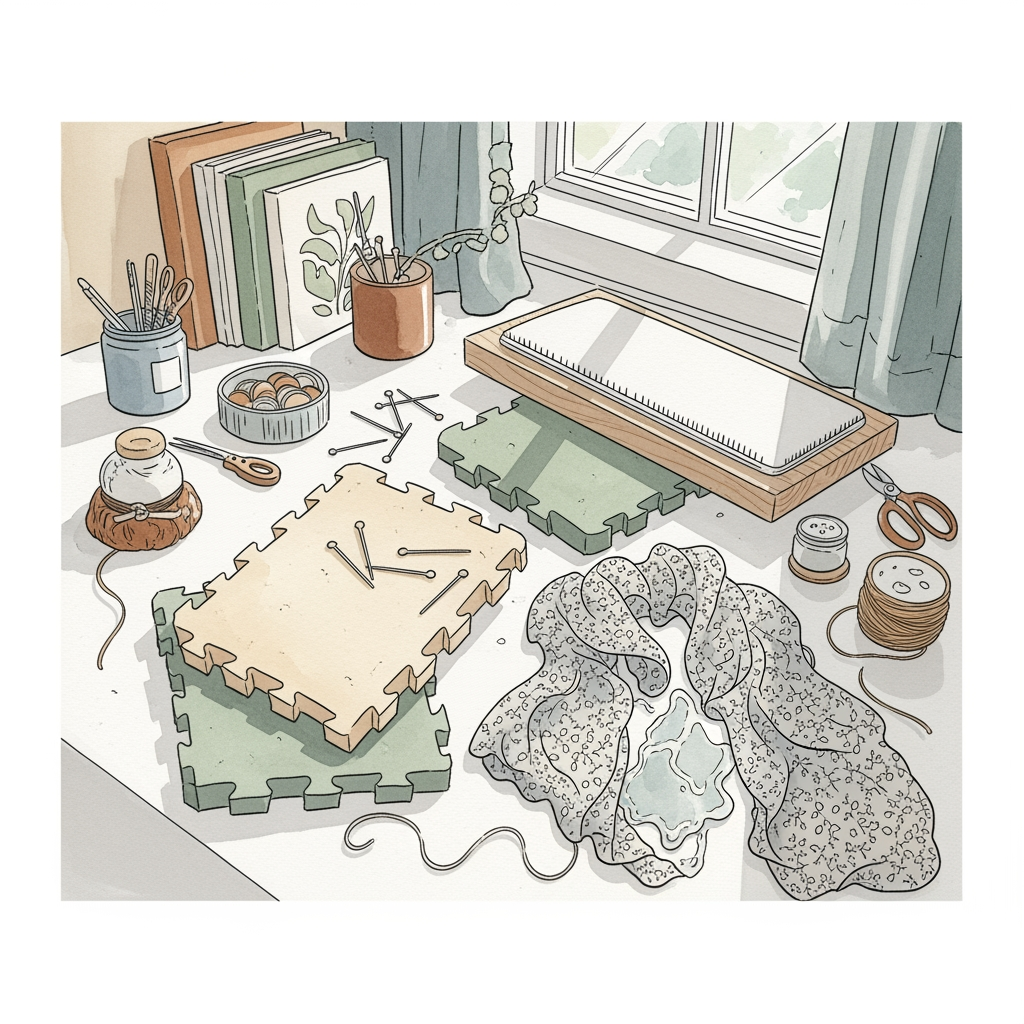
The modular interlocking edges fit together seamlessly, allowing you to build a surface as large or small as your current project requires. If you want one reliable set that handles everything from cowls to full-sized blankets, this is your go-to choice.
Blocking Board by Cocoknits: Best Modular System


Cocoknits takes a different approach by focusing on a high-density, eco-friendly material that feels significantly more premium than standard puzzle-piece mats. The surface is specifically designed to be heat resistant and durable, making it an excellent choice for knitters who frequently steam-block their projects.
The board’s modularity is its strongest selling point, as it includes a clever set of pins and a template that helps you maintain consistent tension across the entire piece. It feels less like a temporary craft tool and more like a permanent piece of equipment for your workspace.
However, keep in mind that the rigid nature of these boards means they don’t fold away as compactly as soft foam mats. If you have limited storage space, you will need to account for the footprint of these boards when they are not in use.
Clover Blocking Mats: Best for Small Lace Projects
If you primarily knit lace socks, mittens, or small neckerchiefs, you don’t necessarily need a mountain of foam taking up your entire floor. The Clover mats are compact, lightweight, and designed specifically for those precise, smaller-scale tasks.

Because they are smaller, they are much easier to maneuver on a tabletop, which saves your back from having to hunch over the carpet. They are also incredibly easy to store in a project bag or a small drawer when you are between projects.
Don’t let the size fool you, though; the material is dense and high-quality, ensuring that your pins stay exactly where you put them. For the dedicated sock knitter, these are often the only blocking surface you will ever truly need.
Magma Blocking Mats by The Woolly Thistle: Durable

These mats are built for the knitter who treats their tools like an investment rather than a disposable convenience. They are noticeably thicker and denser than the average craft store mat, which translates to a much longer lifespan and better pin retention.
The aesthetic is clean and professional, which makes a big difference if you are photographing your finished lace projects for Ravelry or social media. A neutral, high-quality background makes your stitches pop and ensures the focus stays on your craftsmanship.
While they are a bit of a higher price point, the durability is unmatched. If you find yourself constantly replacing cheap mats because the edges fray or the foam compresses, upgrading to these will save you money in the long run.
Mindful Collection Blocking Mats: Best Aesthetics

The Mindful Collection is designed for the knitter who finds as much joy in the process as the result. These mats feature a beautiful, calming color palette and a distinct texture that feels more sophisticated than the typical bright-colored puzzle mats.
Beyond their looks, they are highly functional, offering a smooth surface that won’t snag delicate lace fibers like mohair or silk. When you are pinning out a fragile, hand-dyed lace shawl, you want a surface that feels gentle and secure.
This collection is perfect for those who want their knitting space to feel like a sanctuary. It turns the often-tedious task of blocking into a more pleasant, mindful experience.
KnitIQ Blocking Mats: Best for Large Lace Shawls
When you are tackling a massive lace shawl that requires hundreds of pins, you need a surface that won’t shift under the tension. KnitIQ mats are designed with an interlocking system that is exceptionally tight, creating a solid, unified board that won’t pull apart mid-block.
They come with a very helpful grid that is clearly marked, which is essential when you need to stretch a large piece to exact measurements. If your pattern calls for a specific wingspan, having a reliable grid saves you from constantly reaching for your measuring tape.
These mats are also resistant to moisture, which is critical since you are working with wet, heavy lace. They dry out quickly and don’t retain odors, which is a common issue with cheaper, more porous foam mats.
Boye Blocking Board: Best Budget-Friendly Option
The Boye board is a classic, no-frills solution that gets the job done without any unnecessary bells or whistles. It is ideal for the beginner knitter who is just starting to experiment with blocking and isn’t ready to commit to a high-end system.
While it lacks the dense, premium feel of more expensive mats, it provides a perfectly serviceable surface for standard lace projects. If you are working with sturdier fibers like wool or acrylic blends, this board will hold your pins just fine.
It is a great "starter" tool that allows you to learn the mechanics of blocking without breaking the bank. Once you decide that you are truly committed to intricate lace work, you can always upgrade to a more specialized system later.
Why Blocking Is Essential for Your Lace Projects
Blocking is the final, crucial step in the knitting process that transforms a tight, uneven fabric into a professional textile. When lace comes off the needles, the yarn-overs are often bunched up and the pattern is obscured; blocking relaxes the fibers and allows the stitch definition to emerge.
It also serves to even out your tension, hiding minor mistakes made during the knitting process. If your gauge was slightly inconsistent, a good block can "reset" the stitches to a uniform size.
Think of blocking as the "pressing" stage in sewing. It is the difference between a garment that looks homemade and one that looks like it came from a high-end boutique.
How to Choose the Right Material for Your Mats
When shopping for blocking mats, you are essentially looking for three things: pin retention, moisture resistance, and size. You want a material that is dense enough to hold a T-pin firmly in place, even when there is significant tension pulling on it.
- Closed-cell foam: This is the gold standard because it does not absorb water, preventing mold and mildew.
- Grid printing: Essential for ensuring your lace is stretched evenly in both directions.
- Interlocking edges: Allows you to customize the size of your blocking surface based on the project.
Avoid soft, porous materials that feel like standard floor exercise mats, as they will likely crumble or lose their shape after a few uses. Always prioritize a surface that is specifically labeled as "blocking-safe" to ensure it won’t react with your yarn.
Essential Tips for Perfect Lace Blocking Results
Always soak your lace in lukewarm water with a wool-safe wash before blocking, ensuring the fibers are fully saturated. Gently squeeze the water out using a towel—never wring or twist the fabric, as this can damage the delicate lace structure.
When pinning, start from the center and work your way out toward the edges to maintain symmetry. Use rust-proof T-pins to avoid any potential staining on your project, especially if you are using light-colored or delicate luxury fibers.
Finally, be patient. Let your lace dry completely on the mats before removing the pins; if you unpin it while it is still damp, the lace will immediately lose its shape. Good things come to those who wait for the moisture to evaporate entirely.
Blocking is the bridge between a finished project and a wearable work of art. By choosing the right board for your specific needs—whether it’s a compact set for socks or a large system for shawls—you ensure your hard work gets the presentation it deserves. Take your time, trust your tools, and enjoy the magical moment when your lace finally opens up. Happy knitting!