6 Best Task Lights For Color Accuracy To Use
Achieve perfect hues with our top 6 task lights. We analyze CRI, color temperature, and brightness to help you choose the best lighting for color accuracy.
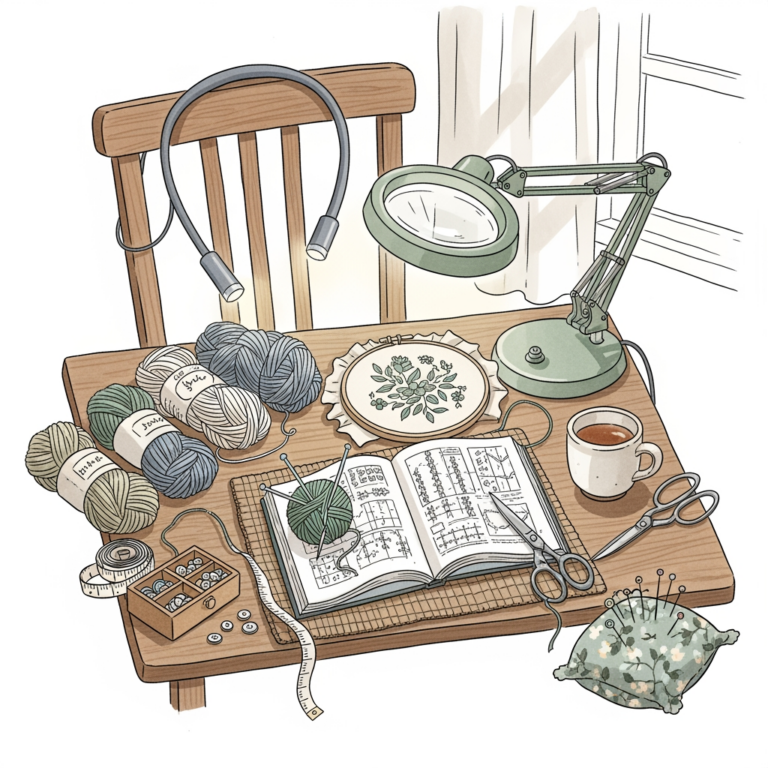
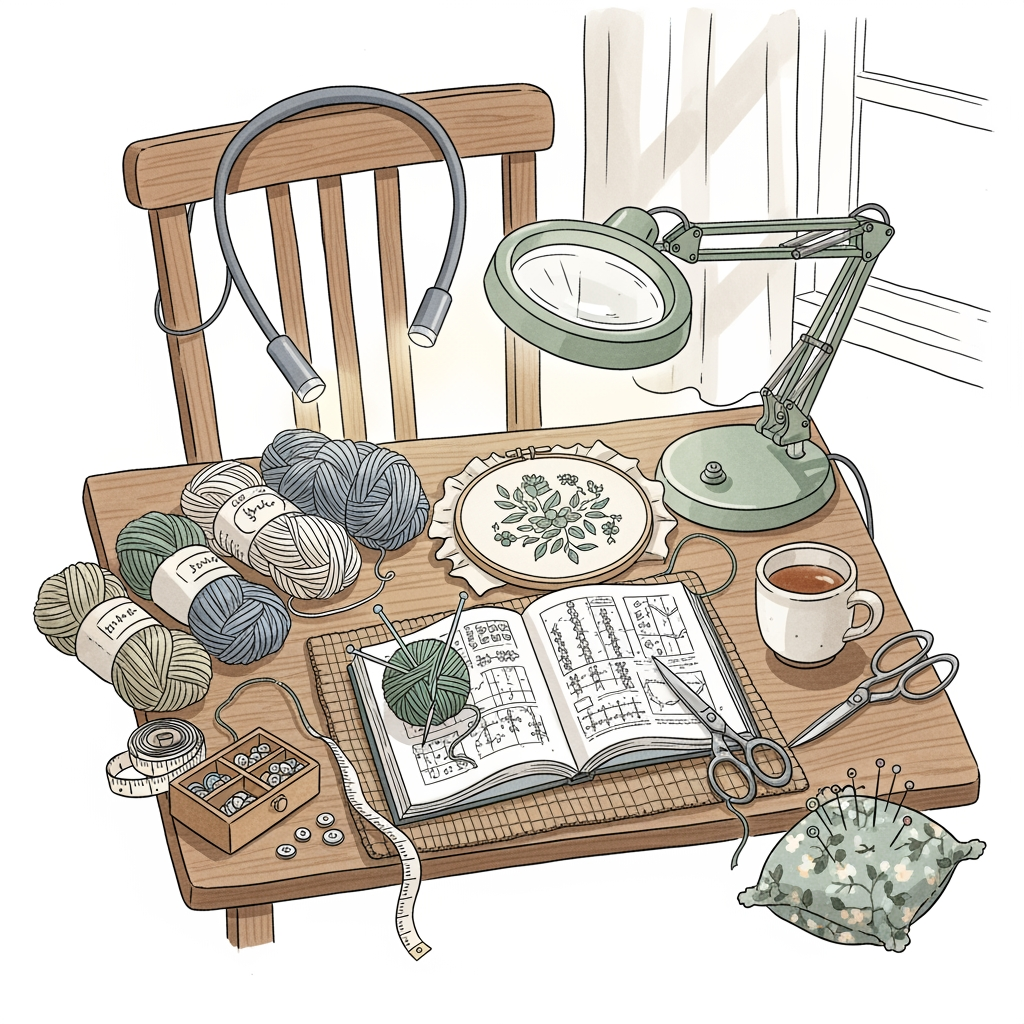
Choosing the right task light is just as critical to your knitting success as selecting the perfect wool blend for a complex cable pattern. Poor lighting hides subtle stitch definition and leads to frustrating mistakes in stranded colorwork. These six tools represent the gold standard for crafters who refuse to compromise on visual clarity. Investing in your workspace lighting ensures your stitches stay even and your color transitions remain true to your vision.
Daylight Company Wafer 3 Lightbox: Best for Color


If you have ever struggled to see the path of a dark mohair strand against a black background, you know the value of backlighting. The Wafer 3 is essentially a thin, ultra-bright LED panel that illuminates your work from beneath.
This is a game-changer for lace knitting or complex charts where you need to track your progress through a pattern. By placing your work on the surface, the light shines through the fabric, making every yarn-over and decrease pop with absolute clarity.
The downside is that it doesn’t provide overhead illumination, so you will still need a secondary light source for your hands. However, for identifying dropped stitches in dark, fuzzy fibers, there is simply no substitute for this level of contrast.
OttLite Wellness Series LED Desk Lamp: Best Value

OttLite has long been the industry standard for crafters because their bulbs are engineered to mimic the properties of natural daylight. This lamp is an excellent entry-level choice that won’t break the bank while still providing high-quality illumination.
The main benefit here is the reduction of visual fatigue during long knitting sessions. If you are working on a pair of socks using 2.25mm needles, the crisp light helps you keep track of your gauge without straining your eyes.
While it lacks some of the high-tech features of more expensive models, it is reliable and consistent. It is a solid, no-nonsense tool for the knitter who wants to see their yarn colors accurately without overcomplicating their setup.
BenQ ScreenBar Halo Monitor Light: Best Desk Setup
For those who knit while watching tutorials or following digital patterns on a computer, this light is a revelation. It clips directly to the top of your monitor, casting a wide, flicker-free beam across your desk without creating glare on your screen.
It keeps your workspace clean and decluttered, which is essential if you have limited room for yarn bowls and pattern binders. The auto-dimming feature adjusts based on your room’s ambient light, ensuring your knitting area stays consistent even as the sun sets.
The trade-off is that it is strictly for desk-bound knitters. If you prefer to knit in your favorite armchair, this won’t be the right solution for your needs.
Brightech Litespan LED Floor Lamp: Best Versatility
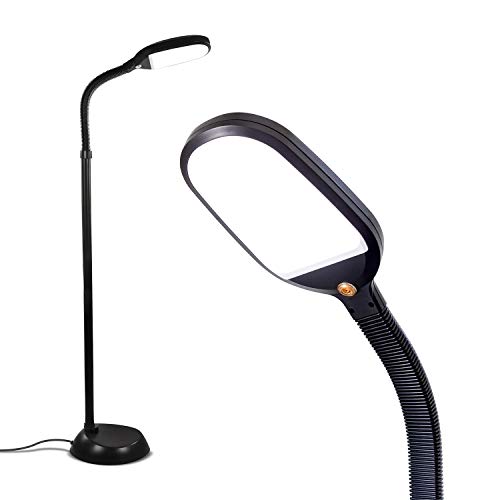
The Litespan is a workhorse that fits into almost any corner of a craft room. Its flexible gooseneck design allows you to direct light exactly where you need it, whether you are picking up stitches along a sweater edge or grafting a toe.
I appreciate how stable the base is; it doesn’t tip over when you accidentally bump it with a heavy skein of wool. It provides a broad, even spread of light that minimizes those harsh shadows that can make it difficult to read your knitting charts.
If you have a dedicated "knitting chair," this floor lamp is usually the most practical investment you can make. It is simple, adjustable, and provides enough reach to cover even the largest afghan projects.
Neatfi XL 2,200 Lumens LED Lamp: Best Magnification
Sometimes, even with perfect light, the stitches are just too small to see comfortably. The Neatfi XL combines a massive, high-quality lens with an incredibly bright LED array, making it perfect for fine-gauge knitting or intricate beadwork.
The magnification is essential when you are working with lace-weight yarn or trying to spot a tiny split in the ply of your fiber. It allows you to see the structure of the stitch clearly, which is vital when you are troubleshooting a complex cable cross.
Be aware that using a magnifying lamp takes a bit of practice to get used to the depth perception. Start with shorter sessions until your eyes adjust to the magnification level.
Verilux Heritage LED Floor Lamp: Best Natural Light
The Verilux Heritage lamp uses "SmartSpectrum" technology to provide a light quality that is remarkably close to actual sunlight. This is critical for colorwork, where you need to ensure that your contrast colors are actually distinct under normal conditions.
There is nothing worse than finishing a stranded colorwork yoke only to realize in the daylight that two colors are too similar to show the pattern. This lamp eliminates that risk by providing a full, balanced spectrum of light.
Its design is also quite elegant, fitting in well with home decor rather than looking like a piece of industrial equipment. It is a premium choice for the knitter who treats their craft as a long-term investment.
Understanding Color Rendering Index for Fiber Arts
The Color Rendering Index, or CRI, is a measurement of how accurately a light source reveals the true colors of an object. For knitters, a high CRI—ideally 90 or above—is non-negotiable.
When you are choosing yarn, you are looking at the subtle undertones of a hand-dyed skein. A low-CRI light will wash out these colors, making a deep plum look like a flat brown or a vibrant teal look dull.
Always check the product specifications for the CRI rating before purchasing. If a lamp doesn’t list its CRI, it is safe to assume it will not provide the color accuracy you need for professional-level results.
Why Full Spectrum Lighting Matters for Colorwork
Full spectrum lighting mimics the balanced output of the sun, covering the entire visible spectrum evenly. In colorwork, where you are often layering multiple shades, this balance is the difference between a cohesive design and a muddy mess.
Using a yellow-tinted "warm" light can trick your eyes into seeing colors differently than they will appear in the wild. Full spectrum light ensures that what you see while knitting is exactly what the recipient will see when they wear the finished garment.
This is especially important when working with natural fibers like wool or alpaca, which have their own subtle sheen and depth. Full spectrum light brings out the natural luster of high-quality fibers rather than flattening them out.
How to Position Lighting to Prevent Eye Strain
The goal of positioning is to eliminate glare and shadows while keeping the light source out of your direct line of sight. I recommend placing your light slightly to the side and slightly behind your dominant shoulder.
This configuration prevents the light from reflecting off your needles and blinding you while you work. If you are left-handed, simply reverse this setup to ensure your hands don’t cast shadows over your active stitches.
Remember to take frequent "eye breaks" every 20 minutes by looking at something across the room. Even the best lighting cannot replace the need for your eyes to refocus on distant objects to prevent fatigue.
Essential Features for Knitting Task Lighting
When shopping for a task light, prioritize these three features to ensure you are getting a tool that actually supports your craft:
- Adjustability: You need an arm or neck that holds its position without drooping over time.
- Color Temperature Control: Being able to toggle between "cool" (for detail work) and "warm" (for relaxing evening knitting) is incredibly useful.
- Flicker-Free Technology: Cheap LEDs can have a subtle strobe effect that causes headaches during long sessions.
Ultimately, the best light is one that becomes invisible—it should make your work easier to see without you having to think about the light itself. Don’t settle for "good enough" when your eyesight is the most important tool in your knitting bag.
Investing in high-quality lighting is a commitment to the longevity of your knitting hobby and the quality of your finished projects. Whether you choose a high-end floor lamp or a specialized lightbox, the right tool will transform your experience from a struggle into a joy. Choose the option that best fits your specific knitting habits and workspace constraints to ensure you can create beautiful textiles for years to come. Your eyes will thank you, and your stitches will look better than ever.