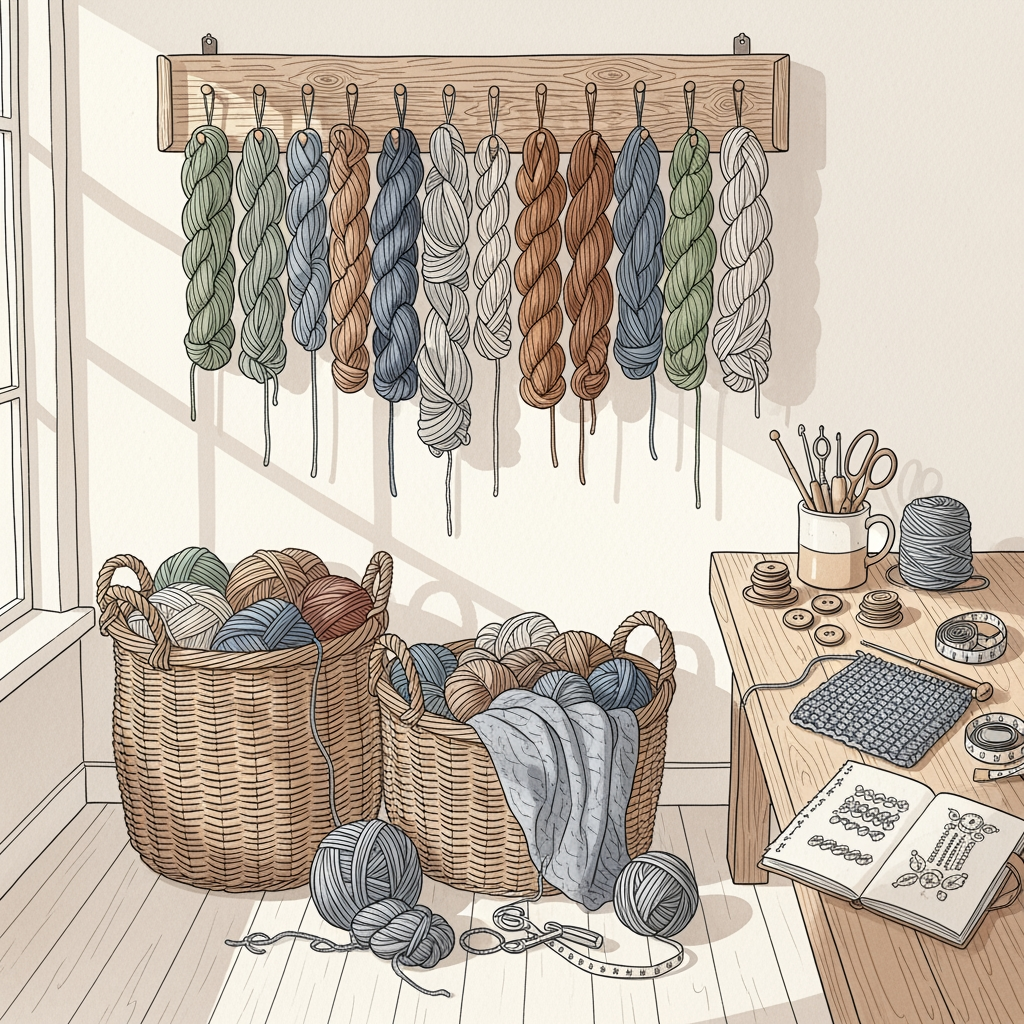
7 Best Organizing Racks For Fiber Supplies To Use
Maximize your craft space with our top 7 fiber supply racks. Learn which storage solutions best organize yarn and fabric for a tidy, efficient studio setup.
A well-organized stash is the difference between starting a new project with joy and feeling overwhelmed by a tangled mess of fiber. After two decades at the needles, I have learned that how you store your yarn directly impacts how often you actually reach for it. These seven storage solutions cater to different habits, helping you keep your supplies accessible and safe. Proper organization turns your collection into a curated library rather than a source of stress.
IKEA Kallax Shelving: Best For Yarn Visibility


The Kallax is a staple in the fiber arts community because it turns your yarn stash into a literal color palette. By using the square cubbies to display your yarn, you can see every skein you own, which prevents the "I have nothing to knit" syndrome.
I recommend using clear plastic bins or fabric inserts if you want to protect your yarn from dust while still keeping it visible. If you are a prolific sweater knitter, these cubbies are perfectly sized to hold a full project’s worth of yarn, keeping your pattern, needles, and fiber in one dedicated spot.
The trade-off here is depth; yarn can get lost in the back of the deep shelves if you aren’t careful. Keep your most frequently used weights—like your worsted and DK—at eye level, and tuck away your long-term stash or spinning fiber in the lower, harder-to-reach cubbies.
Michaels 10-Drawer Rolling Cart: Best Mobility
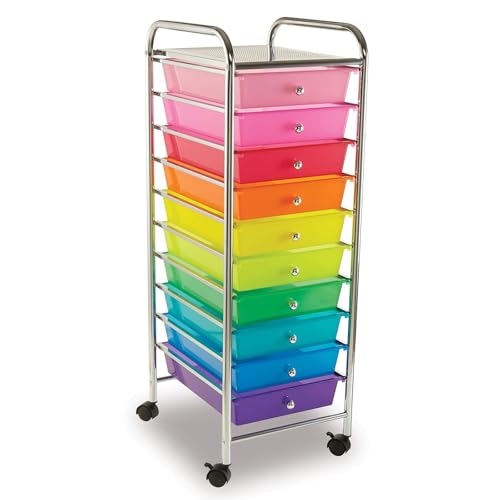
If your knitting space is also your dining room table, a rolling cart is an absolute lifesaver. Being able to wheel your notions, circular needles, and current WIP (Work In Progress) from the living room to your workspace keeps your home tidy and your tools close.
The shallow drawers are ideal for organizing small accessories like stitch markers, measuring tapes, and tapestry needles. I suggest using drawer dividers to keep your needle sets from clattering around; nothing is more frustrating than hunting for a specific 3.25mm needle when you’re ready to cast on.
The main downside is that these carts can become top-heavy if you store heavy cones of yarn in the top drawers. Always keep your heaviest items at the bottom to ensure the unit remains stable when you’re rolling it across the floor.
Wall-Mounted Pegboard Systems: Best For Tools

There is something deeply satisfying about seeing your entire collection of interchangeable needle tips, crochet hooks, and scissors laid out in front of you. A pegboard transforms your wall into a functional display that makes it impossible to lose your favorite tools.
Use hooks and baskets to hang your snips, gauge rulers, and needle gauges at arm’s reach. This system works best for tools you use daily, as it keeps them clean and separated from your yarn, which can sometimes snag on sharper metal instruments.
Be mindful that pegboards don’t offer any protection from sunlight or dust. If you live in a sunny room, avoid hanging natural fibers or hand-dyed yarns on a pegboard, as UV exposure can fade those beautiful, expensive colors over time.
Seville Classics Steel Rack: Best Heavy Storage

For the knitter with a serious "yarn acquisition disorder," a heavy-duty steel wire rack is the gold standard for bulk storage. These units are incredibly sturdy and can hold massive amounts of wool without bowing or sagging over time.
Because the shelves are open-air wire, they provide excellent ventilation, which is crucial for natural fibers like wool or alpaca that need to "breathe" to avoid moisture buildup. You can easily adjust the shelf heights to accommodate large cones or stacks of bulky sweaters.
The downside is that wire shelves can leave indentations on soft, delicate yarns if they are left sitting for years. I suggest lining the shelves with acid-free paper or fabric to ensure your precious hand-dyed hanks stay pristine and free from shelf marks.
Honey-Can-Do Entryway Rack: Best For Skeins

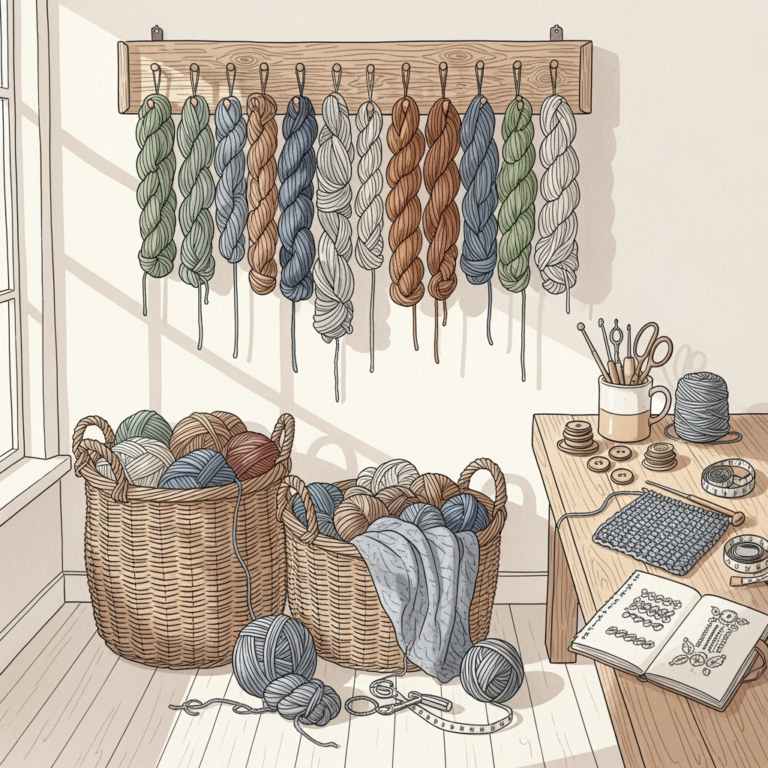
An entryway shoe rack might seem like an odd choice, but the tiered, open design is perfect for displaying skeins of yarn. The angled shelves allow you to see the labels and colors of your yarn at a glance, making it easy to pull a skein for a quick swatch.
This is a fantastic option if you like to keep your yarn in hanks rather than cakes. The open design prevents the yarn from getting crushed, which helps maintain the loft and bounce of high-quality wool.
Just remember that this is an "open storage" solution, meaning it offers zero protection against moths or silverfish. Use this for your "active" stash that you plan to knit within the next few months, rather than your long-term storage.
InterDesign Closet Organizer: Best For Notions
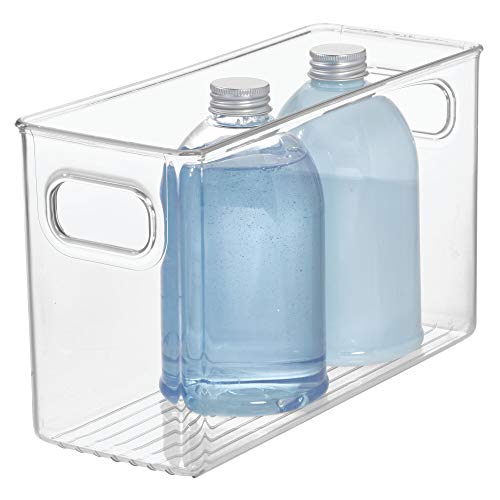
Knitting involves a surprising amount of "stuff"—stitch markers, cable needles, row counters, and tiny crochet hooks for fixing dropped stitches. Hanging closet organizers with clear pockets are perfect for keeping these small, easily lost items categorized.
I find that assigning a specific pocket to a specific needle size or tool type saves minutes of searching every time I start a new project. It also keeps sharp tools safely tucked away from curious pets or children.
The trade-off is that these organizers can become cluttered quickly if you don’t stick to a system. Take five minutes after finishing a project to put your tools back in their designated pockets, or the system will quickly lose its utility.
Elfa Drawer System: Best For Custom Layouts
If you are lucky enough to have a dedicated craft closet, the Elfa system is the most versatile investment you can make. Because the drawers come in different depths and widths, you can create a custom drawer for your sock yarn, another for your lace weight, and a deep one for your bulky wool.
The ability to slide drawers out completely is a massive advantage when you are trying to find that one specific skein buried at the back. It is arguably the most efficient way to maximize a small footprint while keeping your stash completely dust-free.
The biggest hurdle is the initial cost and the time required for installation. Treat this as a long-term investment in your craft; if you are committed to knitting for the long haul, the ease of access will pay for itself in saved time and reduced frustration.
Factors To Consider When Organizing Your Stash
- Accessibility: How often do you reach for the yarn? Keep daily items at waist-to-eye level.
- Visibility: If you can’t see it, you won’t knit it. Use clear bins or open shelving.
- Protection: Natural fibers need protection from pests; use airtight containers for long-term storage.
- Footprint: Measure your space accurately, accounting for the swing of doors or rolling wheels.
- Weight: Always place your heaviest supplies on the lowest shelves to maintain center of gravity.
How To Keep Your Fiber Safe From Moth Damage
Moths are the sworn enemy of every knitter, especially when it comes to protein fibers like wool, alpaca, and silk. The most effective way to prevent an infestation is to ensure your yarn is clean before storing it, as moths are attracted to skin oils and food residue.
For long-term storage, use airtight plastic bins or vacuum-seal bags to create a physical barrier. Adding cedar balls or lavender sachets can act as a natural deterrent, but they are not a substitute for a secure, sealed container.
If you ever suspect a moth presence, immediately isolate the affected yarn in a sealed bag and place it in the freezer for at least 72 hours. This extreme cold kills eggs and larvae, protecting the rest of your stash from a potential disaster.
Tips For Categorizing Yarn By Weight And Fiber
Categorizing your stash by weight—Lace, Fingering, Sport, DK, Worsted, Bulky—is the most practical way to plan your next project. When you have a pattern in mind, you need to know exactly which yarns in your collection will meet the required gauge.
I also recommend separating your fibers by content: keep your superwash wools separate from your non-superwash wools. Superwash fibers are treated to be machine-washable and behave differently during blocking, so you don’t want to accidentally mix them up when working on a project that requires uniform tension.
If you have a large collection, use color-coded tags or labels to mark the yardage and fiber blend on each skein. It is heartbreaking to start a project only to realize you are ten yards short because you didn’t track the yardage when you bought the yarn three years ago.
Organizing your fiber supplies is not just about tidiness; it is about respecting the time and money you invest in your craft. By choosing the right storage solution, you protect your materials and clear the mental space needed for creativity. Take the time to set up a system that works for your specific habits, and you will find yourself reaching for your needles with renewed excitement. May your shelves be full, your yarn be moth-free, and your gauge always be spot on.