7 Best Wall Grid Clips For Organizing Fiber Samples
Organize your fiber samples efficiently. We review the 7 best wall grid clips to help you categorize materials, boost productivity, and clear your workspace.
Every knitter eventually faces the "yarn wall" dilemma, where precious scraps and full skeins become a tangled mess of fiber types and weights. Transforming your stash into a visual library on a wall grid not only clears your workspace but keeps your inspiration front and center. Finding the right clips is the difference between a curated studio and a chaotic pile of fuzz. Here are seven solutions to help you organize your fiber samples with the precision of a master maker.
Command Large Utility Hooks: Best Overall Choice
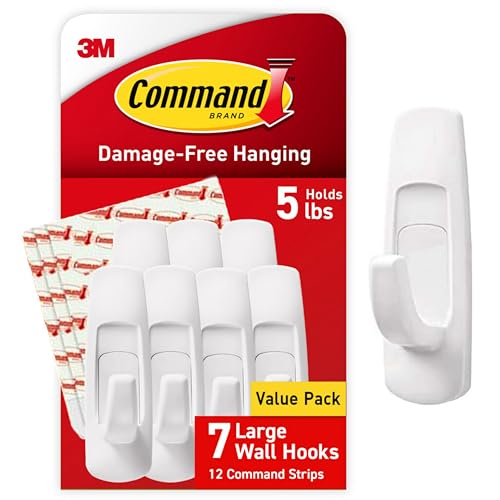

When you need a damage-free way to hang full skeins, these hooks are the gold standard for renters or those who like to reorganize their space frequently. The adhesive backing is surprisingly robust, provided you clean your grid surface thoroughly before application.
These are perfect for holding the loops of a hank or a pre-wound cake. Because they are rounded and smooth, they won’t snag delicate fibers like mohair or hand-dyed silk.
Keep in mind that these hooks are wider than standard wire grid attachments. They work best for larger skeins rather than tiny 5-gram swatches.
Uline Steel Gridwall Hooks: Best for Bulk Samples

If you are a prolific knitter who maintains a large stash of spinning fiber or raw wool, these industrial-grade steel hooks are essential. They are designed for retail environments, meaning they can hold significant weight without bending or sagging.
The sheer length of these hooks allows you to stack multiple samples on a single prong. You can easily group your wool, alpaca, and linen by color or project potential.
Be aware that these are purely functional and lack the aesthetic charm of decorative storage. However, for sheer utility and durability, nothing beats the strength of tempered steel.
Amazon Basics Binder Clips: Best Budget Solution

Every knitter has a stash of these in their junk drawer, and they are surprisingly effective for clipping fiber swatches directly to a grid. Simply snap the clip onto the wire and use the silver arms to hang your samples.
This is the most affordable way to organize small bits of leftover yarn from complex colorwork projects. It’s also a great way to display "yarn barf" or small samples you’ve pulled from a larger project to check for color bleeding.
Just be careful with delicate, high-twist yarns. The metal edges can occasionally crimp fibers if you clamp them too tightly, so only use them on the very end of your sample.
Wall Control Slotted Hooks: Best Secure Fit

These hooks are designed for pegboards, but when paired with an adapter, they provide an incredibly stable, non-wobble attachment for your grid. If your studio is in a high-traffic area, this security is worth the extra setup time.
They are ideal for hanging heavy tools like ball winders or swift clamps alongside your fiber samples. You won’t have to worry about a hook falling off when you reach for a specific hank of yarn.
The trade-off is that they are less portable than simple wire clips. Once they are set, they are meant to stay, so plan your layout carefully before locking them into place.
DisplayGifts Metal Grid Clips: Best for Yarn Tags

When you are cataloging your stash, labeling is just as important as the fiber itself. These metal clips are designed to hold small cards or tags, making them perfect for noting fiber content, yardage, and dye lot numbers.
I recommend using these to clip a small index card to each yarn sample. It’s a lifesaver when you’re trying to remember if that mystery skein is a superwash merino or a delicate untreated wool.
They are lightweight and sleek, keeping the focus on the texture of the fiber rather than the hardware. They provide a professional, organized look that makes your stash feel like a high-end yarn shop.
Bulldog Clips by Acco: Best for Heavy Skeins

For those heavy, 200-gram skeins of bulky-weight wool, standard clips often fail. Bulldog clips offer a much stronger grip and a wider jaw, ensuring your heavy fibers stay exactly where you put them.
They are particularly useful for hanging yarn that has been recently washed and blocked. The weight is distributed evenly across the clip, preventing the yarn from stretching out of shape.
Always look for the ones with a smooth finish to avoid snagging. If you are working with a sticky, high-friction fiber like raw wool, these clips will hold it firmly without slipping.
J-Hook Gridwall Attachments: Best for Easy Access
J-hooks are the ultimate "grab and go" solution for the knitter who is constantly swapping yarns during a design process. Because there is no clamping or tying involved, you can pull a sample off the wall in a split second.
These are perfect for keeping your current "work in progress" yarns within arm’s reach. I find them especially helpful for keeping different needle sizes or stitch markers organized on the same grid.
The only downside is that they don’t lock your yarn in place. If you accidentally brush against your grid, a skein might slide off, so they are best for yarns you use on a daily basis.
How to Organize Your Fiber Samples by Weight
Grouping your samples by weight—from lace to super-bulky—is the most logical way to maintain an organized stash. When you are planning a new sweater, you want to see all your worsted-weight options side-by-side to compare drape and texture.
- Lace/Fingering: Use small binder clips for tiny swatches.
- DK/Worsted: Use J-hooks for full skeins or cakes.
- Bulky/Super Bulky: Use heavy-duty Bulldog clips to support the weight.
Always test your drape by hanging a small sample of the yarn for a few hours. If the fiber stretches significantly under its own weight, store it horizontally rather than hanging it long-term.
Best Practices for Labeling Yarn Fiber Content
A beautiful wall of yarn is useless if you can’t identify the fiber content when it comes time to cast on. Always include the fiber type, yardage, and whether the yarn is a superwash or non-superwash variety.
Superwash wool behaves very differently than untreated wool when blocked, and you don’t want to accidentally felt a project by misidentifying the fiber. Use your grid tags to note the needle size you previously used with that yarn as well.
Keep a small "key" on your wall grid that explains your shorthand. For example, "SW" for superwash, "PL" for ply count, and "WPI" for wraps per inch.
Maintaining Your Wall Grid for Long-Term Storage
Fiber is organic and can be prone to dust, sunlight damage, and—heaven forbid—moths. If your wall grid is in direct sunlight, your beautiful hand-dyed colors will fade over time, so keep it away from windows.
Periodically take your samples down and give them a gentle shake to remove dust. If you notice any signs of pests, immediately isolate the affected yarn and treat it before it spreads to the rest of your collection.
Don’t let your grid become a permanent display for yarn you no longer intend to use. Rotate your samples seasonally to keep your creative energy fresh and your stash manageable.
Organizing your fiber on a wall grid is a transformative step for any knitter, turning a cluttered stash into a functional, inspiring library. By selecting the right clips for your specific yarn weights and labeling them with care, you ensure that your materials are ready whenever inspiration strikes. Remember that your stash should serve your creativity, not overwhelm it, so don’t be afraid to reorganize as your knitting journey evolves. Happy knitting, and may your wall grid be as beautiful as the projects you create.