6 Best Stitch Counters For Buttonhole Alignment
Struggling with uneven buttonholes? Discover the 6 best stitch counters to ensure precise, professional alignment for every garment project you undertake.
Achieving perfectly spaced buttonholes is often the difference between a garment that looks homemade and one that looks truly professional. When you are working on a cardigan or a vest, even a single row of deviation can cause the front bands to pucker or sag. These six tools offer reliable ways to track your row counts so your buttonholes align with mathematical precision. Mastering this aspect of finishing will elevate every sweater you knit from this point forward.
Clover Kacha-Kacha: Best Manual Clicker Choice
The Clover Kacha-Kacha is a tactile, satisfying tool that feels like a natural extension of your knitting process. Its distinct "click" sound provides immediate auditory feedback, confirming that your count has been registered without you needing to look away from your work.
This manual counter is ideal for knitters who prefer avoiding digital screens or batteries. If you are working with dark, fuzzy mohair or complex cables where your eyes are glued to the stitch pattern, the physical button press becomes second nature.
The tradeoff here is that it requires a manual input every single time. If you get distracted or forget to click, your count will be off, which can be catastrophic for buttonhole placement. Keep it tethered to your knitting bag to ensure it is always within reach.
KnitIQ Digital Row Counter: Precision Tracking


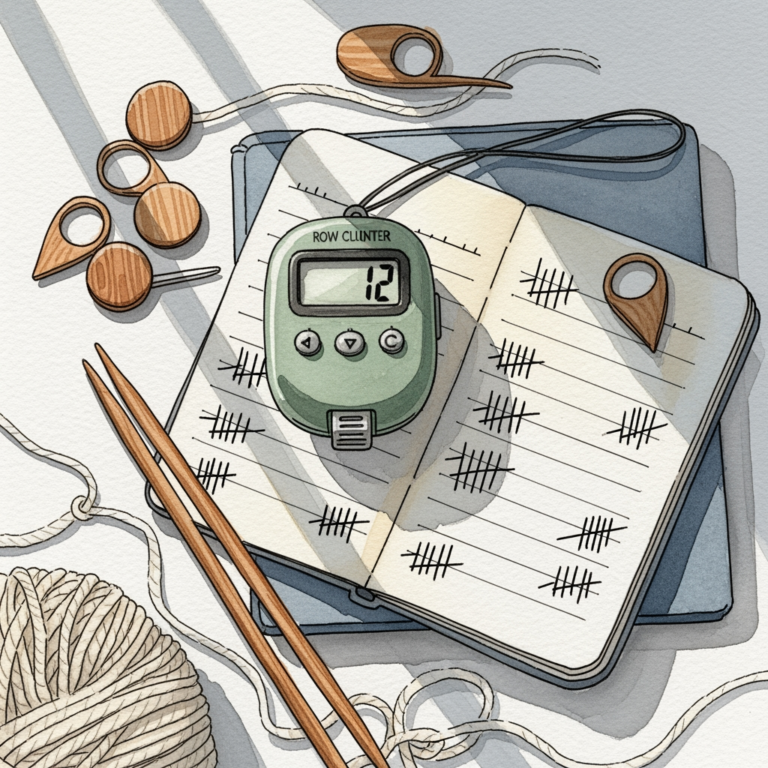
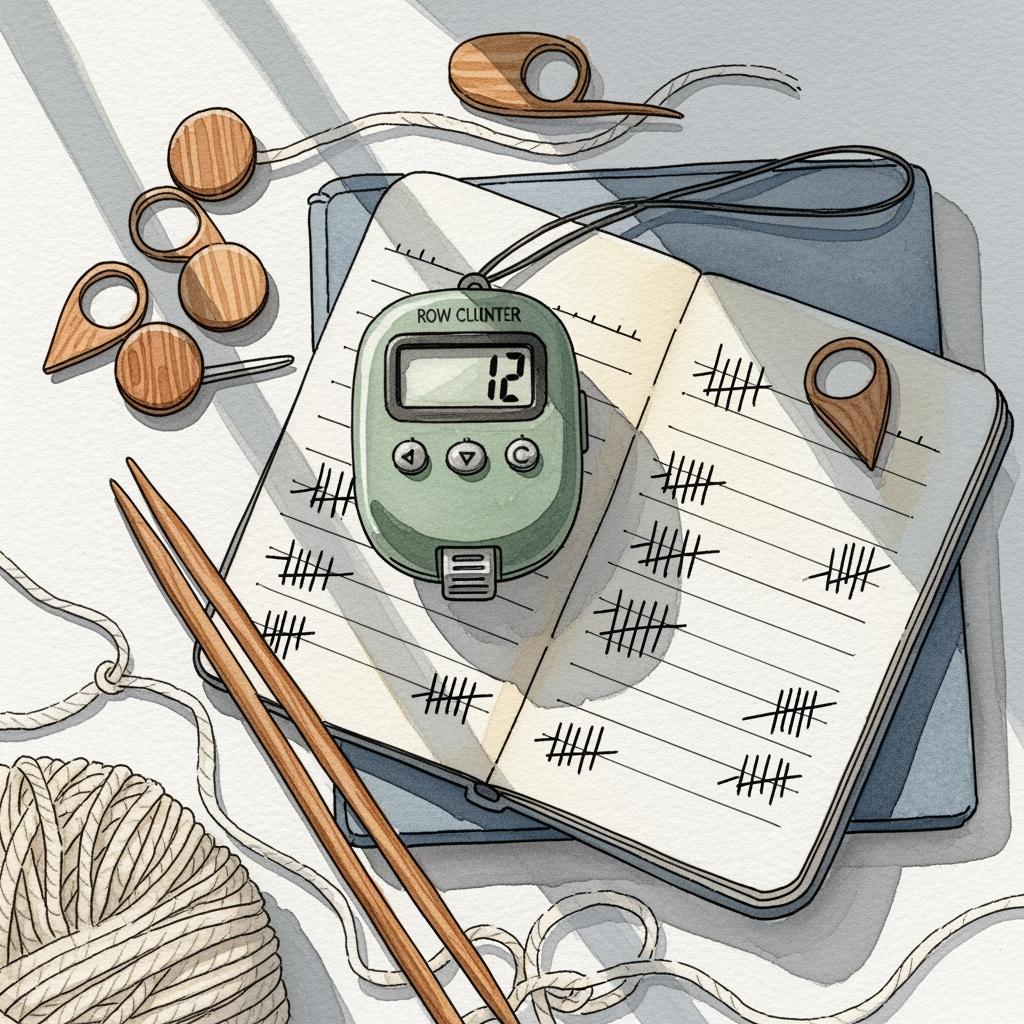
Digital counters like the KnitIQ offer a level of reliability that manual clickers sometimes lack, especially when you are working on long-term projects. The clear LCD display eliminates the guesswork of interpreting mechanical dials or remembering where you left off.
These devices are particularly useful when you are balancing multiple stitch patterns or tracking increases alongside your buttonhole rows. Because they offer a larger display, you can quickly glance at the number even in dim lighting.
Be aware that digital counters rely on batteries, which can die at the most inconvenient times. Always keep a spare battery in your notions pouch, or you might find yourself counting rows manually while waiting for a delivery.
Cocoknits Maker’s Keep: Best Wearable Counter
The Cocoknits Maker’s Keep is a brilliant solution for the knitter who constantly loses their tools in the sofa cushions. By wearing the counter as a magnetic bracelet, your tracking device stays exactly where you need it: right on your wrist.
This setup is a game-changer for knitters who move between rooms or take their knitting on the go. When you finish a row, you simply tap the counter on your wrist, keeping your hands near your needles at all times.
The magnetic surface also serves as a handy spot to hold your tapestry needles or stitch markers. While it is an investment, the convenience of having your "notions hub" attached to your body is hard to beat.
Row Counter Ring: Best for On-the-Go Knitters
The row counter ring is the ultimate minimalist tool for the knitter who hates clutter. By sitting directly on your finger, it allows you to increment your count with a quick flick of your thumb, barely interrupting your rhythm.
This is perfect for sock knitters or those working on small-diameter circular projects. Because it is so unobtrusive, you are much less likely to "forget" to click, as the tool is physically integrated into your hand movements.
However, these rings can be bulky depending on the size of your fingers, and they may snag on delicate lace yarns. If you are working with a thin, high-twist wool, ensure the ring has a smooth finish to prevent catching on the fiber.
Knitter’s Pride Mindful Counter: Best Design

The Knitter’s Pride Mindful collection focuses on aesthetics and ergonomics, making the counter a joy to hold. It features a smooth, rounded design that feels comfortable in the palm, which is a relief during long, repetitive sessions.
Beyond the look, the functional design is robust and easy to read. If you find most knitting tools to be overly industrial or plastic-heavy, this counter brings a touch of elegance to your notions kit.
Design is subjective, but the functionality here is solid. It is a great choice for a knitter who wants a reliable tool that also reflects their personal style and appreciation for quality craftsmanship.
Susan Bates Hand Counter: The Classic Option
The Susan Bates hand counter is a workhorse that has been a staple in knitting bags for decades. It is simple, mechanical, and remarkably durable, standing up to years of heavy use without needing a single battery.
Its classic dial mechanism provides a physical sense of progress that many experienced knitters find comforting. Because it doesn’t rely on electronics, it is essentially fail-proof, provided you remember to turn the dial.
Some find the dial a bit stiff, which can be a minor annoyance if you have hand fatigue or arthritis. If you prefer a tool that requires zero maintenance and has no digital parts to fail, this is your best bet.
Why Buttonhole Alignment Requires Precision
Buttonholes are structural elements that dictate how your garment hangs on the body. If they are unevenly spaced, the fabric will pull or gap, creating unsightly ripples that no amount of blocking can fix.
Think of your front band as a vertical ruler. If your buttonholes are even one row off, the tension across the chest will be uneven, causing the buttons to sit at an angle.
Consistency is the goal here. By using a counter to track the exact number of rows between each hole, you ensure that the load-bearing weight of the buttons is distributed equally across the garment.
Tips for Consistent Buttonhole Spacing
To keep your spacing perfect, I recommend writing your row count down on a sticky note or a project sheet. Even with a counter, having a secondary paper record prevents "counter anxiety" where you worry if you accidentally clicked twice.
When planning your buttonholes, always account for the size of your buttons. A larger button requires more rows of buffer space between the holes to prevent the fabric from feeling crowded.
Finally, consider the weight of your yarn. Heavier, chunkier yarns often require more rows between buttonholes to maintain structure, while fingering weight yarns can handle tighter spacing.
How to Manage Multiple Counters for Repeats
If you are working on a complex pattern, you might need one counter for the overall length and another for your buttonhole repeats. Using different colored counters or distinct styles can help you keep them straight.
Labeling your counters with small pieces of masking tape can also prevent confusion. If you are working on a sweater with multiple sections, knowing exactly which counter tracks which repeat is vital.
Don’t be afraid to use a simple paper tally alongside your digital tools for critical sections. Redundancy is the best friend of a knitter working on a high-stakes project.
Troubleshooting Uneven Buttonhole Placement
If you realize you have made a mistake, do not panic. The best way to fix an uneven buttonhole is to catch it early; if you notice a discrepancy, count your rows immediately and compare them to your previous holes.
If you have already finished the band, you may be able to use a duplicate stitch or a bit of strategic embroidery to "close" a buttonhole and re-work it. However, this is difficult and often shows.
Prevention is always easier than repair. If you find your buttonholes are consistently uneven, slow down your pace on the buttonhole row and use a stitch marker to "anchor" the position before you begin the bind-off for the hole.
Investing in a reliable stitch counter is a small step that yields massive improvements in the quality of your finished garments. Whether you prefer the tactile click of a manual counter or the precision of a digital screen, the key is consistency. By tracking your rows diligently, you ensure that your buttonholes are perfectly placed every single time. Happy knitting, and may your bands always lay flat and your buttons always align.