6 Best Yarn Scales For Checking Yardage To Own
Accurately measuring yarn weight is vital for any knitter. Explore our top 6 scale picks to ensure you never run short on yardage for your next big project.
Every knitter has experienced the heart-stopping moment of running out of yarn just inches away from binding off a sweater sleeve. A reliable digital scale transforms your stash from a collection of mystery balls into a precise inventory of usable fiber. By measuring weight, you can confidently calculate remaining yardage and avoid the dreaded "yarn chicken" defeat. These six scales offer the precision and reliability needed to manage your projects like a seasoned professional.
My Weigh iBalance 201: Best Overall Precision Scale


For the knitter who demands scientific accuracy, the iBalance 201 is the gold standard. It offers a 0.01g resolution, which is vital when you are working with expensive, lightweight luxury fibers like lace-weight cashmere or fine silk.
When you are down to the final few grams of a rare hand-dyed skein, standard kitchen scales often fail to register the subtle shifts in weight. This scale captures those tiny increments, ensuring your yardage estimates are based on actual data rather than guesswork.
The tradeoff here is the footprint; it is a larger, more industrial-looking piece of equipment. However, if you are a serious designer or a knitter who frequently scales down patterns, the precision is worth the desk space.
American Weigh Scales Blade: Best Compact Choice
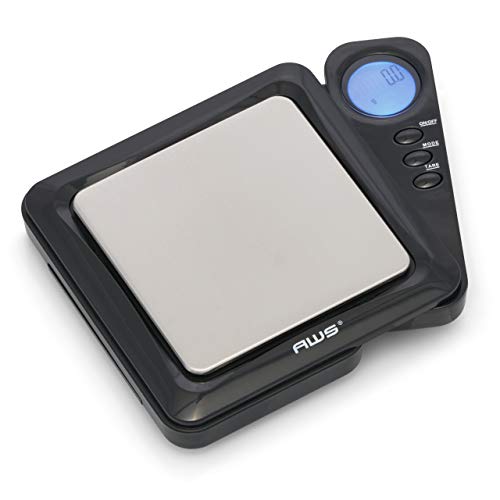
If your knitting space is shared with a dining table or a cramped craft corner, the Blade scale is a fantastic solution. Its design mimics a pocket knife, allowing it to slide easily into a project bag or a notions tin.
Portability is key for knitters who frequent guild meetings or fiber festivals. You can weigh your yarn purchases on the spot to ensure you have enough for that planned cardigan without lugging around a bulky kitchen scale.
While it is incredibly compact, the platform is small, which can make balancing a large, unruly ball of wool tricky. Use a small bowl or a dedicated light container to stabilize your yarn, and always remember to tare the scale before weighing.
Etekcity Digital Kitchen Scale: Best Budget Option

The Etekcity scale is a workhorse that proves you don’t need to break the bank to get reliable results. It is simple, intuitive, and handles the weight of a full sweater’s worth of yarn with ease.
Most knitters don’t need 0.01g precision for everyday projects like worsted-weight hats or bulky scarves. This scale provides the 1g increments necessary for standard wool or acrylic blends, making it perfect for the casual maker.
Keep in mind that while it is affordable, it lacks some of the hyper-sensitive sensors found in professional models. If you are working with very fine thread or cobweb lace, you might find the readings fluctuate slightly more than on a high-end unit.
Ozeri Pronto Digital Scale: Best for Ease of Use

There is something to be said for a tool that just works the moment you press a button. The Ozeri Pronto is beloved for its clear, large display and its straightforward interface, which is a blessing when your hands are tired from a long knitting session.
I often recommend this to beginners who are just starting to track their yardage. It features a prominent "tare" button that makes subtracting the weight of your yarn bowl or swift completely stress-free.
The sleek, chrome-like finish is easy to wipe clean if you accidentally get a bit of fiber dust or lanolin on it. Just be aware that the surface can show fingerprints, so keep a soft cloth nearby if you prefer a pristine workspace.
GreaterGoods Digital Scale: Best Modern Interface

The GreaterGoods scale is designed for the modern knitter who values both form and function. Its backlit display and minimalist aesthetic make it a clean addition to any craft room, while the sensor technology remains impressively accurate.
Beyond the look, the interface is highly responsive, which prevents the frustration of waiting for the numbers to settle. When you are weighing multiple skeins to ensure color consistency across a large project, this speed is a significant advantage.
It is a well-balanced tool that bridges the gap between high-end precision and home-kitchen utility. It’s an excellent choice if you want a scale that looks good on your shelf but performs reliably when you’re deep into a complex colorwork project.
Escali Primo Digital Scale: Best Durable Design
The Escali Primo is legendary in the crafting community for its ruggedness and longevity. It features a sealed control panel, which is a brilliant design choice for knitters who worry about spilled tea or stray bits of fiber getting into the electronics.
This scale is built to handle the heavy lifting. If you are weighing large quantities of bulky wool or heavy cotton cones, the platform is stable and the construction feels solid enough to last for years of daily use.
It is one of the most consistent scales on the market, rarely requiring frequent re-calibration. If you are the type of knitter who wants to buy a tool once and never think about it again, this is your best bet.
Why Knitters Need a Scale for Accurate Yardage
Yarn labels are notoriously optimistic, and they rarely account for the specific way you knit. Factors like your personal tension, the size of your needles, and the amount of "swatch waste" can significantly change your actual yardage consumption.
Measuring by weight allows you to bypass the guesswork of "eyeballing" a ball of yarn. By knowing the total weight of your project and the weight of your leftover yarn, you can calculate exactly how much you have used.
This is particularly critical when working with discontinued yarns or limited-edition hand-dyed skeins. Once you know your personal consumption rate, you can plan your future purchases with the confidence of a pro.
How to Calculate Remaining Yardage Using Grams
To find your remaining yardage, you first need to know the original weight and yardage of your skein, which is printed on the ball band. Use the formula: (Weight of remaining yarn / Total weight of full skein) x Total yardage of full skein = Remaining yardage.
For example, if you have a 100g skein that contains 200 yards, and you have 25g left, your calculation is (25/100) * 200 = 50 yards remaining. This simple math can save you from running out of yarn mid-row.
Always weigh your yarn after winding it into a ball or cake, as the original skein weight can sometimes vary slightly due to moisture content. Taking the time to do this simple math ensures you always know exactly how much "runway" you have left.
Understanding Calibration and Scale Accuracy
Calibration ensures that your scale is reading "true." Over time, even the best digital scales can drift, leading to measurements that are slightly off, which can be disastrous when you need every last inch of yarn.
Most scales come with a calibration mode, but for general knitting purposes, you can check accuracy using a known weight, like a standard nickel (which weighs exactly 5g). If the scale doesn’t read 5g, it is time to re-calibrate.
Always place your scale on a hard, flat, level surface. Placing it on a carpet or a soft craft mat will lead to inaccurate readings, as the sensors need a stable foundation to measure the weight correctly.
Essential Tips for Measuring Yarn Waste Properly
Always subtract the weight of your container—a bowl, a swift, or a yarn cake holder—before you start weighing your yarn. This is called "taring," and it is the most common mistake knitters make when starting out.
Keep your scale away from drafts or direct airflow, as even a gentle breeze can cause the weight reading to fluctuate. If you are weighing very fine lace-weight yarn, even the slight movement of a ceiling fan can throw off the measurement.
Finally, remember that moisture affects weight. Wool is hygroscopic, meaning it absorbs water from the air; if you live in a very humid climate, your yarn might actually weigh more than it did in a dry warehouse.
Investing in a quality scale is one of the most practical upgrades you can make for your knitting practice. It turns the abstract numbers on a label into concrete data you can use to manage your stash and finish your projects with confidence. Choose the tool that best fits your space and your specific fiber needs, and you will find that "yarn chicken" becomes a game you always win. Happy knitting, and may your yarn always be exactly enough.