6 Best Knitting Kits For Beginner Practice To Try
Start your fiber arts journey with these 6 top-rated knitting kits. We review the best beginner-friendly sets to help you master essential stitches with ease.
Starting your knitting journey can feel overwhelming when faced with an endless wall of yarn and a dizzying array of needles. A well-curated kit removes the guesswork by bundling compatible materials, allowing you to focus entirely on your tension and technique. These six selections provide the perfect foundation for building muscle memory and confidence. By choosing the right starting point, you transform a daunting hobby into a rhythmic, meditative practice.
We Are Knitters The Petite Wool Scarf Kit


This kit is the gold standard for those who want instant gratification without sacrificing quality. The chunky, 100% Peruvian wool works up incredibly fast, which is essential when you are still learning to control your tension.
The included wooden needles are a massive advantage for a novice. Because wood has a natural "grip," your stitches are less likely to slide off the needle while you are fumbling with your yarn overs or purls.
Be aware that high-twist, thick wool can sometimes hide your mistakes, making it harder to spot a dropped stitch. However, the sheer tactile joy of working with this soft, bulky fiber makes the learning curve feel like a treat rather than a chore.
Wool and the Gang Billie Jean Yarn Kit

If you live in a warmer climate or prefer a lighter weight, this kit is an excellent alternative to heavy wool. The yarn is made from upcycled denim, offering a unique, rustic texture that is far more durable than traditional sheep’s wool.
Working with cotton-based yarns requires a different approach than animal fibers. Cotton has zero elasticity, meaning your hands will feel the tension of every stitch immediately; it is less "forgiving" if your gauge is uneven.
This kit is perfect for the knitter who wants to create a garment they can wear year-round. Just remember that because the fiber doesn’t stretch, you must stay mindful of your grip to avoid hand fatigue during long sessions.
Purl Soho Beginner Garter Stitch Scarf Kit

Purl Soho kits are synonymous with elegance and high-quality materials. This kit focuses on the Garter stitch—the rhythmic back-and-forth of knitting every single row—which is the absolute best way to master consistent tension.
The yarn provided is usually a fine merino wool, which is soft against the skin and offers great stitch definition. You will be able to see exactly how your loops are formed, which is critical for learning to "read" your knitting.
While the thinner yarn means the project will take longer to complete than a chunky kit, the result is a professional-looking accessory. This is the choice for the perfectionist who wants to understand the mechanics of the stitch before moving on to complex patterns.
Lion Brand Basic Stitch Beginner Hat Kit

Hats are the "rite of passage" for new knitters because they introduce you to working in the round. This kit includes a circular needle, which eliminates the need to seam your work once the knitting is finished.
The yarn is an acrylic blend, which is a fantastic choice for a first project. It is machine washable and durable, meaning you don’t have to worry about ruining your hard work if you make a mistake during the blocking process.
Don’t let the "beginner" label fool you; learning to join your work in the round without twisting it is a skill that will serve you for decades. This kit provides a low-stakes environment to master that transition.
Darn Good Yarn Learn to Knit Scarf Kit
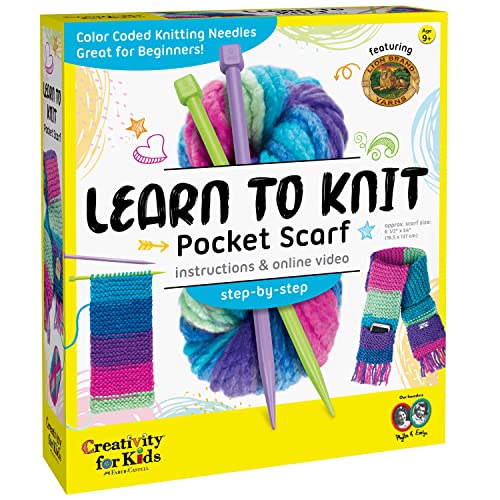
Darn Good Yarn often includes unique, hand-spun fibers that add a vibrant, bohemian flair to your project. This is a great pick if you find standard commercial yarns a bit boring or uninspiring.
Working with artisanal, textured yarn can be a double-edged sword. While the color and feel are unmatched, the varying thickness of the yarn can make it difficult to count stitches or identify where a mistake occurred.
If you are a visual learner who gets bored easily by repetitive patterns, this kit will keep you engaged. Just be prepared to use your fingers to "feel" the stitches rather than relying solely on sight.
KnitPicks Learn to Knit Club Starter Set

This set is less of a specific project and more of an educational curriculum. It provides a variety of tools and yarn weights, allowing you to experiment with different scales of knitting right out of the box.
For a beginner, the biggest benefit here is the exposure to different needle sizes. You might find that you are a "tight" knitter who struggles with small needles, or a "loose" knitter who needs the control of a smaller diameter.
This is the best value for someone who is serious about knitting as a long-term hobby. It treats the craft as a skill to be developed rather than just a one-off project to be finished.
How to Choose Your First Knitting Project Kit
When selecting your first kit, prioritize the yarn weight over the color. Bulky or "super bulky" yarns are generally easier for beginners because they allow you to see the structure of each stitch clearly.
Consider your environment and intended use for the finished item. If you are knitting a scarf for winter, opt for wool; if you are making a summer accessory, seek out cotton or linen blends.
- Bulky/Chunky: Best for fast progress and learning basics.
- Worsted/Medium: The industry standard; offers the most pattern options.
- Fingering/Light: Best left for later; requires more patience and finer motor control.
Why Natural Fibers Are Best for Beginners
Natural fibers like wool have a quality called "crimp," which gives the yarn a natural elasticity. This "give" allows the yarn to stretch slightly while you are forming your stitches, which helps compensate for uneven tension.
Synthetic fibers, particularly cheap acrylics, can be slippery and stiff. This makes it much harder to keep your stitches from sliding off the needle or becoming distorted while you are still learning the muscle memory.
- Wool: Elastic, forgiving, and holds shape well.
- Cotton: Non-elastic, shows every tension error, great for home goods.
- Alpaca: Extremely soft but lacks "memory," meaning it can stretch out over time.
Understanding Your Kit’s Needle Material
The material of your needle changes the entire experience of the craft. Bamboo or wood needles provide friction, which is excellent for beginners who are worried about stitches sliding off.
Metal needles are slick and fast, which is preferred by experienced knitters, but they can be a nightmare for a beginner whose stitches aren’t yet secure. If you find your yarn is "fighting" you, it might be the needle material, not your technique.
If you find yourself constantly dropping stitches, switch to a wood needle. If you feel like you are wrestling the yarn to move it across the shaft, a polished metal or nickel-plated needle will provide the glide you need.
Essential Skills You Will Learn in Your Kit
Every kit should teach you the "Big Three": casting on, knitting, and binding off. These are the bookends of your knitting life, and mastering them is more important than learning fancy cables or lace.
You will also learn to recognize your "gauge," or the number of stitches per inch. Understanding how your personal tension affects the final size of the item is the secret to moving from a "knitter" to a "maker."
Finally, you will learn the art of finishing. Whether it is weaving in ends or blocking a piece to its final shape, these final steps are what separate a "handmade" item from a "homemade" one.
Knitting is a journey of patience, where every dropped stitch is simply a lesson in disguise. By starting with a kit that matches your learning style, you ensure that your initial experience is one of success rather than frustration. Keep your needles clicking, embrace the imperfections, and enjoy the rhythm of the fiber arts. Your hands will soon develop the wisdom that only time and practice can provide.