6 Best Silk Yarns for Luxury Shawls to Try
Elevate your knitting with these six premium silk yarns. Discover the best fibers for luxurious, elegant shawls that offer unmatched drape and soft luster.
There is a transformative moment in every knitter’s journey when you transition from basic wools to the luminous, fluid world of silk. Working with silk requires a shift in tension and patience, but the reward is a garment that feels like liquid against the skin. Whether you are aiming for a heirloom lace shawl or a modern, minimalist wrap, the fiber choice dictates the final silhouette. This guide explores the best silk yarns to elevate your next project from a simple knit to a true luxury piece.
Malabrigo Silkpaca: Best for Stunning Drape


If you have ever dreamt of a shawl that pours over your shoulders like water, Silkpaca is your starting point. This blend of 70% baby alpaca and 30% silk creates a fabric that is impossibly soft yet retains enough structure to hold a lace pattern.
The secret here is the alpaca halo, which fills in the gaps of your stitches, while the silk provides the weight needed for a beautiful, heavy drape. Because it is a single-ply yarn, it is incredibly supple, though it can be prone to pilling if subjected to heavy friction.
If you are knitting a large, triangular shawl, expect it to grow significantly during blocking. Always knit a generous swatch and wash it exactly as you intend to wash the finished piece to account for this natural relaxation.
Shibui Knits Koan: Best for Crisp Definition
When your pattern features complex cables or sharp geometric lace, you need a yarn that doesn’t hide your hard work. Koan is a sophisticated blend of linen and silk that offers a dry, matte finish, providing the stitch definition that soft, fuzzy yarns often lack.
The linen component adds a structural "memory" to the silk, keeping your stitches remarkably even. This is an excellent choice for knitters who struggle with uneven tension, as the yarn’s inherent stiffness helps keep loops consistent across the row.
Be aware that because this yarn has less elasticity than wool, it can be slightly harder on the hands during long knitting sessions. Use needles with a bit of "grab"—like wood or bamboo—to prevent the slick silk from sliding off your tips too quickly.
Rowan Kidsilk Haze: Best Iconic Mohair Blend

Kidsilk Haze is the industry standard for a reason; it is the ultimate "cloud" yarn. By pairing a silk core with a fine mohair halo, you achieve a delicate, ethereal fabric that is surprisingly warm despite its gossamer weight.
Many knitters find this yarn intimidating because it is difficult to "tink" or unknit if you make a mistake. The mohair fibers tend to cling to each other, so my advice is to use a lifeline every few repeats to save your sanity.
This yarn is incredibly versatile; hold it double for a faster, squishier knit, or hold it alongside a fingering-weight wool for added strength and color depth. It is the perfect choice for those who want a romantic, vintage-inspired shawl.
Manos del Uruguay Fino: Best Hand-Dyed Luxury
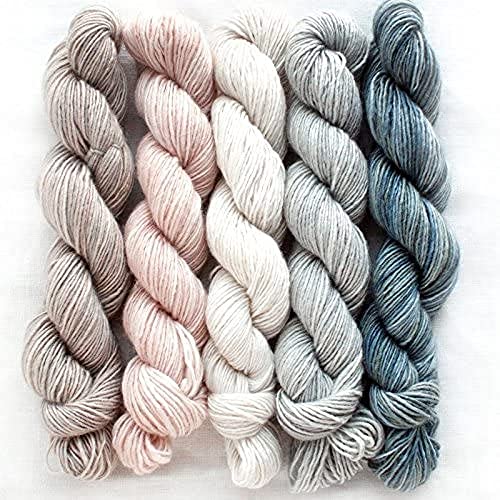
Fino offers the depth of color that only kettle-dyed yarns can provide, making it a favorite for shawls that require a touch of artistic flair. The blend of merino wool and silk creates a yarn that is strong enough for daily wear but silky enough for special occasions.
The beauty of this yarn lies in its subtle tonal variations, which add life to simple stockinette sections. Because it is hand-dyed, I always recommend alternating skeins every two rows if you are working a large, solid-colored body to avoid visible color pooling.
It is a fantastic "gateway" silk for those who are used to working with pure wool. You get the familiar elasticity of merino with the unmistakable, cool sheen of silk.
Purl Soho Mulberry Silk: Best Pure Fiber Choice
If you want to experience the true, unadulterated nature of silk, look no further than 100% Mulberry silk. This yarn has a high-sheen, mirror-like quality that makes every stitch pop with a jewelry-like intensity.
Pure silk is notoriously inelastic, meaning it will show every single tension fluctuation in your knitting. If you are a beginner, this might be frustrating, but for an advanced knitter, it is the ultimate test of your craft.
Because this yarn is heavy and lacks "spring," avoid patterns that rely on ribbing or tight cinched sections. Instead, focus on open lace or simple garter stitch patterns that allow the drape of the pure fiber to take center stage.
Hedgehog Fibres Silk Lace: Best Vibrant Colors

Hedgehog Fibres is famous for their electric, saturated colorways, and their Silk Lace is no exception. This yarn is a dream for those who want their shawl to be the focal point of an entire outfit.
The high silk content gives these vibrant dyes a luminous quality that synthetic fibers simply cannot replicate. It is a bold choice, perfect for modern, graphic shawl designs that demand attention.
Keep in mind that with such high-intensity colors, you must be careful with blocking. Always test a small swatch for colorfastness, as deep, saturated dyes can occasionally bleed when soaked in water for the first time.
Why Silk Is the Gold Standard for Fine Shawls
Silk is a protein fiber with a unique triangular prism structure, which is what gives it that signature luster. Unlike wool, which has scales that can be itchy, silk is smooth, making it ideal for those with sensitive skin.
For shawls, silk is the gold standard because it is both incredibly strong and surprisingly lightweight. It allows you to knit massive, sprawling lace projects that won’t feel like a heavy blanket around your neck.
When you invest in a silk shawl, you are knitting a piece that will last for decades. Unlike many other fibers, silk does not break down easily over time, provided it is treated with care.
Understanding Silk Blends Versus Pure Silk Yarns
Choosing between a blend and 100% silk is a choice between ease of use and aesthetic purity. Blends—usually with wool, mohair, or alpaca—are generally easier to knit because the other fibers provide "grip" and elasticity.
- Silk/Wool: Best for durability and ease of handling.
- Silk/Mohair: Best for warmth and a soft, hazy aesthetic.
- Silk/Linen: Best for structure and crisp stitch definition.
- 100% Silk: Best for drape, shine, and luxury, but requires the most skill.
If you are new to the fiber, start with a silk-wool blend. It will give you the shine you crave without the slippery frustration of working with a 100% silk lace weight.
Essential Tips for Blocking Delicate Silk Knits
Blocking is not optional when working with silk; it is the final step of the design process. Silk is a "lazy" fiber that needs to be gently coaxed into its final shape, as it won’t snap back like wool.
Use a gentle wool wash and soak your shawl for no more than 15 minutes. When removing the excess water, never wring or twist the fabric; instead, lay it flat on a thick towel and roll it up like a burrito to press the moisture out.
Pin your shawl out aggressively. Silk lace benefits from being stretched to its maximum potential, as this opens up the eyelets and defines the pattern. Let it dry completely on the blocking mats before unpinning.
How to Properly Wash and Store Your Silk Shawls
Silk is a protein fiber, much like your own hair, and it should be treated with the same level of gentleness. Always use a pH-neutral wool wash to maintain the integrity of the fibers.
To store your shawls, avoid hanging them, as the weight of the silk can cause the fabric to stretch out of shape over time. Instead, fold your shawls neatly and store them in a breathable cotton bag to protect them from dust and moths.
If you follow these steps, your silk shawl will remain a staple in your wardrobe for years. Treat your knitting like the investment it is, and it will reward you with unparalleled beauty.
Knitting with silk is an intimate process that rewards patience and precise technique. By selecting the right yarn for your specific project, you ensure that your hard work results in a beautiful, long-lasting accessory. Remember that the fiber is only part of the equation; your choice of needles and your blocking technique are what bring the piece to life. Take your time, enjoy the sheen of the yarn on your needles, and embrace the luxury of the process.