6 Studio Desk Lamps For Workspace Lighting Efficiency
Boost your productivity with our top 6 studio desk lamps. Discover the best workspace lighting efficiency solutions for your office and shop your upgrade today.
Struggling to read dark, navy-blue mohair or losing track of stitches in intricate cable charts is a universal rite of passage for every knitter. Proper workspace lighting is not just a luxury; it is the most critical tool for preventing eye strain and ensuring that tension remains consistent across every row. The right lamp transforms a dim corner into a vibrant studio, making fiber identification and pattern reading effortless. Selecting the perfect illumination requires balancing brightness, color fidelity, and the physical maneuverability of the light source itself.
Brightech Litespan LED: Best for Color Accuracy
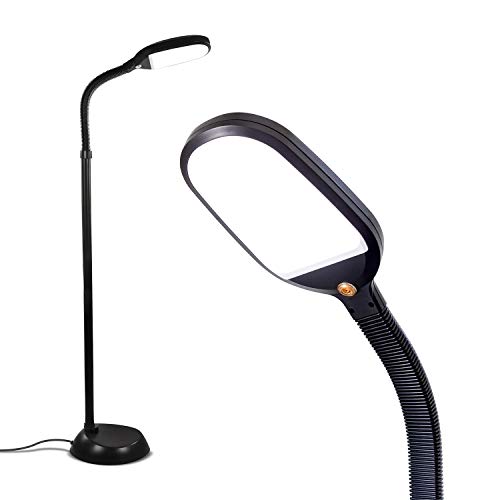

When working with variegated hand-dyed yarns, the subtle shift between tonal greens or muddy browns can be impossible to distinguish under standard warm-toned bulbs. The Brightech Litespan offers a high Color Rendering Index (CRI), which is essential for ensuring that the colors you see in your workspace are the colors that will appear in finished garments. Accurate color representation prevents the frustration of realizing that two yarns intended to coordinate are actually clashing once the project is finished.
This lamp excels by providing a crisp, natural light that mimics daylight. It is particularly helpful when performing complex colorwork, where high contrast is necessary to track the float of secondary colors behind the main pattern. By highlighting the true hue of the fiber, it reduces the visual fatigue associated with “guessing” yarn shades during late-night knitting sessions.
The tradeoff with this model is the stability of the base, which may feel lightweight if the neck is extended at an extreme angle. However, for most crafters, the sheer quality of the light outweighs the need for a heavy-duty stand. For those prioritizing color precision, this is the gold standard.
BenQ e-Reading Lamp: Best for Wide Coverage

A standard desk lamp often creates a harsh “hot spot” of light, leaving the periphery of a project in shadow. The BenQ e-Reading lamp utilizes a curved design that casts light across an exceptionally wide area, easily illuminating even the largest sweater-in-progress on a lap desk or table. This wide throw is a major advantage when juggling multiple balls of yarn, charts, and circular needles simultaneously.
The lamp also features automatic dimming sensors that adjust based on ambient light levels. While this sounds like a gimmick, it is surprisingly helpful for maintaining a consistent light environment as the sun sets during a long afternoon of knitting. By ensuring even illumination, the lamp reduces the need for the eyes to constantly adjust to shifting light intensities.
Because of its design, it occupies a significant footprint on a desk. It is best suited for dedicated crafting stations rather than shared or cluttered tabletops. If the goal is seamless, shadow-free coverage, the physical space trade-off is worth the investment.
Neatfi XL 2,200 Lumens: The Ultimate Power Lamp
Some projects, such as black-on-black textured stitch patterns or dark charcoal lace, require an extraordinary amount of raw brightness to see the structure of the stitch. The Neatfi XL provides an overwhelming 2,200 lumens, acting almost like a sunlit window at midnight. This level of power is ideal for knitters with aging eyes or for those who frequently work with difficult, low-contrast materials.
The reach of the arm on this lamp allows for precise placement directly over the hands. It is built for utility, with a clamp that secures it firmly to almost any surface. There is no wobbling, and the light stays exactly where it is directed.
The primary drawback is that this lamp can be too bright if not adjusted, potentially causing glare on shiny metal needles or certain acrylic yarns. It is a heavy-duty tool intended for professional or highly frequent use. If the difficulty level of the patterns involves tiny, dark stitches, this is the definitive solution.
Tomons Swing Arm Lamp: Top Budget-Friendly Pick

Not every knitting station requires a high-tech, multi-sensor lighting system to achieve great results. The Tomons Swing Arm lamp offers a classic design that is both functional and aesthetically pleasing, providing reliable light without the premium price tag. Its adjustable arm is perfect for directing light precisely where it is needed, whether that is right onto the needles or over a printed pattern.
The ability to swap bulbs is a standout feature for those who have personal preferences regarding light temperature. While many modern LED lamps are integrated, the Tomons allows the user to select the specific color temperature of the bulb, such as a soft warm white for cozy evenings or a daylight bulb for color-work accuracy. This modularity offers significant value for the price.
Be mindful that the build quality is lighter than professional-grade studio lamps. It serves best as a primary desk light for intermittent knitting rather than as an industrial solution. For the budget-conscious crafter, it provides the essential utility needed to keep stitches visible and progress steady.
OttLite Dual-Head Lamp: Best for Task Versatility

Knitting often involves moving from the needles to a crochet hook for a provisional cast-on or to a pair of scissors for trimming ends. The OttLite Dual-Head lamp provides two distinct light sources that can be angled independently, creating a “surround light” effect that eliminates most shadows. This is highly beneficial when multitasking or working on projects that require simultaneous needlework and tool handling.
The dual-head configuration is particularly useful for those who work in a shared space, as one head can be directed at the pattern and the other at the work. It provides flexibility that single-arm lamps simply cannot replicate. The light quality itself is soft yet bright, designed to minimize eye strain during long, multi-hour projects.
The tradeoff is complexity; with more moving parts comes a slightly higher risk of wear over time. Ensure the heads are tightened securely to maintain their position. For the multi-tasking maker who needs focused light in two directions at once, this is the most versatile option.
Daylight Company DuoLamp: Ideal for Portability

For knitters who frequent local fiber guilds, knitting retreats, or move between different rooms, the DuoLamp offers a balance of portability and performance. It is compact and designed to be moved easily without losing its tension or structural integrity. A reliable portable light ensures that the quality of your work remains consistent, even when you are away from your main studio.
This lamp is often battery-operable or easily collapsible, making it a favorite for travel. The light produced is of a high standard, designed specifically for crafters who need to see fine detail on the go. It does not compromise on illumination quality, even though it is designed for convenience.
The limitation of a portable lamp is that it often lacks the reach or power of a permanent, heavy-duty desk lamp. It is a supplement rather than a total replacement for a stationary setup. However, for the mobile knitter, it is an essential piece of equipment.
Lumens vs. Color Temperature: What Matters Most?
Lumens measure the total amount of visible light, whereas color temperature (measured in Kelvins) describes the “warmth” or “coolness” of that light. For knitters, a higher lumen count translates to better visibility of dark or intricate stitches. However, too many lumens can create uncomfortable glare on reflective surfaces like metal needles or synthetic yarn.
Color temperature is equally vital. A light around 5000K to 6500K is considered “daylight” and is crucial for accurate color perception when working with dyed wool or silk. Lower temperatures, around 2700K to 3000K, produce a warm, yellowish light that can make it difficult to distinguish between shades of blue, gray, or purple.
The ultimate goal is to find a balance where the light is bright enough to reveal detail without washing out color or straining the eyes. A lamp with adjustable brightness and color temperature allows for a custom experience. Always prioritize color accuracy (high CRI) alongside appropriate brightness.
Choosing the Right Lamp for Your Crafting Space
The best lamp for a crafting space depends entirely on the projects most frequently undertaken. If the focus is on intricate, high-contrast lace or cable work, look for a lamp that offers high brightness and a stable, maneuverable arm. Conversely, if most projects involve monochromatic yarns, color accuracy is the most significant factor to consider.
Consider the physical space available for the base. A clamp-style lamp is an excellent space-saver for small tables, keeping the work area clear for yarn bowls, stitch markers, and reference books. For those with larger workspaces, a floor-standing lamp with an adjustable reach provides the greatest degree of freedom.
Do not overlook the ease of adjustment. A lamp that requires two hands to move will quickly become a nuisance during a project that requires frequent position changes. Test the tension of the joints before committing to a permanent fixture.
Magnifying Lamps: A Must-Have for Fine Detail?
Magnifying lamps combine task lighting with a lens, providing an enlarged view of the needle and the yarn interaction. For knitters working with lace-weight yarn, tiny 2mm needles, or complex charts, these can be a game-changer. They effectively remove the guesswork from identifying dropped stitches or tracking intricate pattern repeats.
However, the use of a magnifying lens requires practice to overcome the initial disorientation. The focus distance must be precise; if the work is too close or too far, it can lead to immediate nausea or eye strain. They are best suited for detailed inspection or corrective work rather than as a primary light for standard-gauge knitting.
For those with perfect vision, a magnifying lamp might be an unnecessary expense. For those struggling with finer-gauge work, it can extend the number of productive years spent on delicate projects. The decision rests on the complexity of the fibers and patterns chosen.
Positioning Your Lamp to Avoid Eye Strain & Glare
Proper positioning is just as important as the quality of the light itself. The goal is to illuminate the work without creating reflections on the needles or the yarn. For right-handed knitters, the light should ideally be positioned on the left side to minimize the shadow cast by the hand while knitting.
Avoid pointing the light directly at the eyes or at a surface that reflects light back toward the face. The light should be angled to graze the surface of the work, which enhances the visibility of texture, cable twists, and yarn overs. This oblique angle is the secret to seeing the structure of the knitting clearly.
If glare persists, try adjusting the height of the lamp or moving the work slightly further from the center of the beam. A soft-diffused light source is generally more comfortable for long sessions than a sharp, directed beam. Consistent, even illumination is the most effective way to prevent the physical fatigue that can lead to dropped stitches and uneven gauge.
Investing in a high-quality studio lamp is one of the most effective ways to elevate your knitting experience and preserve your eyesight for years to come. Whether you opt for a high-powered professional model or a versatile portable light, your hands and your stitches will thank you. With the right setup, even the most challenging patterns become a joy to execute.