7 Best Circular Needles For Sweater Knitting Reviewed
Choosing the right circular needles is vital for sweater projects. We review seven top models, comparing materials, cable flexibility, and overall comfort.
Choosing the right circular needle is the single most important decision you will make before casting on a sweater. The perfect needle balances your personal tension with the specific characteristics of your chosen yarn. Whether you are battling hand fatigue or struggling with uneven stitches, the right tool can transform a frustrating project into a meditative experience. Here is my breakdown of the top contenders to help you knit your next garment with confidence.
ChiaoGoo Red Lace: The Gold Standard for Sweaters
If you walk into any professional knitting studio, you are almost guaranteed to find a pair of ChiaoGoo Red Lace needles on the table. These stainless steel needles are celebrated for their signature surgical-grade steel and a cable that remains blissfully memory-free.


The join—where the needle meets the cable—is incredibly smooth, ensuring that even the stickiest wool won’t snag as you work your rounds. Because the tips are quite sharp, they are perfect for complex cable work or picking up stitches along a sweater neckline.
However, be aware that the slickness of the steel can be a drawback if you are working with very slippery fibers like silk or rayon. If your stitches are prone to sliding off, you might find yourself chasing them more than you’d like. Ultimately, these are the workhorses of the knitting world for a reason.
Lykke Driftwood: Best for Comfort and Grip
When you’re working on a large sweater body, the weight and feel of your needles become paramount. Lykke Driftwood needles are made from smooth birch wood, providing a warm, tactile experience that is much gentler on the joints than cold metal.
The wood offers a slight amount of "grab," which is essential when you are working with high-twist wools or mohair blends that tend to slide around. This grip helps you maintain a consistent gauge throughout the long, repetitive rows of a sweater body.
Keep in mind that wooden needles can be more fragile than metal; avoid sitting on them or keeping them in a crowded bag where they might snap. If you are a "tight" knitter, the slight friction of the wood may actually help you maintain a more relaxed tension.
Addi Turbo Circulars: The Ultimate Speed Needles
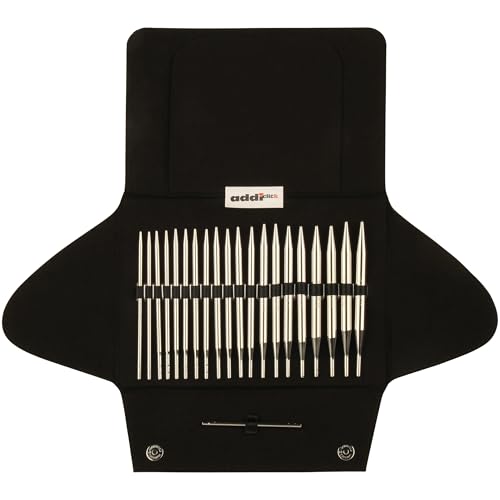
Addi Turbo needles are legendary for their ability to make yarn fly across the needle surface. They feature a nickel-plated finish that is exceptionally slick, making them the go-to choice for speed knitters who want to finish a sweater in record time.
The tips are slightly rounded, which is a massive advantage if you tend to split your yarn while working. If you are knitting with a multi-ply yarn that has a loose twist, these needles will help you maintain a clean stitch structure without piercing the fiber.
The primary tradeoff here is the lack of grip. If you are prone to dropping stitches or if you have very loose, relaxed tension, these needles might feel like they are working against you. They are best suited for knitters who have a steady, controlled hand.
HiyaHiya Sharp: Best for Intricate Lace Details
If your sweater pattern involves delicate lace inserts, bobbles, or complex increases, you need a needle that can get into tight spaces. HiyaHiya Sharp needles have a tapered, needle-like point that makes maneuvering through multiple loops effortless.

The stainless steel construction is polished to a mirror finish, providing a satisfying "click" as you work. The swivel cable design is a standout feature, as it prevents the cable from twisting and coiling while you knit in the round.
Because the tips are so sharp, they can be a bit aggressive on your fingertips during long sessions. If you are a knitter who pushes the needle tip with your index finger, you might find yourself needing a small silicone thimble or a bit of tape for comfort.
KnitPicks Options: Best Value Interchangeable Set
For the knitter who wants versatility without breaking the bank, the KnitPicks Options set is the industry standard for entry-level interchangeables. You get a wide range of needle sizes and cable lengths in one organized case, which is essential for sweater knitting.

Having an interchangeable set allows you to swap out needle tips mid-project if you realize your gauge is off, or to attach a longer cable to accommodate a growing sweater body. The joins are generally reliable, provided you use the included metal tightening key.
The main drawback is that these are not as "indestructible" as premium brands. The plating on the metal tips can eventually wear down after years of heavy use, and the cables are stiffer than those found on more expensive sets. Still, for the price, they are unbeatable.
Knitter’s Pride Karbonz: Best for Slippery Yarns
Knitter’s Pride Karbonz are a unique hybrid, featuring carbon fiber shafts with plated brass tips. This combination provides the strength and flexibility of carbon fiber with the smooth, precise tip of a metal needle.
These needles are a lifesaver when working with slippery fibers like bamboo, silk, or superwash wool. The matte finish of the carbon fiber provides just enough friction to keep your stitches from sliding off, while the brass tips ensure you can still pick up stitches easily.
They are also incredibly lightweight, which reduces hand fatigue during those marathon sweater-knitting sessions. If you struggle with sweaty hands or find metal needles too cold, the carbon fiber material will feel significantly more comfortable.
Clover Takumi Bamboo: Best for Sweater Beginners
Clover Takumi needles are the classic choice for a reason: they are affordable, widely available, and have a consistent, reliable feel. The bamboo surface provides a natural grip that is perfect for those who are still developing their tension control.
Since bamboo is a natural material, it is quiet and warm, making it a pleasant tool for learning the ropes of sweater construction. They are also very forgiving, as the wood helps prevent the yarn from slipping off the needle while you focus on your pattern.
However, they are not as durable as metal needles and can eventually develop a "burr" or rough spot if you knit tightly or use abrasive yarns. When you are ready to graduate to more advanced techniques, you may find that you prefer the speed of metal or the precision of sharper tips.
How to Choose Cable Lengths for Sweater Knitting
Choosing the right cable length is often more important than choosing the needle material itself. For a standard pullover, you generally need a shorter cable for the neckband (16 inches) and a longer cable for the body (32 or 40 inches).
If your cable is too long, you will spend your time constantly pulling the extra cord through your work, which slows down your rhythm. If the cable is too short, your stitches will be stretched too thin, which can distort your gauge and make the knitting process physically difficult.
A good rule of thumb is to choose a cable length that is slightly shorter than the circumference of your project. This ensures that the stitches sit comfortably on the cord without being overly compressed or falling off the ends.
Fixed vs. Interchangeable: Which Should You Buy?
Fixed circulars are often preferred by knitters who have a "go-to" needle size and style. Because there is no join to unscrew, they are inherently more secure and offer a seamless transition from cable to tip.
Interchangeable sets, on the other hand, are the ultimate investment for sweater knitters. They allow you to mix and match tips and cables to create the exact length needed for sleeves, bodies, and necklines, saving you from buying multiple fixed needles.
The tradeoff is the potential for the join to loosen over time. If you choose an interchangeable system, make it a habit to tighten your connections with the provided key every time you pick up your project to avoid the disaster of a needle tip unscrewing mid-row.
Essential Tips for Maintaining Your Needle Tips
Your needles are an investment that should last for years if cared for properly. After every sweater project, give your needles a quick wipe with a soft, dry cloth to remove any residual oils or lanolin from the yarn.
If you are using wooden needles, consider conditioning them occasionally with a tiny amount of beeswax or specialized wood balm to prevent them from drying out or splintering. For metal needles, keep them stored in a case rather than loose in a bag to prevent the tips from getting nicked or bent.
Finally, always check your joins before starting a new sweater. A small piece of grit or a stray fiber stuck in the threads of an interchangeable join can prevent a tight seal, leading to that dreaded moment when your needle pops off.
Finding your favorite needle is a personal journey that evolves as your skills and project preferences change. Don’t be afraid to experiment with different materials to see how they impact your gauge and comfort. Remember that the best needle is the one that makes you want to pick up your knitting again tomorrow. Happy sweater making, and may your joins always stay secure.