6 Best Portable Lamps For Detailed Work To Try
Need precise lighting for intricate tasks? Discover our top 6 portable lamps that offer superior clarity, adjustable brightness, and ergonomic design features.
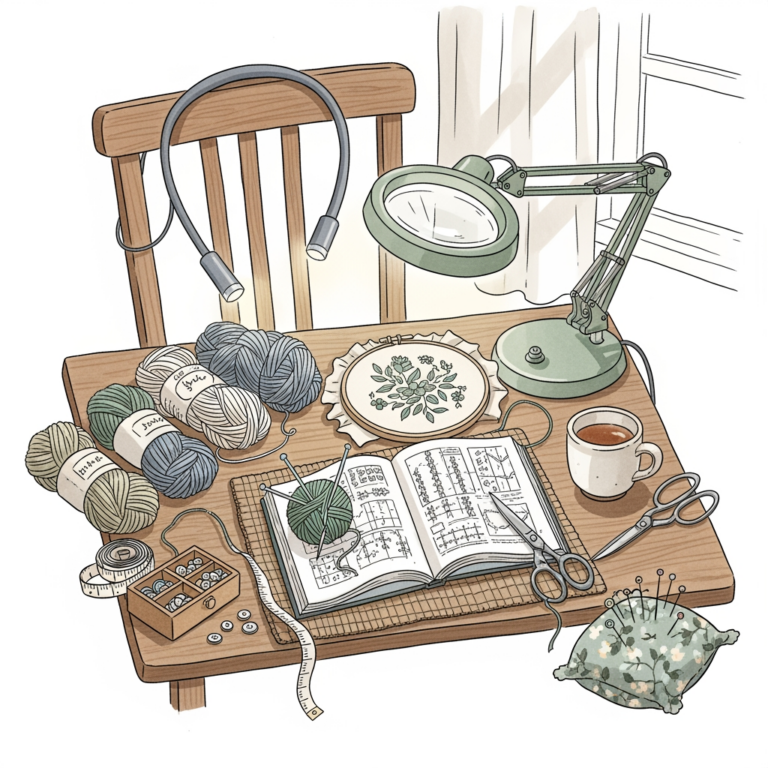
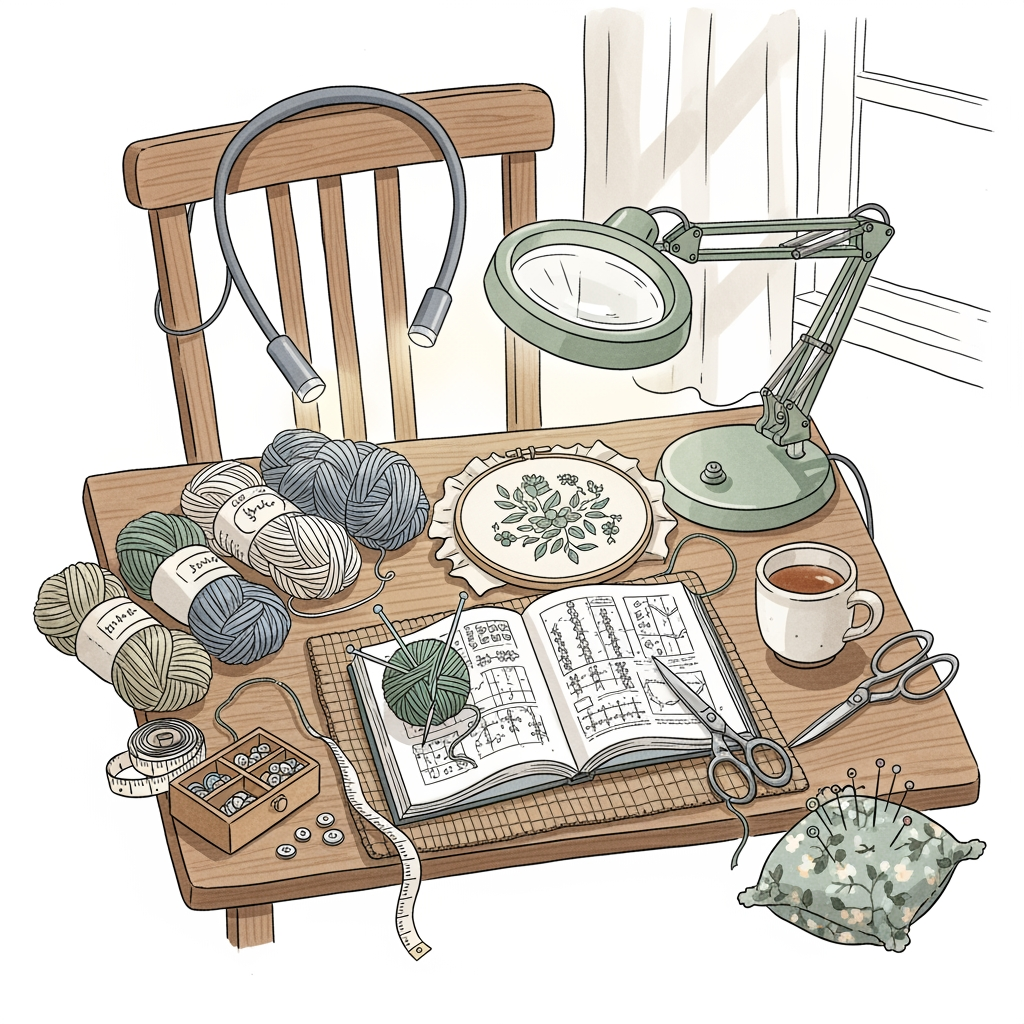
Finding the right light is just as critical to your knitting success as choosing the perfect needle material or fiber blend. When you are working with dark mohair or complex lace, poor illumination is the primary culprit behind dropped stitches and uneven tension. These portable lamps are designed to bridge the gap between your project and your eyes, ensuring every stitch is visible. Investing in a dedicated craft light will transform your late-night knitting sessions from a struggle into a pleasure.

Mighty Bright HammerHead: Best All-Around Light

The HammerHead is a staple in many knitting bags because of its incredible versatility and dual-head design. Its flexible neck allows you to direct light exactly where you need it, which is essential when you are working on intricate cables or complex charts.
For knitters who frequently travel to workshops or knit-alongs, the portability here is unmatched. It clips securely onto most surfaces, providing a stable, flicker-free light source that won’t distract you while you’re focusing on your pattern instructions.
The tradeoff, however, is that the battery life can be inconsistent if you are using it on the highest setting for long periods. Keep a spare set of batteries or a power bank handy if you tend to knit for hours on end.
OttLite 2-in-1 LED Floor Lamp: Best for Clarity

OttLite is famous for its "Natural Daylight" technology, which mimics the color spectrum of the sun. This is a game-changer when you are colorwork knitting, as it prevents the common headache of mistaking a navy blue for a black yarn.
This lamp is a true hybrid, converting easily from a floor lamp to a tabletop version. If you are working on a large blanket in your favorite armchair, the floor configuration provides the necessary height to illuminate your entire lap.
While this lamp is excellent for color accuracy, it is less "portable" than clip-on models. It is a better choice for your dedicated knitting nook rather than a light you’d toss in a project bag for a commute.
Daylight Company Halo Go: Best Portable Magnifier
If you struggle with fine-gauge work, such as knitting socks on 2.25mm needles, the Halo Go is your best friend. The integrated magnifier allows you to inspect your stitches closely without straining your eyes.
The build quality is substantial, yet it folds down into a surprisingly slim profile. It is perfect for those who want a professional-grade light that doesn’t permanently occupy their desk space.
One thing to note: the magnifying lens requires a specific focal distance to avoid distortion. You will need to adjust your posture slightly to find the "sweet spot" where your knitting looks crisp and clear.
Vekkia Rechargeable Neck Light: Best Wearable
The Vekkia neck light is a revelation for knitters who like to move around their home while working on a project. Because it sits directly on your shoulders, the light source moves with your head, keeping your hands completely free.
This is particularly useful for those who knit while sitting on the sofa or in low-light environments where a desk lamp might cast awkward shadows. The adjustable brightness levels allow you to dim the light when you are working with lighter-colored, reflective wools.
The main downside is that it can feel a bit heavy after three or four hours of continuous wear. Use it for shorter, focused sessions rather than full-day marathons to keep your neck comfortable.
Globe Electric Architect Lamp: Best Desk Option

The classic architect style remains a favorite for a reason: it offers unmatched reach and stability. If you have a dedicated workspace for weaving in ends or blocking finished swatches, this lamp provides a wide, even spread of light.
Its heavy base prevents tipping, which is a common frustration with lighter, plastic-based lamps. You can swing the arm over your project and lock it in place, knowing it won’t drift while you’re counting rows.
Because it is a corded model, you are tethered to an outlet. It is a stationary tool, not a travel companion, but it provides the most consistent, reliable illumination for long-term projects.
Brightech LightView Pro: Best Clamp-On Model
The clamp-on design of the LightView Pro is ideal for small apartments or crowded knitting spaces. It attaches firmly to the side of a table or a shelf, keeping your surface clear for your yarn bowls and pattern binders.
The magnifying glass paired with the LED ring light makes it perfect for fixing dropped stitches in delicate lace. It eliminates the shadows that often hide the "ladder" of a dropped stitch, making repairs much less stressful.
Be sure your table edge is sturdy before clamping this on, as the lamp is quite heavy. It is a professional-grade tool that rewards those who have a consistent place to set up their gear.
Key Features to Prioritize in Your Craft Lamp
When shopping for a lamp, don’t just look at the price tag; focus on the mechanics of the light. You want a lamp that offers flicker-free technology, as subtle flickering can cause eye fatigue even if you don’t consciously notice it.
Look for a high Color Rendering Index (CRI). A CRI of 90 or above ensures that the colors of your hand-dyed yarns appear exactly as they would in natural sunlight.
Finally, prioritize adjustability. Whether it is a gooseneck or a multi-jointed arm, the ability to direct light at a 45-degree angle to your needles will minimize glare and maximize visibility.
Understanding Color Temperature for Fiber Arts
Color temperature is measured in Kelvins (K), and it dictates the "warmth" or "coolness" of the light. For knitting, you generally want to aim for the 4000K to 5000K range, which is considered "cool white" or "daylight."
Avoid warm, yellow-toned bulbs (around 2700K), as they will distort the appearance of your yarn colors. Conversely, extremely blue light (above 6000K) can feel harsh and clinical, making your eyes work harder than necessary.
If you work with a variety of fibers—from shiny silk to matte cotton—a lamp with adjustable color temperature settings is a luxury worth the investment. It allows you to switch between a warmer glow for evening relaxation and a bright, crisp light for complex pattern reading.
Why Lumens Matter When Knitting With Dark Yarn
Lumens measure the total amount of visible light emitted by the bulb. When you are knitting with black, navy, or charcoal yarns, your eyes struggle to find the stitch definition because the yarn absorbs light rather than reflecting it.
A lamp with at least 500 to 800 lumens is recommended for dark-colored projects. This extra power helps highlight the texture of the yarn, making it easier to see the difference between the front and back loops.
Don’t be afraid to use more light than you think you need. High-lumen output combined with a proper diffuser will create a soft, bright pool of light that makes dark-yarn knitting feel almost as easy as working with white wool.
Essential Tips for Reducing Eye Strain While You Knit
Beyond good lighting, the "20-20-20 rule" is a knitter’s best friend: every 20 minutes, look at something 20 feet away for 20 seconds. This simple act prevents your eye muscles from locking into the "near-focus" position required for knitting.
Position your lamp so that the light hits your needles from the side, not directly in front of your face. This prevents glare, which is especially important if you use metal needles, as they can act like tiny mirrors and cause distracting reflections.
Lastly, consider your contrast. If you are having trouble seeing your work, try placing a light-colored towel or a piece of white cardstock on your lap. This creates a high-contrast background that makes your dark yarn pop, giving your eyes a much-needed break.
Investing in the right lighting is an act of care for your craft and your long-term health as a maker. By choosing a lamp that offers high color accuracy and adjustable positioning, you remove the physical barriers that make complex knitting feel like a chore. Remember that your eyes are your most valuable knitting tool, so treat them with the same attention you give to your favorite hand-dyed skein. May your stitches be even, your tension consistent, and your workspace always bright.