7 Best Display Stands For Craft Fairs To Boost Sales
Maximize your craft fair profits with these 7 display stands. Learn how to optimize your booth layout, attract more customers, and boost your overall sales today.
Preparing for your first craft fair is just as nerve-wracking as tackling a complex lace shawl for the first time. You’ve spent months perfecting your tension and blocking your pieces to perfection, but how you present them is what actually stops a shopper in their tracks. The right display stands do more than hold your inventory; they tell the story of your craft and protect your hard work from the chaos of a busy market floor. Here are the seven best display solutions to help your booth stand out and drive sales.
Adjustable Gridwall Panels for Versatile Displays


Gridwall panels are the workhorses of the fiber arts circuit. They offer a blank canvas that can be reconfigured depending on whether you are selling heavy wool sweaters or lightweight cotton market bags.
The beauty of these panels lies in their modularity. You can clip on hooks for hanging finished garments or attach small shelves for displaying yarn cakes and notions. Just remember that weight distribution is critical; if you overload one side with heavy aran-weight wool, the entire panel can become unstable.

When setting these up, always invest in heavy-duty floor bases. A gust of wind or a clumsy shopper can easily topple a flimsy grid, which is the last thing you want when your hand-knit items are on display.
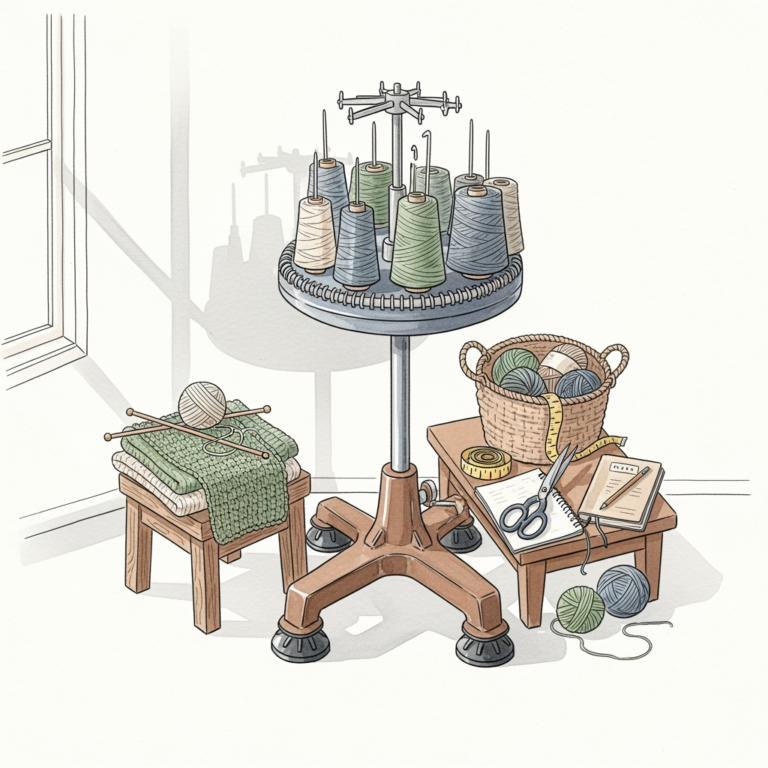
Rotating Wooden Pegboard for Small Accessories
If you specialize in small items like stitch markers, buttons, or delicate fingerless mitts, a rotating pegboard is a game changer. It maximizes vertical space while allowing customers to interact with your products from every angle.
The spinning mechanism encourages shoppers to linger, which statistically increases the likelihood of a purchase. I’ve found that using high-quality wooden pegs rather than plastic ones creates a more artisanal, cohesive look that aligns better with the tactile nature of fiber arts.
Be careful not to crowd the board, though. If your accessories are too close together, they lose their individual charm, and the board begins to look like a cluttered junk drawer rather than a curated collection.
Tiered Acrylic Risers for Height and Visibility

Acrylic risers are essential for creating visual depth on a flat table. By elevating your items, you prevent your booth from looking like a pile of fabric and instead transform it into a boutique-style showcase.
These are particularly useful for showcasing the intricate details of a swatch or the sheen of a luxury silk-blend yarn. Because they are transparent, they don’t distract from the colors and textures of your work, allowing the fiber to remain the star of the show.
However, keep in mind that acrylic can scratch easily. Always transport them in soft fabric bags or bubble wrap, as a scratched riser can make even the most exquisite hand-dyed yarn look cheap.
Collapsible Tabletop Easels for Scarves and Shawls

A shawl that is folded flat on a table loses 90% of its appeal. You need to show off that drape, the stitch definition, and the way the fabric moves, which is exactly why tabletop easels are a knitter’s best friend.
These allow you to drape your shawls vertically, letting customers see the full scale of the piece without having to unfold it themselves. It saves you the headache of constantly re-folding and re-blocking items that have been handled by dozens of people.
Choose easels with adjustable height settings to accommodate different sizes of lace shawls. If the easel is too small, your beautiful border work will just puddle on the table, hiding the very detail you spent hours perfecting.
Modular Wire Mesh Cubes for Bulk Item Storage

When you have a high volume of inventory—like dozens of identical hats or skeins of yarn—wire mesh cubes are incredibly efficient. They act as both display units and storage, keeping your stock organized and accessible.
I recommend using these for items that are less delicate, such as beanies or yarn balls. Because the wire is open, customers can see exactly what is inside without needing to dig through boxes, which keeps your booth looking tidy throughout the day.
The downside is that they can look a bit industrial. To soften the aesthetic, consider lining the bottoms with a piece of natural linen or felt to complement the organic feel of your fiber projects.
Sturdy Metal Hat Racks for Beanies and Berets

Beanies are notorious for losing their shape if they aren’t stored correctly. A metal hat rack provides the necessary structure to keep your headwear looking crisp and professional, even after being handled repeatedly.
Look for racks with rounded ends to avoid snagging your delicate yarn. If you are working with mohair or other fuzzy fibers, be extra cautious, as metal can occasionally catch on long fibers and cause pilling or unwanted pulls.
If you have the space, grouping hats by color or fiber content on these racks makes the shopping experience much more intuitive. It helps the customer find what they need quickly, which is essential when the booth is crowded.
Velvet Bust Displays for High-End Knitwear Pieces
If you have invested time in a high-end, luxury garment—perhaps a cashmere sweater or a complex cabled vest—it deserves a pedestal. Velvet bust displays provide a professional, high-end look that justifies a higher price point.
The velvet texture is gentle on delicate fibers and provides a non-slip surface that keeps your garments securely in place. It also provides a neutral, dark background that makes bright or variegated colorways really pop.
The trade-off is portability and cost. These busts are often bulky and can be fragile, so they aren’t ideal for every show, but for your "hero" pieces, they are an investment that pays off in perceived value.
How to Optimize Your Booth Layout for Foot Traffic
Your layout should guide the customer’s eye naturally from the front of the booth to the back. Start with your most eye-catching, high-impact pieces at eye level near the front to draw them in.
Avoid creating "dead ends" where a customer might feel trapped or blocked by another shopper. Keep your aisles wide enough for two people to pass, and ensure that your most popular items are spread out to prevent bottlenecks.
Think of your booth as a journey. Lead the customer from your large statement pieces toward your smaller, impulse-buy accessories located near the checkout area.
Essential Tips for Lighting Your Craft Fair Booth
Good lighting is the difference between a professional display and a dark, uninviting corner. Fiber arts are all about color and texture, both of which disappear in poor light.
Use warm-toned LED lights to mimic natural daylight, which is crucial for showing off the true color of your hand-dyed yarn. Avoid harsh, cool-toned lights, as they can make your work look sterile and synthetic.
Position your lights to highlight the texture of your stitches, not just the overall garment. Side-lighting is often better than front-lighting for revealing the depth of cables and lace.
Creating Visual Hierarchy to Attract More Customers
Visual hierarchy is about managing where the customer looks first. You want a clear "hero" item that grabs attention, followed by supporting pieces that flesh out your collection.
Use varying heights to move the eye up and down across your display. If everything is at the same level, the display becomes monotonous and the eye eventually stops scanning.
Don’t be afraid to leave some empty space. A cluttered booth is overwhelming, and it often makes customers walk away because they can’t focus on any one thing.
Investing in the right display stands is just as important as choosing the right yarn for your project. By focusing on height, accessibility, and proper lighting, you create an environment that honors your hard work and makes it easy for customers to fall in love with your pieces. Keep your booth organized, keep your fiber safe, and let your craftsmanship do the talking. Good luck at your next fair!