6 Best Modular Cubes For Yarn Wall Storage To Organize
Transform your craft room with our top 6 modular cubes for yarn wall storage. Discover the best organizational solutions to keep your collection tidy. Shop now!
A curated yarn collection is not just a hobbyist’s pride; it is a functional library where every skein represents a future project waiting to be cast on. When yarn stash grows beyond a few project bags, the search for organized, visible, and accessible storage becomes a rite of passage for every dedicated maker. Modular cube systems offer the best balance of flexibility and display, turning disorganized piles into a curated fiber wall. Selecting the right system ensures that delicate natural fibers stay in prime condition while providing the visual inspiration needed to fuel the next creative breakthrough.
IKEA KALLAX: The Gold Standard for Yarn Stash Walls


The KALLAX remains the undisputed heavyweight of yarn storage for good reason. Its thick-walled, modular design provides the structural integrity needed to support heavy loads of wool or cotton without bowing under the weight.
For the knitter with a massive inventory of worsted-weight Peruvian highland wool or bulky alpaca, the internal dimensions of these cubes are ideal. The square openings are perfectly sized to tuck in yarn cakes or neat hanks, allowing for a color-coordinated display that functions like a personal yarn store.
The tradeoff lies in the footprint; this system is heavy and essentially permanent once assembled. Avoid this if living in a space that requires frequent furniture rearranging, as the particleboard can weaken with repeated moves.
SONGMICS Cube Organizer: Best Budget-Friendly System

For those just beginning to transition from plastic bins to a display-ready wall, the SONGMICS system offers a lightweight, modular alternative. These organizers utilize a plastic panel and wire frame construction that is easy to assemble and customize to fit awkward corner spaces.
This system works exceptionally well for lighter yarn weights, such as lace or fingering weight sock yarns. Because the cubes are flexible, they can be configured into narrow columns or sprawling low-profile units, depending on the available wall space in a craft room.
Be aware that these are not designed for extreme weight. Do not stack heavy, undyed fleece or large quantities of heavy-ply cotton in the top tiers, as the connectors can sag over time if overloaded.
TomCare Wire Grid Organizer: Maximum Customization

Wire grids are the preferred choice for knitters who prioritize airflow and visibility above all else. The TomCare system allows for unique geometric configurations, such as tiered steps or irregular heights that accommodate both tall stash baskets and individual skeins.
Visibility is the primary benefit here, as the open wire grid prevents the “hidden stash” syndrome where yarn at the back of a solid cabinet is forgotten. This is particularly useful for identifying dye lots at a glance when planning a large-scale stranded colorwork sweater.
However, the open grid design does mean dust can settle on the yarn more easily. Only use this for projects intended to be used within a few months, or consider draping a light cloth over the unit to protect the fibers.
Way Basics Eco-Stack: Sustainable & Lightweight Pick
Constructed from zBoard recycled paperboard, the Way Basics system appeals to the eco-conscious knitter who wants to avoid plastics and heavy chemicals. These units are remarkably lightweight and feature a tool-free assembly process using 3M adhesive strips.
The modularity here is excellent, as individual units can be stacked vertically or horizontally with ease. Because the material is softer than pressed wood, it is less likely to snag delicate mohair or hand-dyed silk threads if the interior surfaces remain clean.
The primary limitation is moisture sensitivity. Since the material is paper-based, keep these units away from damp basements or laundry room walls where humidity levels can compromise the structural integrity of the boards.
Whitmor Wire Cubes: The Classic, Versatile Choice
Whitmor cubes have been a staple in craft rooms for decades due to their sheer utility and low cost of entry. These interlocking wire grids are modular enough to build a custom wall that reaches from floor to ceiling, maximizing every inch of vertical storage.
The grid spacing is tight enough that most yarn balls won’t slip through, yet the airflow remains constant. This is an excellent environment for natural fibers that need to “breathe,” such as raw wool or untreated sheep’s wool that might otherwise become musty in a closed container.
While utilitarian, they lack the aesthetic polish of a solid wood shelf. Pair them with fabric bins inside the cubes to hide unsightly notions or scraps, and reserve the open wire spaces for the beautiful, skeined yarn worth displaying.
IRIS USA Wood Organizer: For a More Finished Look
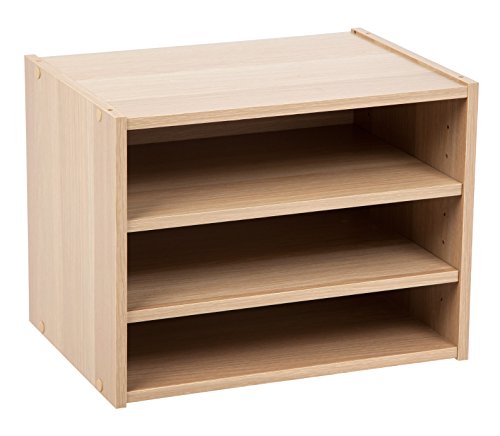
When the stash is displayed in a shared living space, the IRIS USA wood organizer provides a cleaner, more furniture-like appearance. These units offer the stability of solid wood with the modularity of a plastic cube, making them a step up in terms of both aesthetics and durability.
The smooth finish is ideal for protecting delicate fibers like cashmere or bamboo blends that can catch on rougher surfaces. These cubes are also easier to clean, as the finished wood surface wipes down quickly without the need for delicate dusting of wire grids.
The main drawback is the cost and lack of structural flexibility. Once the configuration is decided, it is less adaptable than a wire-grid system, so ensure the measurements fit the wall perfectly before committing to the layout.
How to Choose the Right Cube Size for Your Skeins
Choosing the right cube size requires assessing the “bulk” of the stash rather than just the number of skeins. A cube that holds thirty cakes of fingering-weight sock yarn might only hold five skeins of super-bulky roving or chunky yarn.
Consider the depth of the unit; deeper cubes are excellent for storing full sweaters’ worth of yarn in a single row, preventing the need to dig through piles. Shallow cubes are better for smaller, individual project skeins that need to be grabbed quickly for a spur-of-the-moment cast-on.
Always verify internal dimensions rather than exterior measurements, as the thickness of the shelf material can significantly reduce usable storage space. Aim for a depth of at least 12 to 14 inches to accommodate standard skein lengths without them protruding awkwardly into the room.
Wire Grid vs. Solid Cubes: Which Is Best For Yarn?
Wire grid systems are superior for circulation, as they prevent the stagnation of air that can sometimes occur in solid-walled cabinets. This is vital for untreated, organic, or heirloom fibers that require consistent airflow to prevent damage.
Solid cubes, by contrast, are better at shielding yarn from direct UV light. Overexposure to sunlight causes fading in hand-dyed yarns and can degrade the structural integrity of synthetic fibers over several years.
If the yarn wall is positioned near a window, solid cubes or fabric-backed inserts are mandatory to preserve the color accuracy of the stash. Use wire grids only in interior rooms away from harsh, direct daylight.
Tips for Anchoring Your Yarn Wall Safely to Drywall
A floor-to-ceiling yarn wall is heavy and represents a significant tipping hazard, especially in households with pets or children. Always use the included wall-mounting hardware to secure the top of the unit to the studs in the wall.
If studs are not accessible, use heavy-duty toggle bolts specifically rated for drywall weight capacity. Never rely on basic adhesive strips or simple plastic anchors for a unit holding more than twenty pounds of yarn.
Test the stability of the unit by gently rocking it before loading the fiber. Once the shelves are filled, check the anchors every six months to ensure that the weight of the yarn hasn’t caused the brackets to shift or pull away from the wall.
Protecting Your Stash From Dust, Moths, and Light
Storage is not just about containment; it is about preservation. Yarn, particularly protein-based fibers like wool, silk, and alpaca, is highly attractive to moths and carpet beetles.
- Cedar: Use blocks or rings of natural cedar in the cubes to deter pests.
- Sealing: For long-term storage of precious hand-spuns or luxury fibers, use breathable cotton bags rather than plastic, which can trap moisture and encourage mold.
- Dusting: If using open grids, use a microfiber cloth to wipe the shelves every month, as accumulated dust can settle into the fibers and become difficult to remove.
Ultimately, the best storage strategy is one that keeps the yarn visible. If a skein is tucked away in a dark, airtight bin, it is far more likely to be forgotten; if it is visible on a well-anchored, clean shelf, it is far more likely to be turned into a beautiful project.
A well-organized yarn wall is the hallmark of a knitter who respects their materials as much as their craft. By selecting a system that balances accessibility with protection, you ensure that every skein remains in peak condition, ready for the needles at a moment’s notice. Focus on stability, light control, and airflow, and the stash will remain a source of joy for years to come.