7 Best Stitch Transfer Needles For Ribbing Attachments
Upgrade your ribbing with our top 7 stitch transfer needles. Discover essential tools that ensure smooth, professional transitions for all your knit projects.
Transferring ribbing from a knitting machine or a holder to your needles is a delicate task that can make or break the finish of a garment. Whether you are picking up dropped stitches or transitioning from a ribbing attachment to a main needle bed, the right tool is essential for maintaining tension. These seven options represent the gold standard for precision, material integrity, and ease of use. Choosing the correct tool ensures your transition is seamless and your ribbing remains perfectly elastic.
ChiaoGoo Stainless Steel Stitch Holders: Best Choice
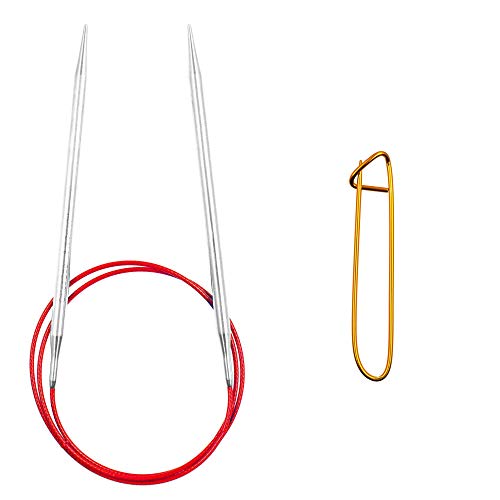

When you need a tool that won’t bend or snag, stainless steel is the professional’s gold standard. These holders offer a smooth, surgical-grade finish that allows stitches to slide off effortlessly without catching on microscopic burrs.
They are particularly effective when working with high-twist yarns or delicate fibers like silk or cashmere. Because they are rigid, they provide a stable "bridge" between your ribbing attachment and your knitting needles.
The tradeoff here is weight; they are heavier than plastic or aluminum alternatives. However, for most ribbing projects, this weight actually helps keep the fabric anchored while you work.
Knitter’s Pride Mindful Collection Transfer Needles

The Mindful Collection focuses on the tactile experience, offering a smooth finish that feels warm in the hand. These needles are designed specifically for those who find metal too cold or slippery during long sessions of picking up stitches.
The tips are precisely tapered, which is a massive advantage when inserting the needle into a tight, twisted rib stitch. You’ll find that the taper is aggressive enough to enter the stitch but rounded enough to prevent piercing the yarn ply.
If you struggle with hand fatigue, the ergonomic design of these needles is a significant benefit. They aren’t the cheapest option, but they are a long-term investment for your knitting kit.
Clover Double-Ended Stitch Holders: Best for Ribbing

Clover’s double-ended holders are a clever solution for ribbing because they allow you to work from either end without having to re-orient your stitches. This is vital when moving ribbing from a machine attachment where the orientation of the loops is fixed.
The locking mechanism is secure but easy to open, even if your hands are tired after a long day of knitting. They are lightweight, making them perfect for holding large sections of ribbing without pulling on the fabric.
Be aware that the plastic can sometimes develop a slight "tackiness" over time if exposed to hand oils. A quick wipe with a damp cloth usually restores their original slickness.
Addi Steel Stitch Holders: Premium Durability Pick

Addi is legendary for its manufacturing precision, and their steel holders are virtually indestructible. If you are working with heavy wool or large-gauge ribbing, these will not warp or snap under the tension of the yarn.
The surface is incredibly polished, which is ideal if you are working with sticky fibers like mohair or unspun wool. These fibers tend to grab onto plastic, but they glide beautifully over the high-polish steel of an Addi tool.
While they carry a higher price tag, the durability means you will likely never need to replace them. They are a "buy it once" tool for the serious knitter.
Susan Bates Plastic Transfer Needles: Best on Budget

Sometimes you don’t need high-end materials, just a tool that gets the job done reliably. Susan Bates plastic needles are ubiquitous for a reason: they are inexpensive, lightweight, and perfectly functional for most everyday projects.
The plastic is smooth enough for acrylics and standard wool blends. However, be cautious when using them with very fine, delicate yarns, as the seams in the plastic molding can occasionally snag a loose ply.
These are excellent to keep in your "emergency kit" for when you need to hold a few stitches while working on a complex ribbing pattern. They are the workhorse of the budget-conscious knitter.
Boye Aluminum Stitch Holders: The Reliable Classic

Aluminum is the middle ground between the rigidity of steel and the flexibility of plastic. Boye holders have been a staple in knitting bags for decades because they provide a nice, snappy feel that many knitters prefer.
The aluminum is anodized, which prevents it from reacting with the oils in your skin or the chemicals in your yarn. This makes them a great choice for long-term storage of stitches if you have to set a project aside for weeks at a time.
If they get bent, they can usually be straightened with minimal effort. They are a classic for a reason—they simply work, every single time.
CocoKnits Nylon Stitch Holders: Best for Flexibility
If you are working on a garment with a complex shape, rigid needles can actually get in the way. CocoKnits nylon holders are flexible cords that allow your ribbing to drape naturally while it waits to be finished.
This flexibility is a game-changer for avoiding "laddering" or distorted stitches, as the weight of the fabric is distributed evenly. You simply thread the cord through the stitches and tie it off, creating a soft, secure hold.
They are particularly useful for circular ribbing where a straight needle would be awkward. They aren’t meant for picking up stitches, but they are the best for holding them safely.
How to Pick the Right Size for Your Ribbing Project
The cardinal rule of selecting a transfer needle is to match the diameter to your working needle size. If the transfer needle is too large, it will stretch out the stitch, leading to a permanent gap in your ribbing.
- For fine lace or fingering weight: Use a 2.0mm to 2.5mm needle.
- For standard worsted weight: A 3.5mm to 4.5mm needle is usually sufficient.
- For bulky yarns: Always size down slightly to ensure the stitch stays snug.
If you are between sizes, always choose the smaller diameter. It is much easier to stretch a stitch slightly than it is to fix a loose, baggy ribbing section caused by a needle that was too thick.
Why Material Matters When Moving Delicate Stitches
The material of your tool dictates how much "grip" you have on the yarn. Slick materials like stainless steel or polished aluminum are best for high-friction yarns, such as those with a lot of halo or fuzz.
Conversely, if you are working with slippery materials like silk, rayon, or superwash wool, you might find that stainless steel is too fast. In those cases, a matte-finish plastic or wood needle can provide just enough resistance to keep the stitches from sliding off accidentally.
Always consider the "memory" of the yarn. Highly elastic wools will snap back into shape, but delicate fibers can be permanently deformed if they are held on a needle that is too large or too rough.
Expert Tips for Preventing Laddering in Ribbing
Laddering occurs when the transition between your ribbing attachment and your needles creates uneven tension. To avoid this, always ensure your transfer needle is inserted into the stitch at the same angle the stitch was created.
When you transfer the stitches back to your knitting needles, try to work the first row slowly. Don’t be afraid to use your fingers to gently "pat" the stitches into place, ensuring the tension is consistent across the entire row.
Finally, remember that blocking is your best friend. Even if your transition looks a little messy, a proper wet block will often even out the tension and make the ribbing look perfectly uniform.
Mastering the transition of ribbing is a skill that separates the hobbyist from the true craftsperson. By selecting the right material and size for your specific project, you ensure that your hard work remains professional and polished. Don’t be afraid to experiment with different tools, as the right match for your unique tension will make all the difference. Happy knitting, and may your stitches always be perfectly aligned.