6 Best Blocking Boards For Symmetrical Shapes Tested
We tested top blocking boards for symmetrical projects. Discover our top 6 picks for achieving perfect, uniform shapes and professional results every time.
Every knitter knows that the magic of a finished project truly happens during the blocking process. Whether you are coaxing a lace shawl into its final shape or squaring off a colorwork sweater, the right surface makes all the difference. After years of guiding makers through their finishing work, I have found that the quality of your blocking board dictates the precision of your final symmetry. Here are the top six blocking boards that deliver professional results every single time.
Knitter’s Pride Knit Blockers: Best Overall Pick


These aren’t your average pins; they are a game-changer for anyone who struggles with the "scalloping" effect on straight edges. By using a bar with multiple pins, you distribute tension across a wider area, which prevents that annoying wavy look you get with individual T-pins.
I recommend these specifically for heavy sweaters or dense wool projects where you need to exert significant force to open up the stitches. Because the plastic housing is sturdy, you can push them into the board with your palm, saving your thumbs from the sharp ends of traditional pins.
The tradeoff here is that they are rigid, so they don’t work well for tight, complex curves. However, for achieving perfectly straight seams and crisp corners, they are the gold standard.
Boye Foam Blocking Boards: Best Budget Option

If you are just starting your journey into blocking, you don’t need to break the bank to get professional results. These foam boards are lightweight, portable, and surprisingly resilient, making them perfect for knitters who don’t have a dedicated craft room.
The foam is dense enough to hold a pin firmly, but soft enough that you won’t feel like you’re fighting the material. They are ideal for smaller items like baby hats or swatches where you need to check your gauge before committing to a full-sized garment.
Be aware that these are not as thick as premium mats, so avoid using very long pins that might poke through to your table surface. They are a fantastic entry-level tool that will last for years if you treat them with care.
Exquiss Interlocking Mats: Best for Large Projects

When you are blocking a full-length adult sweater or a massive circular shawl, you need a surface that grows with the project. These interlocking tiles are the modular solution that every serious knitter eventually ends up buying.
The beauty of these mats lies in their ability to be configured into any shape, from long rectangles for scarves to large squares for blankets. The interlocking teeth are tight, ensuring that your project doesn’t snag or get caught in the seams between tiles.
They are quite thick, which is a massive advantage when using long blocking wires. You can pin deep into the side of the mat, creating a secure anchor point that won’t shift while your garment is drying.
Clover Blocking Mats: Best for Delicate Lace Work

Lace knitters understand that "opening up" the stitches is an art form that requires a gentle touch. These mats are specifically designed to be pin-friendly and highly receptive to the light tension required by fine mohair or silk blends.
The surface texture provides just enough grip to keep your lace from sliding around while you are trying to align your points. This is crucial when you are working with slippery fibers that tend to "spring back" if the tension isn’t perfectly distributed.
While they are a bit more expensive than basic foam, the durability of the material means the pin holes don’t widen as quickly. For those who spend weeks on a single heirloom project, this is a worthwhile investment in the longevity of your tools.
ArtBin Foam Blocking Tiles: Best Modular Solution
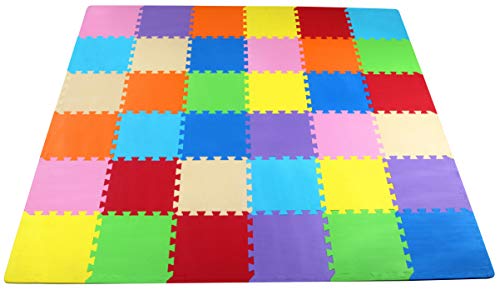
ArtBin has long been a staple in the craft world, and their blocking tiles are no exception to their reputation for utility. These tiles are particularly good for knitters who need to store their gear in small spaces between projects.
They are designed to be stackable and incredibly lightweight, so you can easily slide them under a bed or into a closet. The grid lines printed on the surface are a major plus for those who struggle with keeping their symmetrical shapes consistent across a large piece.
One thing to keep in mind is that the surface is slightly firmer than high-end mats. This is great for stability, but it means you will need to use a bit more force when inserting your pins.
KnitPicks Lace Blocking Mats: Best Grid Precision

If you are a perfectionist about symmetry, the printed grid on these mats will be your new best friend. It takes the guesswork out of measuring, allowing you to align your stitches to the exact millimeter.
These are particularly helpful for stranded colorwork, where maintaining the integrity of the pattern is just as important as the size of the garment. You can visually verify that your motifs are centered and that your edges are perfectly parallel without reaching for a measuring tape every five minutes.
The foam is high-density, meaning it resists wear and tear even after hundreds of blocking sessions. It is the perfect choice for the knitter who values data and precision as much as the craft itself.
Why Blocking Boards Are Essential for Symmetry
Blocking is not just about making a garment look pretty; it is about structural integrity. When you knit, your stitches are often cramped and uneven, but blocking allows the fibers to relax and bloom into their intended shape.
Without a dedicated board, you are often limited to pinning your work to a bed or a carpet, which rarely provides the flat, stable surface needed for true symmetry. A board ensures that your tension is uniform across the entire piece, which prevents the garment from twisting or pulling unevenly while worn.
Think of the board as the "frame" for your art. Just as a painting needs a frame to be displayed correctly, your knitting needs a board to reach its full potential.
How to Choose the Right Material for Your Needs
The choice of material often comes down to the types of yarn you use most frequently. If you work primarily with delicate natural fibers like alpaca or cashmere, you need a softer mat that won’t snag the fibers when you pin them down.
For those who use heavy, superwash wools that hold a lot of water, density is the priority. You need a board that won’t warp or become saturated with water, which could lead to color transfer or mildew issues.
- Foam/EVA: Great for general use, lightweight, and easy to store.
- Cork: Natural and firm, but can be brittle over time.
- Grid-printed Foam: Essential for beginners or those working with complex geometric patterns.
Essential Techniques for Perfect Edge Tensioning
The secret to a professional edge is all in the placement of your pins. Always start by pinning the corners first, then work your way toward the center of each side, which helps distribute the tension evenly.
If you are blocking a piece with a ribbing edge, be careful not to overstretch it. Ribbing is designed to have "spring," and if you block it flat to its maximum width, it will lose its elasticity and look baggy once you take the pins out.
Use blocking wires for long, straight edges. By threading a wire through the edge of your knitting, you can pull the entire side taut with just a few pins, resulting in a perfectly straight line that is impossible to achieve with pins alone.
Troubleshooting Common Blocking Board Problems
One of the most common issues is the "pin hole" fatigue, where your mat becomes so riddled with holes that it no longer holds pins securely. To mitigate this, try to rotate your project on the board so you aren’t always using the same center area.
If you find that your board is staining your light-colored wools, it is likely due to the dye in the foam. Always test a small, inconspicuous corner of the mat with a damp white cloth before laying down your expensive hand-dyed yarn.
Finally, if your board is warping, it is likely being exposed to too much heat or moisture. Keep your boards away from direct sunlight and radiators, and always allow them to air dry completely before stacking them for storage.
Investing in a quality blocking board is the final step in elevating your knitting from "homemade" to "handmade." By selecting a surface that matches your project’s needs, you ensure that your hard work is displayed to its absolute best advantage. Take the time to pin carefully, respect your fiber’s properties, and watch as your finished objects transform into the professional-quality pieces you envisioned. Happy knitting, and enjoy the satisfaction of a perfectly blocked project.