6 Best Levelers For Flat Assembly Surfaces To Consider
Achieve precision in every project with our top 6 picks for flat assembly surface levelers. Compare the best options and improve your workspace accuracy today.
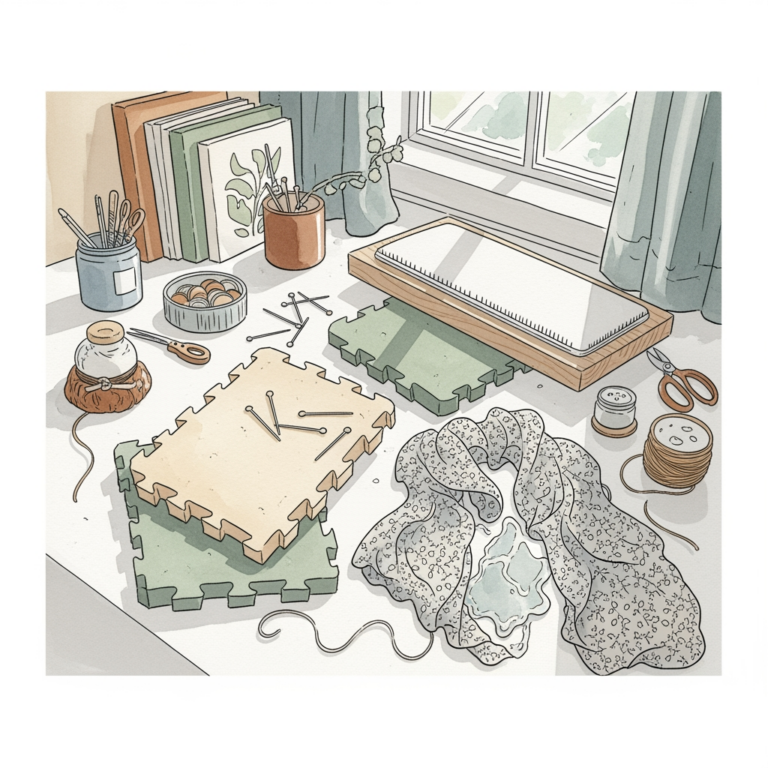
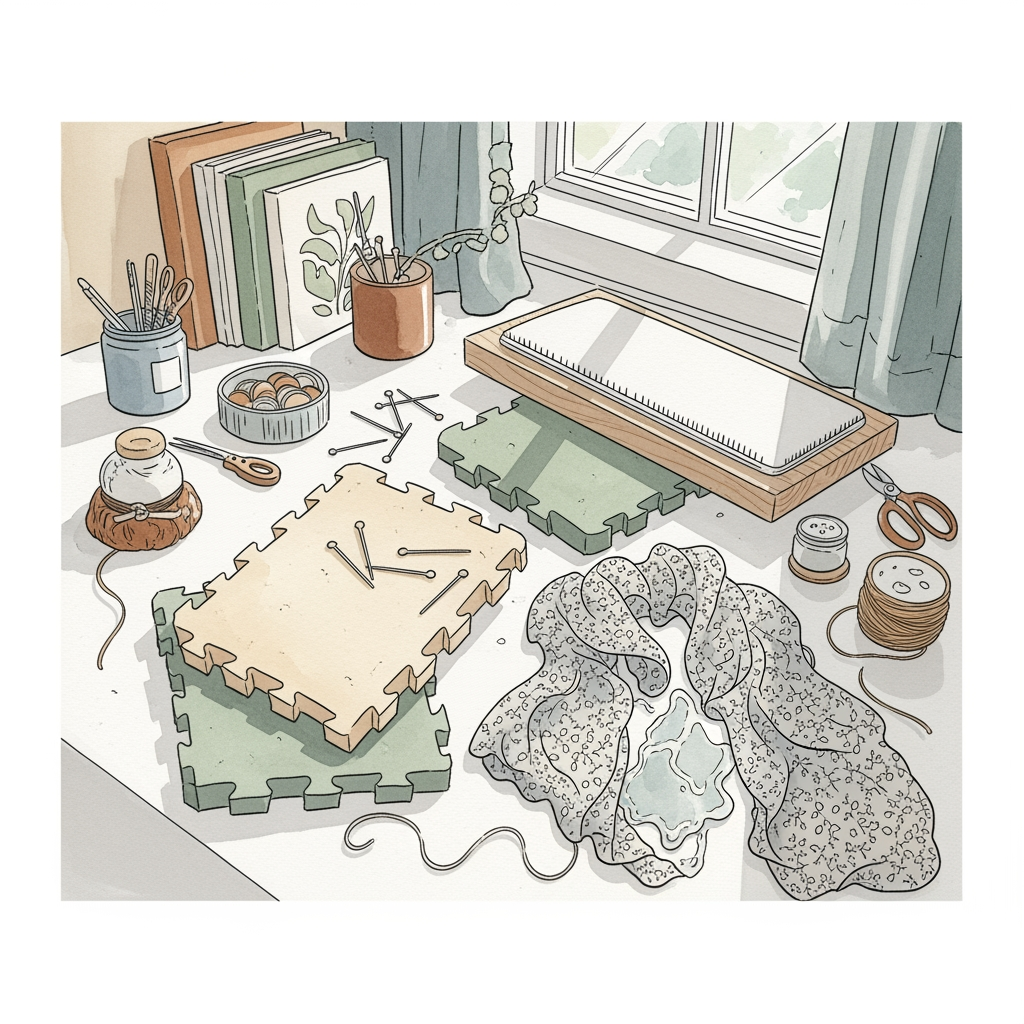
Blocking is the silent architect of every finished garment, transforming a slumped, uneven swatch into a professional-grade piece of knitwear. Achieving that crisp, structural result requires more than just water and pins; it demands a perfectly level surface that stays stable under the weight of damp wool. If a worktable lists even slightly to the left, lace motifs will stretch unevenly and seams will fail to align during assembly. Investing in proper levelers ensures that hours spent at the needles culminate in a finished project that reflects true craftsmanship.
Gorilla-Grip Levelers: Best for Heavy Worktables


Heavy-duty worktables are essential for blocking large-scale projects like heavy cabled sweaters or multi-panel afghans. Because these projects carry significant weight when wet, the table itself must remain absolutely static.
Gorilla-Grip levelers offer the high-load capacity needed to keep these massive surfaces from shifting. These screw-in metal adjusters handle significant weight without bowing or stripping their threads, which is vital when a table is loaded with heavy, saturated superwash wool or bulky cotton.
The primary tradeoff here is the installation requirement; these usually necessitate drilling into the table leg. However, the stability provided is unrivaled for anyone maintaining a permanent studio space.
Slip-Stop Wedges: Top Pick for Your Blocking Mats
When working on a portable setup—like a folding table or a dining room floor—the surface often feels less than ideal for delicate finishing. Blocking mats can migrate across slick surfaces, causing the entire assembly to shift mid-process.
Slip-Stop wedges are designed to counteract this horizontal sliding. By jamming these into the slight gaps between the mat and a wall or table edge, the entire blocking board becomes a static, immovable plane.
These are an excellent, low-profile choice for knitters who frequently clear their blocking area for daily tasks. They provide grip without needing to permanently alter the furniture.
Shepherd Hardware Glides: Most Versatile Option
Adjustable glides are a staple for furniture that needs to move occasionally but sit perfectly level during long blocking sessions. These screw-in feet provide a small but crucial range of vertical adjustment.
They are particularly effective for knitters dealing with older, uneven flooring where a standard table would inevitably rock. By dialing in each foot individually, you can create a dead-flat surface even on warped floorboards.
Note that while these offer great stability, they do not lock in place once set. If the table is bumped frequently, periodic re-leveling is a wise habit to ensure the surface remains precise.
Wobble-Wedges Shims: Best Budget-Friendly Fix
Sometimes the simplest solution is the most effective, especially when dealing with the minor inconsistencies of a home environment. Wobble-Wedges are stackable, interlocking plastic shims that tuck neatly under table or mat corners.
Their greatest strength lies in their ability to bridge gaps of varying sizes without the need for tools. If a table leg is short by a few millimeters, a single wedge provides an instant, stable foundation.
These are ideal for knitters who need a quick fix without committing to hardware installation. Keep a small bag of these in the knitting kit to solve leveling issues on the fly at retreats or workshops.
Tabletop Tec Base: Premium Self-Adjusting Choice
For the dedicated fiber artist who views the blocking surface as a critical tool, self-adjusting bases represent the premium tier of stability. These systems use tension-based mechanics to constantly maintain a level plane as weight is applied.
They remove the guesswork entirely, meaning you do not have to stop mid-block to readjust when you add more pieces to the board. This is a game-changer for those tackling complex, multi-piece garments where tension must be identical across every panel.
While the upfront cost is higher, the time saved in manual adjustments justifies the investment. They are the top choice for those who block items commercially or manage high-volume production.
Knit-Block Clips: Ideal for Interlocking Mat Setups

When working with modular interlocking foam mats, the biggest challenge is not the floor, but the surface integrity itself. These mats often bulge at the seams, creating a slightly uneven landscape that can distort delicate lace or intricate intarsia.
Knit-block clips force these mats into a unified, flat plane, ensuring the seams do not lift. This prevents the “bump” that often forms in the center of a blocking project, which can lead to uneven tension in the finished fabric.
Always ensure the mats are fully clicked into one another before applying the clips. This creates a solid, uniform field that treats even the most delicate lace with the respect it deserves.
How to Choose the Right Leveler for Your Surface
Selecting the right leveler depends entirely on the permanence of your blocking station and the weight of your fiber. For permanent, heavy-duty setups, opt for fixed, screw-in hardware like Gorilla-Grip or Shepherd Glides.
If you are a mobile knitter, prioritize portable solutions like shims or wedges. Consider the following criteria when making your selection:
- Weight Capacity: Are you blocking heavy wool sweaters or lightweight lace shawls?
- Surface Texture: Are your floors slick hardwood or carpeted?
- Portability: Does the setup need to disappear when not in use?
- Adjustability: Do you need to compensate for large gaps or just minor wobbles?
Why a Level Surface is Crucial for Proper Blocking
Blocking is the process of setting the stitches into their final, relaxed state. If the surface is tilted, gravity pulls the moisture and the fabric downward at an angle, causing the stitches to set in a distorted shape.
This is especially dangerous for garments featuring stranded colorwork or cables. If the background fabric is stretched differently than the cables, the resulting garment will look puckered or limp. A level surface ensures even tension distribution, leading to a professional finish that wears perfectly.
Tips for Installing and Adjusting Your New Levelers
When installing hardware, always use a reliable bubble level rather than relying on visual alignment. Place the level in the center of the table and adjust feet or shims until the bubble sits perfectly in the middle.
Check the level in both directions—horizontally and vertically—before beginning to pin your work. If you notice the table shifting during the process, do not hesitate to add extra shims. A few extra minutes of preparation here prevents hours of frustration with an misshapen garment later.
Shims vs. Wedges vs. Adjustable Feet: A Comparison
Shims are thin, flat plates designed to fill specific vertical gaps; they are best for slight, static adjustments. Wedges offer more dynamic, tapered adjustment, making them superior for filling uneven floor spaces on the move.
Adjustable feet, by contrast, are structural components that replace or augment existing table legs. They provide the most permanent and stable solution for heavy-duty work.
Choose adjustable feet for the primary studio worktable and keep shims or wedges on hand for secondary surfaces or travel needs. This layered approach ensures that every knitting project starts with a solid foundation.
Ultimately, the goal of blocking is to allow the fiber to breathe and settle into its permanent form. By choosing the right levelers for your workspace, you remove the hidden variables that cause distortion and uneven fabric. Whether you choose simple shims or advanced self-adjusting feet, the result is a finished project that stands the test of time and wear.