6 Best Acrylic Yarns For Practice Projects To Try
Mastering crochet or knitting starts with the right materials. Discover our top 6 acrylic yarn picks that offer affordability and ease for your next project.
Mastering the art of knitting requires hundreds of hours of repetitive motion, which makes choosing the right practice yarn a critical decision for your progress. High-quality acrylics offer a forgiving, consistent, and cost-effective way to build muscle memory without the stress of working with expensive natural fibers. By focusing on yarns with clear stitch definition, you can easily spot your mistakes and learn how to correct them in real-time. This guide highlights the best synthetic options to help you transition from a nervous novice to a confident maker.
Lion Brand Vanna’s Choice: Best All-Purpose Pick


Vanna’s Choice is a staple for a reason: it sits right in that "goldilocks" zone of weight and texture. It is a true worsted weight yarn that doesn’t split easily, making it perfect for those first few weeks when your needle control is still developing.
Because it has a slightly tighter twist than many budget acrylics, the yarn stays together even if you have to rip back your work multiple times. This is vital for beginners who are still learning to read their stitches.
If you find yourself constantly snagging your yarn with the tip of your needle, the smooth ply of this yarn will save you immense frustration. It is reliable, widely available, and behaves exactly the same way across different dye lots.
Red Heart Super Saver: Best Value for Beginners

There is a long-standing myth that Red Heart Super Saver is "scratchy," but that reputation ignores its incredible utility for learning. When you are practicing a complex cable or a new increase, you need a yarn that can withstand being pulled, tugged, and frogged (unraveled) dozens of times.
This yarn is practically indestructible. You can practice the same swatch for an entire week, and the fiber will show almost no signs of wear or pilling.
The trade-off is that it feels stiffer on the needles compared to premium blends. However, this rigidity actually helps you see the structure of your stitches more clearly, which is exactly what you need when you are first learning to identify a "knit" versus a "purl."
Caron Simply Soft: Best for Drape and Softness

If you want your practice projects to feel like something you might actually wear, Caron Simply Soft is your best bet. It has a high-sheen finish and a beautiful drape that feels much more luxurious than its price point suggests.
However, be warned: this yarn has a "slippery" quality and a looser ply. If you are a beginner who tends to knit loosely, you might find your stitches sliding off the needles more often than you would like.
It is an excellent choice for practicing lace or simple eyelet patterns. Because it is so soft, it forces you to develop a consistent, even tension to prevent the fabric from looking uneven.
Paintbox Yarns Simply DK: Best Color Selection

When you are practicing, you want to be excited about the colors you are using. Paintbox Yarns offers a massive spectrum of shades, allowing you to pick colors that make it easy to see your stitch definition.
Using a light-colored yarn is a pro tip for beginners because it allows you to see exactly where your needle is inserting into the loop. If you try to learn on black or navy blue yarn, you will be fighting your own eyes the entire time.
The DK weight is slightly thinner than a standard worsted, which is a great way to get comfortable with smaller needles. It is a fantastic bridge between bulky practice yarns and the finer weights you might eventually use for garments.
Stylecraft Special DK: Best for Colorwork Skills

Stylecraft Special DK is the gold standard for many knitters when it comes to learning colorwork. It is incredibly smooth, consistent, and comes in a vast array of colors that play well together in stranded knitting projects.
When you start knitting with two colors at once, tension is your biggest enemy. This yarn is consistent enough that it won’t add extra variables to your practice, letting you focus entirely on your "floats" (the strands of yarn carried across the back of the work).
It is also very affordable, which is essential when you are buying multiple balls of different colors. You can practice fair isle or intarsia without feeling like you are wasting expensive wool.
Patons Canadiana: Best for Durable Practice Items
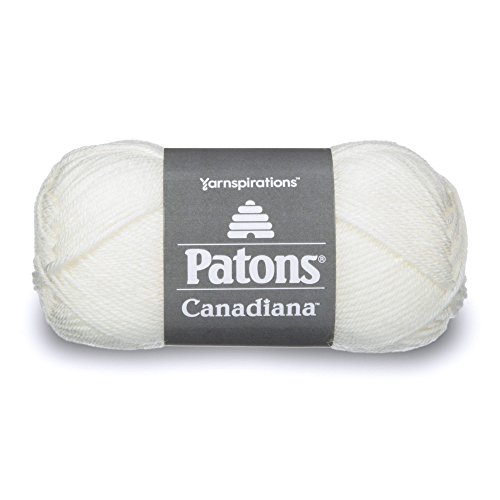
Patons Canadiana is a premium acrylic that feels surprisingly close to wool in terms of its "squish" and weight. It is a bit heavier and more substantial than many other acrylics, which makes it excellent for practicing items that need structure, like hats or cowls.
It has a very low pilling rate, meaning your practice swatches will look fresh even after being handled repeatedly. If you are a knitter who likes to keep your practice pieces to track your progress, this yarn holds up beautifully over time.
While it is slightly more expensive than basic big-box brands, the quality is reflected in the ease of knitting. It is a great "step up" yarn for when you want to move away from entry-level acrylics but aren’t quite ready for the maintenance of natural fibers.
Why Acrylic is Ideal for Learning New Techniques
Acrylic yarn is a synthetic fiber, usually derived from petroleum-based plastics, which gives it unique mechanical advantages for learners. Unlike wool or alpaca, which have "scales" that can grab and felt together, acrylic is smooth and consistent.
This lack of friction means that if you make a mistake, you can easily pull the yarn out without it becoming a tangled, fuzzy mess. It is the most forgiving material for the "learning curve" phase of your knitting journey.
Furthermore, acrylic is hypoallergenic and machine washable. You don’t have to worry about ruining your practice projects in the wash, which allows you to focus on the process of creation rather than the preservation of the final object.
How to Evaluate Yarn Texture for Stitch Clarity
When choosing a yarn for practice, look for a "plied" structure where the individual strands are twisted tightly together. A tightly plied yarn is much less likely to split, which is the most common source of frustration for new knitters.
Avoid "roving" style yarns or yarns with a halo (fuzziness) when you are first starting out. These textures make it nearly impossible to see the individual "V" shape of a knit stitch, which is essential for learning how to identify and fix dropped stitches.
- Smoothness: The yarn should glide through your fingers without catching.
- Ply: Look for at least 3-4 strands twisted together.
- Color: Choose bright, solid colors to maximize visual clarity.
Essential Tips for Managing Tension in Practice
Tension is the most elusive skill in knitting, and it comes down to how you hold your yarn and needles. If your fabric looks like a series of holes, you are likely knitting too loosely; if you can’t get your needle into the stitch, you are likely too tight.
- Consistent Grip: Keep your tensioning hand steady and close to the work.
- Needle Material: If you are a loose knitter, try bamboo needles for more grip; if you are a tight knitter, use metal needles to help the yarn slide.
- The Swatch Test: Always knit a 4×4 inch square to see how your tension behaves before starting a full project.
Best Practice Projects for Building Your Skills
Don’t feel pressured to knit a sweater right away. Start with projects that allow you to practice a single skill repeatedly, such as a garter stitch scarf or a simple dishcloth.
- Dishcloths: Perfect for learning increases and decreases in a small, low-stakes format.
- Headbands: Great for practicing cast-ons, bind-offs, and basic stitch patterns.
- Cowls: Excellent for learning to knit in the round without the complexity of shaping.
The journey of a thousand stitches begins with a single, well-chosen ball of yarn. By selecting a reliable acrylic that offers good stitch definition and consistent texture, you remove the unnecessary hurdles that often discourage new knitters. Remember that every "mistake" is actually a lesson in fiber behavior, so be patient with yourself as you build your muscle memory. Happy knitting, and enjoy the process of watching your hands turn a simple string into a beautiful, tangible fabric.