
6 Best Craft Glues For Yarn Ends For Secure Finishes
Secure your crochet and knitting projects with the best craft glues. Discover our top six picks for clean, durable, and fray-free yarn ends in this guide.
We have all spent hours on a complex project, only to reach the final bind-off and worry that those clipped yarn ends might eventually migrate or pop out. While traditional weaving-in methods are the gold standard, there are moments—like working with slippery silk or delicate lace—where a touch of adhesive provides essential insurance. Choosing the right glue is about balancing security with the tactile integrity of your fiber. This guide explores the best adhesives to ensure your hard work stays finished and secure for years to come.
Aleene’s Fabric Fusion: The Best Overall Choice
Aleene’s Fabric Fusion is a staple for a reason, acting as a permanent, flexible bond that doesn’t turn brittle once it cures. For a knitter, the primary concern is usually that a glue will create a hard "crust" that ruins the drape of a garment, but this formula stays surprisingly supple.
It is particularly effective for high-friction areas, such as the cuffs of a sweater or the heel of a sock. Because it is water-based and non-toxic, you don’t have to worry about harsh chemicals reacting with your natural fibers like wool or alpaca.
The trade-off is the drying time; it is not an instant fix and requires a few hours to fully set. If you are a knitter who likes to finish a project and wear it immediately, you will need a little patience here.
Dritz Fray Check: Best for Preventing Unraveling


If you are working with slippery synthetic yarns or silk blends, the ends have a nasty habit of wiggling out of your woven-in tails. Dritz Fray Check is essentially a liquid seam sealant that locks the fibers together at the very tip of the yarn.
It is incredibly thin, meaning it wicks into the ply of the yarn rather than sitting on top of it. This makes it invisible, which is perfect for delicate lace projects where any bulk would be immediately obvious to the eye.
Be warned: it is very potent and can slightly stiffen the immediate area if you are too heavy-handed. Use it sparingly, just a tiny drop on the final inch of your tail, to keep the structure intact without changing the hand-feel of your fabric.
E6000 Craft Adhesive: Best for Heavy-Duty Bonds
E6000 is the heavy hitter of the craft world, known for a bond that is nearly impossible to break. While it is overkill for a simple scarf, it is a lifesaver when you are attaching heavy embellishments or securing yarn ends in a structural, non-drapey item like a felted bag.
Because it is industrial-strength, it handles the tension of daily use better than almost anything else on this list. It remains flexible, which prevents the yarn from snapping at the point of the glue connection.
However, the smell is quite strong and it requires a well-ventilated space to use safely. It is best reserved for projects where the yarn is under significant physical stress and you need a permanent, "set it and forget it" solution.
Beacon Fabri-Tac: Best for Quick-Drying Finishes
Beacon Fabri-Tac is the favorite of many makers because it grabs almost instantly. If you are finishing a project and want to secure those ends and move on to blocking immediately, this is your best friend.
It is a solvent-based glue, which means it dries much faster than water-based alternatives. It is excellent for securing ends in stranded colorwork where you might have dozens of tails that need to be tucked and locked in rapid succession.
The only downside is that the glue can become stringy if you aren’t careful with the application. Keep a toothpick handy to wipe away any excess strands before they harden on your beautiful stitches.
Gorilla Super Glue Gel: Best for Precision Work
When you need to secure a tiny knot in a fine-gauge project, standard glues can be too messy. The gel consistency of Gorilla Super Glue is a game-changer because it stays exactly where you put it without soaking into the surrounding stitches.
The gel formula is much easier to control than liquid super glues, which tend to run everywhere. For a knitter, this means you can apply a microscopic dot to a knot, ensuring it stays tight without creating a noticeable hard spot.
Always remember that super glue is permanent and can be difficult to remove if you make a mistake. Use a precision applicator or a needle tip to place the glue only on the knot itself, avoiding the surrounding fabric fibers.
Loctite Ultra Gel Control: Best for Small Knots
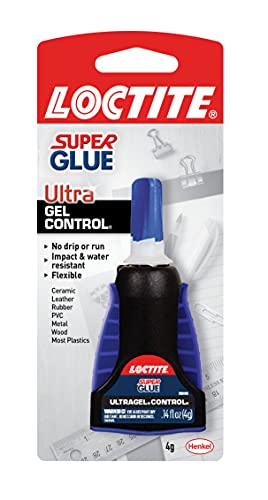
Loctite Ultra Gel Control features a unique side-squeeze bottle that makes it incredibly easy to dispense the perfect amount. If you are working on a project with a very tight gauge, like a pair of socks on 2.25mm needles, this is the most precise tool for the job.
The "Ultra" formula is designed to be shock-resistant, which is perfect for garments that undergo a lot of movement. It won’t crack or flake off, even when the fabric is stretched or pulled during wear.
It is the best choice for when you need to secure a knot that you’ve already woven in but still feel might slip. It locks the knot in place, providing a secondary layer of security that feels invisible to the touch.
Why Fiber Content Matters When Using Craft Glues
The type of yarn you are using dictates how well an adhesive will perform. Natural fibers like wool and cotton are porous and absorb glue well, creating a very strong mechanical bond.
Synthetic fibers, however, can be slick and non-porous, meaning the glue might just sit on the surface and peel off. Always consider these factors:
- Protein fibers (wool, alpaca): Excellent for gluing; the fibers grip the adhesive.
- Plant fibers (cotton, linen): Can be slippery; ensure the glue is fully worked into the ply.
- Synthetics (acrylic, nylon): May require a stronger, solvent-based glue to create a lasting bond.
Always test on a swatch if you are unsure how your specific yarn will react. The last thing you want is for the glue to discolor a delicate hand-dyed wool or melt a synthetic fiber.
How to Apply Glue Without Stiffening Your Fabric
The secret to using glue in knitting is to apply it to the yarn end before you bury it, or only to the knot, never to the fabric itself. If you saturate the fabric, you will inevitably create a stiff, uncomfortable patch that ruins the drape of your item.
Use a fine-tipped tool, like a tapestry needle or a toothpick, to apply the glue. Never squeeze the bottle directly onto the garment.
By focusing the glue only on the tail or the knot, you keep the rest of the fabric soft and pliable. The goal is to make the repair invisible, both to the eye and to the person wearing the garment.
Testing for Colorfastness Before Final Assembly
Before you apply any glue to a finished piece, you must test for colorfastness. Some adhesives contain solvents that can lift dye or cause bleeding, especially in dark, saturated colors or hand-dyed yarns.
Apply a small amount of the glue to a scrap piece of your yarn and let it dry completely. If the yarn changes color or the glue turns the fiber murky, do not use it on your main project.
This is especially critical for projects with high-contrast colorwork, where bleeding could ruin the entire aesthetic. A five-minute test can save you from a project-ending disaster.
Essential Tips for Hiding Ends Without Adhesives
While glue is a useful tool, it should never be a substitute for proper finishing techniques. The most secure way to hide ends is to weave them into the back of your work, following the path of the stitches (a technique known as "duplicate stitch").
If you are working with a yarn that is prone to splitting or unraveling, try these methods first:
- Split-ply splicing: For feltable wools, untwist the yarn, remove half the plies, and splice the ends together for a seamless join.
- The "Ladder" method: Weave your end horizontally through the back of the stitches, then vertically, creating a secure "L" shape that won’t pull out.
- Knots: A simple overhand knot is often enough if it is buried deep within the fabric and secured with a few extra inches of weaving.
Glue should be your final line of defense, not your first. By mastering the art of weaving in your ends, you ensure that your knitting remains as durable and beautiful as the day it came off the needles.
There is no shame in using a little extra help to ensure your knitting project stands the test of time. Whether you choose a flexible fabric glue or a precision gel, the key is to apply it sparingly and with intention. Remember that your weaving-in technique is the foundation, and these adhesives are simply the final, secure polish. Happy knitting, and may your ends stay tucked away for a lifetime of wear.

