6 Best Tape Measures For Taking Custom Garment Measurements
Finding the right tool is key for precision. We review the 6 best tape measures for custom garments, focusing on durability, flexibility, and measurement ease.
Achieving the perfect fit in knitwear begins long before you cast on your first stitch; it starts with precise body measurements. A reliable tape measure is the most fundamental tool in your kit, ensuring your hard work results in a garment you’ll actually wear. Whether you are drafting a custom sweater or checking your gauge swatches, the right tool makes all the difference. Here are the best tape measures to help you master your craft.
Dritz Ezy-Lock Tape: Best Overall for Accuracy


The Dritz Ezy-Lock is a staple in many sewing baskets for a reason: it stays exactly where you put it. The locking mechanism is a game-changer when you are trying to measure your own bust or waist without the tape slipping or retracting mid-measurement.
Accuracy is non-negotiable when you are calculating ease for a garment. If your tape shifts even a quarter-inch, your finished sweater might end up with too much positive ease, leaving it baggy in all the wrong places.
The material is sturdy enough to resist stretching over time, which is a common issue with cheaper vinyl tapes. If you find your measurements are fluctuating, check your tape against a metal ruler; if it has stretched, it’s time for a replacement.
Hemline Retractable Tape: Best for Travel Kits
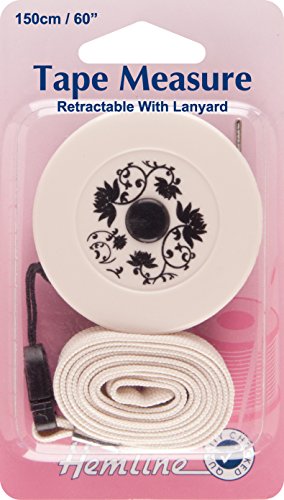
If you like to knit on the go, the Hemline Retractable tape is your best companion. It is compact, lightweight, and tucks easily into a notions pouch alongside your stitch markers and tapestry needles.
The primary benefit here is protection. By retracting the tape into its housing, you prevent it from getting tangled in your yarn or snagged on the sharp tips of your circular needles.
However, remember that retractable mechanisms can occasionally jam or lose tension. Always double-check that the tape is fully retracted before tossing it into your project bag to keep the edges crisp and readable.
Singer Professional Tape: Best Durable Option

The Singer Professional tape is built to withstand years of heavy use in a busy studio. It feels thicker and more substantial in the hand, which helps it lay flat against the body without curling or twisting.
Durability matters when you are constantly measuring different fiber blends that might have varying degrees of drape. Because this tape is less prone to kinking, you get a consistent measurement every time you wrap it around your shoulders or hips.
It is a slightly heavier tool, so it might not be your first choice for a minimalist travel bag. But for a dedicated home knitting station, its reliability is unmatched.
Clover Tailor’s Tape: Best for Precision Work

Clover is renowned for its ergonomic design, and their tailor’s tape is no exception. It is exceptionally soft and pliable, which allows it to contour perfectly to the curves of the body.
When you are measuring for a fitted garment, you need a tape that doesn’t fight against you. This tape hugs the body, ensuring you aren’t accidentally adding extra inches by holding the tape too loosely.
It is perfect for measuring complex areas like the armscye or the nape of the neck. Because it is so flexible, it provides the most accurate reading for those tricky, rounded measurements.
Wescott Flexible Rule: Best for Flat Measuring

Sometimes, you need to measure a flat gauge swatch or a finished garment piece on a table rather than a human body. The Wescott Flexible Rule excels here because it combines the stability of a ruler with the flexibility of a tape.
It is ideal for verifying the dimensions of your blocked swatches. Since it doesn’t stretch like vinyl, you can trust that your swatch measurements are truly reflective of your tension.
It is not meant for wrapping around the body, as it lacks the drape of a traditional tailor’s tape. Keep it on your blocking board for quick, reliable checks of your work.
Stanley 12-Foot PowerLock: Best for Long Spans

While most knitters reach for soft tapes, a rigid metal tape like the Stanley PowerLock is essential for measuring large-scale projects like blankets or oversized afghans. Trying to measure a six-foot-long throw with a sixty-inch soft tape is a recipe for error.
The rigidity allows you to measure across a flat surface without the tape bunching up in the fabric. It is a specialized tool, but it is indispensable when you are working on home decor items.
Be careful not to let the metal edge snag your yarn. Always measure your finished, blocked piece on a hard surface to avoid catching any delicate fibers.
Why Accurate Measurements Matter for Knitwear
Knitting is a mathematical craft, and your body is the foundation of the pattern. If you measure incorrectly, your gauge swatch won’t translate into a garment that fits your unique silhouette.
Most patterns are written with a certain amount of "ease"—the difference between your actual body measurement and the finished garment size. If your base measurement is off by an inch, that calculated ease becomes meaningless.
Always measure yourself wearing the type of undergarments you intend to wear under the finished sweater. A bulky sweater worn over a thin camisole requires different ease considerations than one worn over a thick blouse.
Soft vs. Rigid Tapes: Choosing the Right Tool
Soft, vinyl, or fiberglass tapes are designed to wrap around three-dimensional objects like arms, waists, and necks. Their flexibility allows them to follow the natural contours of the body without compressing the skin or fabric.
Rigid tapes, like metal carpenter’s rules, are for two-dimensional surfaces. They are excellent for blocking measurements or checking the length of a flat-knit panel before seaming.
Never use a rigid tape to measure your bust or waist, as it cannot capture the true circumference accurately. Conversely, don’t rely on a soft tape to measure a long, flat hem, as it can stretch and give you a false reading.
Essential Body Points for Custom Garment Fits
To get a custom fit, focus on these three critical points:
- The Bust/Chest: Measure at the fullest part, keeping the tape level across the back.
- The Waist: Measure at your natural waistline, usually the narrowest point of your torso.
- The Upper Arm: Measure the circumference of your bicep to ensure your sleeves won’t be too tight or too loose.
These points provide the structure for your sweater’s shaping. If you are knitting a top-down raglan, knowing your exact neck-to-underarm depth is also vital for placing your increases correctly.
How to Maintain Your Tape for Consistent Results
Treat your tape measure as a precision instrument. Avoid leaving it in direct sunlight or extreme heat, which can cause the material to warp or the markings to fade over time.
Periodically check your tape against a standard metal ruler to ensure it hasn’t stretched. If you notice the first inch is worn or the tape has become wavy, discard it and invest in a new one.
Keep your tape clean by wiping it down with a damp cloth if it gets dusty. A clean, accurate tape is the secret to a professional-looking finish on every project you create.
Investing in a high-quality tape measure is one of the most cost-effective ways to improve the quality of your hand-knits. By choosing the right tool for the specific task—whether it’s measuring your own frame or checking a finished swatch—you eliminate guesswork and build confidence in your process. Remember that the best tool is the one that provides consistent, repeatable results every time you reach for it. Happy knitting, and may all your future projects fit perfectly.