6 Best Clear Sheet Protectors For Pattern Preservation
Protect your designs with our top 6 best clear sheet protectors for pattern preservation. Explore our expert reviews and find the perfect fit for your craft today.
Knitting patterns are far more than mere instruction sheets; they are the architectural blueprints for every sweater, sock, and shawl created. Over months of work, these pages inevitably face the hazards of coffee spills, stray yarn fibers, and the constant friction of being tucked into project bags. Protecting these documents is the single most effective way to ensure a complex chart remains legible from the first cast-on to the final weave-in. Investing in high-quality sheet protectors preserves the integrity of notes, modifications, and intricate stitch diagrams for years of repeat projects.
Avery Heavyweight Sheet Protectors: Best Overall


Avery Heavyweight protectors represent the gold standard for most knitting applications due to their balance of flexibility and structural integrity. They handle repeated flipping in a binder without the holes tearing away from the rings, which is essential when following a long-term garment project.
The thickness provides enough rigidity to keep a pattern from drooping if displayed on a music stand or a pattern holder. Because they are acid-free, they won’t yellow or degrade the paper over time, ensuring that heirloom lace patterns remain in pristine condition.
They offer a clear finish that makes reading small, dense charts—like those found in stranded colorwork or complex cables—entirely painless. Choose these if the priority is reliability and a long shelf life for your pattern collection.
Samsill Super Heavyweight Protectors: Most Durable

When a project stays in a knitting bag for months, the patterns inside are subjected to significant pressure and potential folding. Samsill Super Heavyweight protectors are engineered for this kind of rigorous, real-world wear.
These protectors are noticeably thicker than standard options, providing a stiff backing that prevents pages from creasing. Even if a heavy ball of wool or a set of metal needles presses against the binder, these sheets hold their shape exceptionally well.
The reinforced edge strip is the standout feature here, as it resists the common issue of binders snapping the holes of the protector. For knitters who keep massive, multi-page project folders, the added durability of these sheets makes them the superior choice.
C-Line Cleer Super Heavyweight: Best for Binders
C-Line Cleer protectors feature a unique, non-glare yet highly transparent surface that minimizes eye strain during late-night knitting sessions. The weight of the material is substantial, preventing the “flimsy” feel often associated with cheaper alternatives.
The primary advantage of this product is how cleanly it sits within a standard ring binder. The holes are punched with high precision, ensuring that the pages turn smoothly without snagging on the metal rings.
This is critical when jumping between a lace chart and a written row-by-row instruction set. If the workspace is cluttered with needles, notions, and yarn, these protectors keep the pattern flat and readable regardless of the lighting conditions.
StoreSMART Vinyl Protectors: Best for Portability
Vinyl protectors from StoreSMART are the ideal solution for the knitter who frequently takes projects to coffee shops, guild meetings, or on travel. Unlike brittle polypropylene, vinyl offers a distinct pliability that survives being tossed into a tote bag without cracking.
The texture is slightly softer, which helps in environments where you might need to quickly fold a binder back to save space on a small table. They are exceptionally clear, allowing for high-contrast visibility when checking stitch counts on complex colorwork motifs.
Be aware that because they are vinyl, they are slightly heavier than plastic alternatives. However, for those who prioritize the ability to fold, flex, and transport a pattern without worrying about damage, this is the premier option.
UniKeep 100% Polypropylene Case: Best Archival
For patterns that are true family heirlooms or irreplaceable out-of-print designs, UniKeep offers the safest storage environment available. These are not merely sleeves, but fully enclosed pages that prevent moisture and dust from creeping in at the edges.
Polypropylene is chemically inert, meaning it won’t react with the ink on your printed patterns or the paper itself. This is vital if you are printing your own pattern notes or annotating charts with pencils and highlighters, as the ink won’t transfer to the sleeve.
While they are a more significant investment, they offer peace of mind that cannot be matched by open-topped sleeves. They are the professional-grade choice for anyone serious about building a long-term, archival-quality pattern library.
Amazon Basics Sheet Protectors: Best Budget Pick
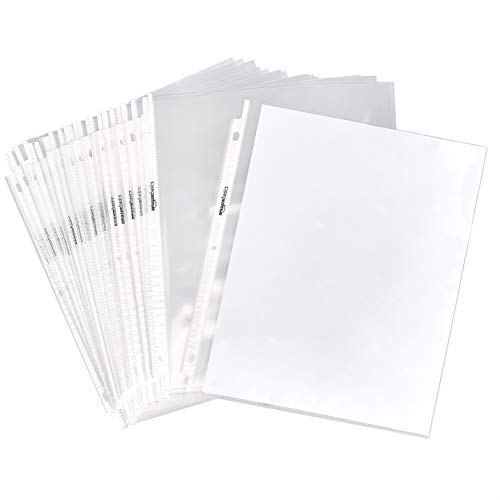
The Amazon Basics line provides a serviceable, cost-effective solution for knitters who print patterns for every project and move them around frequently. While they lack the extreme heavy-duty feel of premium brands, they are more than adequate for basic scarf or simple hat patterns.
They are thin and lightweight, which keeps the overall weight of a project binder down. If you tend to print new patterns for every single project and rarely reuse them, paying for heavy-duty archival sleeves may be unnecessary.
They are prone to glare under bright lamp light, which can sometimes make reading fine-gauge stitch symbols difficult. Use these for straightforward patterns where you do not need to constantly reference the page for fine detail.
Why Every Knitter Needs to Protect Their Patterns
Patterns are the foundation of every finished object, yet they are often left exposed to the rigors of the knitting process. Over the course of a project, a pattern sheet travels from the living room to the car, the park, and everywhere in between, accumulating dust and oils.
A protected pattern is an annotated pattern. Keeping a chart inside a clear sleeve allows for the use of dry-erase markers or grease pencils directly on the plastic, enabling you to track your progress row-by-row without marking the original document.
When you protect your patterns, you are also protecting your future self. Projects often get “hibernated”—set aside for weeks or months—and a pristine, protected pattern ensures that when you pick up your needles again, the instructions are exactly as you left them.
How We Tested Our Top Sheet Protector Picks
To evaluate these protectors, each was tested against the specific environmental stressors common in the knitting world. The testing involved repeatedly turning pages in a ring binder to check for hole-punch failure and edge fraying.
Clarity was assessed under various light sources, including direct sunlight and harsh LED task lighting, to determine which sleeves caused the most distracting reflections. We also evaluated how the sleeves fared when subjected to the weight of typical knitting gear, such as circular needles and heavy yarn cakes.
Finally, each sleeve was checked for archival safety to ensure that no ink transfer occurred between printed charts and the plastic surface. This approach ensures that every recommendation is based on the functional reality of a busy knitting desk.
Glossy vs. Matte: Which Finish Is Best for You?
The finish of a sheet protector significantly impacts the knitting experience, particularly when working with small charts. Glossy finishes offer the highest level of clarity and vibrancy, making them excellent for colorwork patterns where distinguishing between shades is vital.
However, glossy sleeves are notorious for catching overhead light, which can create bright spots that obscure your place in a complex lace repeat. Matte or “non-glare” finishes diffuse that light, making it much easier to read for extended periods.
If you work with very fine-gauge needles and dense charts, the slight softening effect of a matte finish might actually make it harder to see tiny stitch symbols. The best approach is to select a finish based on your primary project type and your specific lighting setup.
Beyond Binders: Creative Pattern Storage Ideas
Binders are the most common storage solution, but they are not the only way to keep your patterns safe. Magnetic boards used in conjunction with magnetic strips are excellent for holding patterns upright, allowing you to move a highlighter strip down the page as you progress.
Some knitters prefer using large, clear document wallets that can hold both the pattern and the swatches associated with that project. This keeps all relevant information—including gauge notes and fiber swatches—in one centralized location.
If space is limited, consider a dedicated accordion file folder with labeled tabs for different types of patterns, such as socks, sweaters, or accessories. Whatever system you choose, ensure the materials are acid-free to prevent the long-term deterioration of your pattern collection.
Proper organization of your pattern library ensures that your time remains focused on the craft rather than searching for lost pages. By selecting the right protector for your specific needs, you safeguard your progress and ensure your creative process remains as organized as your stitches.