6 Best Pattern Keepers For Desk Knitting To Try
Struggling to track your rows? Discover our top 6 desk knitting pattern keepers that streamline your projects, reduce errors, and keep your workspace tidy.
We have all been there: squinting at a complex lace chart while trying to keep track of our place with a stray sticky note. A dedicated pattern keeper is the difference between a meditative knitting session and a frustrating afternoon of frogging mistakes. By elevating your chart to eye level, you reduce neck strain and maintain your rhythm. These six tools offer unique ways to keep your focus where it belongs—on your stitches.
KnitIQ Magnetic Pattern Holder: Best Overall Pick


The KnitIQ system is the gold standard for those who regularly work with large-format lace or stranded colorwork charts. Its sturdy, foldable board provides a stable surface that stays put on your desk, while the high-strength magnets ensure your place-marker doesn’t budge, even if you bump the table.
The beauty of this system lies in its versatility. You can use it flat or angled, which is a lifesaver for maintaining proper posture during long sessions of complex cabling. The magnets are strong enough to hold heavy cardstock or multiple pages, making it ideal for patterns with several supplemental charts.
If you are a knitter who likes to highlight rows as you go, you can place a clear plastic sheet over the chart and use dry-erase markers. It is a robust, reliable tool that bridges the gap between home-studio organization and portable utility.
Cocoknits Maker’s Keep: Best Wearable Solution
Sometimes the best desk organization is the kind that moves with you. The Maker’s Keep is essentially a magnetic slap bracelet that keeps your needles, stitch markers, and, crucially, your magnetic chart-tracking strips within arm’s reach.
While it isn’t a traditional "stand," it functions as a dynamic anchor for your pattern tracking. If you are working on a project with a repetitive motif, having your magnet right on your wrist prevents that frantic "where did I put my place-keeper?" moment.
It is particularly useful for knitters who find themselves moving between the desk and the sofa. By keeping your magnetic markers attached to your wrist, you ensure that your progress tracking is never separated from your hands.
Della Q Pattern Clutch: Best for Travel Knitting
Della Q is renowned for their high-quality canvas and leather goods, and their pattern clutch is no exception. It functions like a sophisticated folio that protects your printed patterns from the inevitable wear and tear of a project bag.
This is the perfect choice for the knitter who treats their patterns like precious documents. The interior is designed to hold your chart flat, preventing those annoying creases that can make symbols hard to read.
When you arrive at your knitting group or coffee shop, you simply unfold the clutch, and it acts as a self-contained workspace. It offers a professional, polished aesthetic for knitters who want their tools to be as beautiful as their finished garments.
Loome Pattern Stand: Best for Desktop Stability
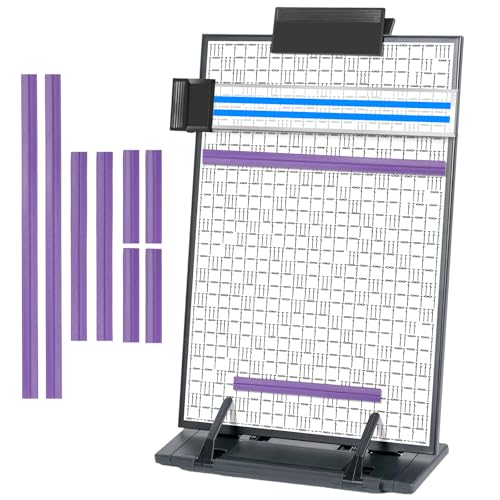
If you suffer from "knit-neck"—the tension that builds up from looking down at your lap for hours—the Loome stand is your best friend. It elevates your pattern to eye level, allowing you to keep your head in a neutral, healthy position.
The stability of this stand is its greatest asset. It is weighted perfectly to handle thick pattern booklets without tipping over, which is a common failure point for cheaper, lightweight stands.
This is an essential investment for anyone tackling long-term projects like heirloom-quality blankets or intricate sweaters. By bringing the chart up to your line of sight, you reduce the physical fatigue that often leads to dropped stitches or missed chart symbols.
Thread & Maple Pattern Folio: Best Luxury Option
The Thread & Maple folio is an exquisite piece of craftsmanship that feels like an heirloom tool. It uses a clever magnetic system to hold your pattern pages, and the leather finish is designed to age beautifully alongside your projects.
Beyond the aesthetics, the functionality is top-tier. It includes various pockets for your notions, effectively turning your pattern holder into a centralized command center for your current project.
While it is a significant investment, it is an excellent choice for the dedicated maker who values tactile quality. If you find joy in the "ritual" of knitting, using a tool that feels this luxurious makes the process of following a complex pattern feel like a special event.
Mindful Collection Pattern Keeper: Best Budget Buy

The Mindful Collection keeper is a testament to the idea that you don’t need to break the bank to get organized. It offers a clean, functional design that does exactly what it promises: it holds your pattern securely and keeps your place with a simple magnetic strip.
It is lightweight and slim, making it easy to slide into a project bag or stow away in a desk drawer when not in use. For the knitter who is just starting to experiment with chart-based patterns, this is the perfect entry point.
Don’t let the lower price point fool you; the construction is durable enough to withstand daily use. It is a no-nonsense tool that prioritizes utility over bells and whistles.
Essential Features to Look for in Pattern Keepers
When shopping for a pattern keeper, prioritize magnet strength and adjustability. A weak magnet will slide down the page the moment you shift your project, causing you to lose your spot on a tricky row.
Consider these factors before you buy:
- Size: Will it fit the largest chart you typically use?
- Portability: Does it need to fold down to fit in a bag?
- Surface: Is it non-slip so it won’t slide across your desk?
- Material: Do you prefer the durability of metal or the warmth of wood/leather?
Remember that your pattern keeper should adapt to your knitting habits, not the other way around. If you prefer to knit standing up or at a high drafting table, look for a stand with a wider range of tilt angles.
Magnetic vs. Clip Systems: Which Works for You?
Magnetic systems are generally superior for complex charts because they allow you to move the magnet horizontally or vertically without removing the chart from the board. They are ideal for row-by-row tracking in lace or cables.
Clip systems, conversely, are better for heavy booklets or patterns that require multiple pages to be visible at once. They offer a more permanent hold, which is great if you are working from a thick printed book that you don’t want to disassemble.
Ultimately, magnetic systems offer more precision, while clips offer more capacity. If you work primarily with single-sheet charts, go magnetic; if you prefer working from books, look for a system with robust clips.
Why Desk Organization Improves Your Stitch Count
A cluttered workspace is a recipe for errors, especially when working with high-twist wool or slippery silk blends. When your pattern is clearly displayed and your notions are within reach, you spend less time searching for your tools and more time in the "flow state."
Organization reduces the cognitive load of knitting. When you aren’t fighting to keep your pattern flat or searching for a cable needle, your brain is free to focus on the nuances of your tension and the structure of your stitches.
Consistent organization also helps you spot mistakes earlier. When your chart is right in front of you, you are more likely to notice a misplaced yarn-over or a skipped cable crossing before you’ve knit three inches past the error.
Tips for Managing Complex Lace and Cable Charts
When tackling complex charts, use a "Highlight and Track" method. Use your magnetic strip to mark the row you are currently working on, and use a highlighter (or a digital overlay) to mark special symbols like increases or decreases.
- Break it down: If a chart is massive, use sticky notes to cover the sections you aren’t working on yet.
- Count as you go: Use stitch markers to denote pattern repeats so you don’t have to count the entire row every time.
- Read your knitting: Don’t just follow the chart; look at the stitches on your needles to verify that the pattern is forming correctly.
If you are working with dark-colored yarn, ensure your pattern holder is well-lit. Poor lighting is the number one cause of missed stitches in dark, low-contrast projects.
Investing in a pattern keeper is an investment in your own knitting longevity and accuracy. Whether you choose a high-end leather folio or a simple magnetic board, the goal is to create a workspace that supports your craft. Once you stop fighting with your pattern, you will find that your knitting becomes faster, more accurate, and infinitely more enjoyable. Happy knitting, and may your rows always stay perfectly on track.