6 Best Bleed-Proof Markers For Concept Sketches
Elevate your concept sketches with our top 6 picks for the best bleed-proof markers. Discover the perfect smudge-free tools for your creative workflow today.
Visualizing a complex stranded colorwork sweater before picking up the needles requires a reliable way to map out design motifs. Bleed-proof markers are essential for keeping technical sketches clean, preventing ink from migrating across fine grid lines or blurring intricate color charts. These tools ensure that every stitch in the planning phase translates accurately to the needles. Selecting the right set helps maintain clarity, whether mapping out geometric cables or testing a new fair isle palette.
Copic Sketch Markers: The Professional’s Choice


Copic Sketch markers are the gold standard for designers who demand precise, repeatable color results. Their alcohol-based ink flows smoothly, allowing for seamless blending that mimics the tonal shifts seen in variegated hand-dyed yarns.
These markers feature a replaceable nib system, ensuring that heavy daily use does not render the tool obsolete. When drafting a multi-colored shawl, the ability to switch between a chisel tip for broad color blocking and a fine brush tip for individual stitch motifs is invaluable.
Because they are refillable, they represent a long-term investment for the serious designer. While the initial price point is high, the longevity of the markers often offsets the cost for those who sketch daily.
Prismacolor Premier Markers: Top Value for Artists
Prismacolor markers provide an excellent balance between professional-grade pigment intensity and affordability. They are a reliable choice for knitters who want to experiment with color theory without committing to a premium-priced professional system.
The dual-tip design offers a broad nib for filling in solid areas and a fine tip for outlining lace patterns or chart borders. The ink formula is highly pigmented, which makes it easy to visualize how different yarn weights will look once knitted up.
These markers tend to be very saturated, so work quickly to avoid over-saturating the paper. For those who frequently sketch large swatches, this brand offers consistent color payoff at a fraction of the cost of other high-end options.
Faber-Castell Pitt Pens: The Ultimate Ink Marker
Faber-Castell Pitt Pens utilize India ink, which is both waterproof and archival. This makes them ideal for technical sketches that need to remain vibrant and clear for years, such as custom-drafted sweater schematics.
Unlike alcohol markers, these pens do not bleed through most high-quality sketchbooks. They are perfect for drawing crisp, clean outlines of cable layouts where precision is vital for counting stitch repeats correctly.
The variety of tip sizes available allows for extreme detail, such as drawing small symbols for increases or decreases. They provide a structural clarity that ensures the knitter never loses their place in a complex pattern layout.
Tombow Dual Brush Pens: Best Water-Based Option
Tombow Dual Brush Pens are highly favored for their water-based, blendable ink. They act much like a watercolor paint, which is useful when mimicking the soft, ethereal look of hand-spun wool or mohair blends.
Because they are water-based, they do not suffer from the harsh chemical scent of alcohol markers. This makes them more pleasant to use during long design sessions at the craft table.
Note that because the ink is water-based, it can be reactivated if moisture touches the page. Use these primarily for design mapping rather than for sketches that might be exposed to the elements or high humidity.
Ohuhu Alcohol Markers: Best Budget-Friendly Pick
Ohuhu markers have gained a strong reputation for offering a professional feel at an entry-level price. They are ideal for knitters just starting to document their own designs or for those who need a large color palette for stranded colorwork testing.
The flow of ink is steady, and the blending capabilities are surprisingly robust for the price. They are excellent for filling in larger areas of color on a schematic without leaving unsightly streaks or blotchy patches.
The primary tradeoff is that these markers can be quite juicy, so they require a heavier weight paper to prevent ghosting. They are the perfect choice for testing out a new, bold color palette for a sweater project without breaking the bank.
Sakura Pigma Micron: Best for Bleed-Proof Lines
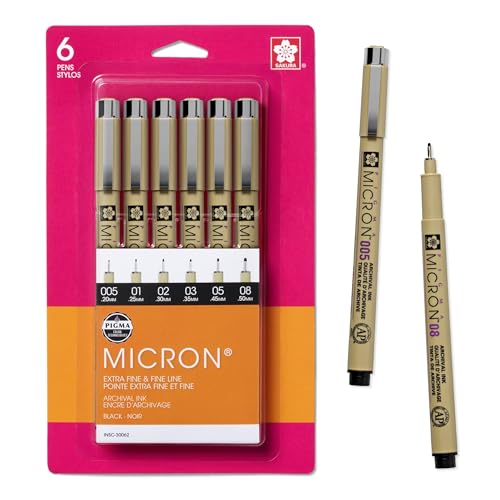
Sakura Pigma Micron pens are the industry standard for technical line work. When charting out a lace project where every single yarn-over and decrease must be represented with absolute clarity, these pens are indispensable.
They offer a permanent, bleed-proof line that will not smear, even if overlaid with lighter coloring markers. Their consistent line width prevents the ink from “bleeding” into the fibers of the paper, keeping the chart sharp.
They come in an impressive range of nib sizes, from ultra-fine 003 to thicker 08 tips. Use the finest tips for grid-based charting and the thicker tips for annotating pattern instructions or construction notes.
How to Choose the Right Marker for Your Sketch
Choosing a marker depends entirely on the specific stage of the knitting process. If the goal is technical charting, prioritize fine-line pens like the Sakura Pigma Micron to ensure grid accuracy.
For those visualizing color dominance in a stranded colorwork project, look for markers with high saturation and blending capabilities. Alcohol-based markers are superior for these aesthetic tasks as they allow for smooth transitions between colors.
Always consider the weight of the paper in the sketchbook. Finer, lighter papers may require water-based markers, while heavier, bleed-proof sketchbooks are designed to handle the heavy saturation of alcohol-based pens.
Alcohol vs. Water-Based: Which Marker Is Best?
Alcohol markers are the go-to for designers who need to blend colors to mimic the interplay of different yarn plies. They dry quickly and are permanent, making them ideal for long-term project planning.
Water-based markers are more forgiving and often produce a softer, more artistic finish. They are perfect for conceptual sketching where the knitter wants to explore ideas without worrying about harsh, unblendable lines.
The bottom line is that alcohol markers provide structural stability and blending power, while water-based markers provide ease of use and a fluid, painterly aesthetic. Most designers eventually maintain a mix of both in their toolkit.
The Best Paper for Bleed-Proof Marker Art
Paper quality is just as important as the marker itself when preventing bleed-through. Standard copy paper will almost always fail, causing ink to spread and ruin the underlying pages.
Look specifically for “marker paper” or “heavyweight sketchbook” stock. These are coated to keep the ink sitting on the surface, which allows for better blending and cleaner lines when working on delicate patterns.
If the goal is to keep a design journal for years, opt for acid-free, archival-quality paper. This ensures that the ink does not fade or yellow, keeping the design legible long after the project is cast off.
Tips for Sketching Your Next Knitting Project
When sketching designs, always start by drawing the garment silhouette to scale. Use a light pencil first, then trace over it with your bleed-proof pens to finalize the structural lines.
Include annotations about yarn properties, such as twist, fiber content, and gauge, directly on the sketch. Linking a visual representation of the cable or lace motif to its specific needle size and yarn weight creates a much more useful reference for future projects.
Finally, keep a test swatch card clipped into the back of your sketchbook. Testing your markers on the exact paper you use for your designs prevents unpleasant surprises and ensures that your layout remains professional and clear.
Investing in high-quality markers and understanding how they interact with different papers will transform the way design concepts are realized on the needles. With the right tools, any knitter can turn a fleeting idea into a precise, actionable project plan.