6 Best Fixative Sheets For Graphite Protection
Protect your drawings from smudging and fading with our top picks. Read our expert review of the 6 best fixative sheets for graphite protection and shop today.
Graphite marks are essential tools for marking sewing lines, embroidery patterns, or stitch counts directly onto fabric or patterns. However, graphite is notoriously unstable and prone to smearing, which can ruin hours of careful work. Protecting these markings requires specific fixatives or sheets that stabilize the medium without altering the fabric’s hand or drape. Selecting the right protector ensures that your carefully calculated stitch patterns remain clear from the initial draft to the final bind-off.
Pellon Vinyl Fuse: Best Iron-On Fabric Protector


Pellon Vinyl Fuse provides a permanent, waterproof coating that effectively locks graphite markings into place. Because it is iron-on, it bonds directly to the fabric, making it ideal for marking templates that will be handled repeatedly during complex colorwork or quilting projects.
This material creates a stiff, laminated surface that is completely smudge-proof. While this added rigidity is perfect for durable pattern pieces, it will significantly alter the drape of soft fibers like silk or fine merino. Consider using this only for structured items or non-wearable crafting templates.
The key takeaway is that durability comes at the cost of flexibility. Reserve this for heavy-duty projects where you need a permanent, smear-proof guide that can withstand constant friction.
Grafix Dura-Lar Film: Best For Tracing & Overlay
Grafix Dura-Lar is a translucent, archival-grade polyester film that excels when used as a protective overlay for delicate pattern drafting. Instead of applying a substance to the fabric, this film sits atop your graphite work, acting as a clear, physical shield.
This film is particularly useful when sketching intricate lace charts or complex cable maps that need to be referenced while working. Because it does not require adhesive, it won’t leave sticky residue on your needles or yarn. It can be easily repositioned, making it the most versatile option for drafting on the fly.
Use this when you want to protect a design without changing the nature of the underlying substrate. It is the cleanest choice for those who are protective of their fabric’s texture and composition.
Krylon Workable Fixatif: Top Spray-On Solution
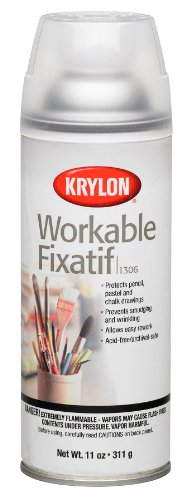
Krylon Workable Fixatif functions as a fine mist that creates a microscopic, invisible barrier over graphite. Unlike physical sheets, this spray maintains the original tactile feel of the fabric, which is crucial if you are marking stitches on a piece that will eventually be worn against the skin.
This product is “workable,” meaning you can continue to add graphite markings on top of the fixed layer without the pencil skipping. For projects involving extensive custom shaping or intricate pattern adjustments, this allows for a fluid, iterative design process.
Be mindful that aerosol applications require good ventilation and even coverage to avoid spotting. Always test on a scrap of the same fiber before applying it to your actual project to ensure the spray doesn’t cause bleeding or discoloration.
Con-Tact Clear Matte Film: Best Budget-Friendly Pick
Con-Tact Clear Matte Film is essentially a shelf liner, but its adhesive properties make it an incredibly effective, low-cost way to seal graphite on paper templates or heavy-duty fabric swatches. The matte finish is superior to glossy options because it minimizes glare, making it easier to read fine stitch details under bright task lighting.
The adhesive is strong, so use it carefully on delicate weaves to avoid pulling fibers when removing the film. It is best suited for reinforcing patterns that you intend to reuse for multiple garments.
If you are working on a high-volume production of the same pattern, this budget-friendly pick offers the necessary protection without the premium price of archival-grade materials.
Lineco Archival Polyester: Best for Art Preservation
Lineco Archival Polyester, often referred to as Mylar, is the gold standard for preserving graphite work over long durations. It is completely inert, meaning it will not react with the graphite or the fibers beneath it, ensuring that your markings do not yellow or fade over years of storage.
This is the professional choice for heirloom projects or patterns that need to be archived for future generations. Because it is transparent and non-adhesive, it protects the graphite through static cling or physical enclosure rather than chemical bonding.
Invest in this material when the longevity of your design draft is just as important as the final garment. It is the safest option for long-term storage of hand-drafted schematics.
C-Line Self-Adhesive Sheets: Easiest to Apply
C-Line self-adhesive sheets provide a protective, clear layer that applies like a sticker. These are ideal for the knitter who values speed and convenience over archival-grade chemistry. They are perfect for quickly sealing graphite marks on rigid cardboard templates or stiff fabric stabilizers.
The biggest challenge with these sheets is the alignment, as they are not easily repositioned once they touch the fabric. Use a credit card or a quilting ruler to smooth them down slowly to ensure a professional, secure seal.
These sheets are perfect for high-touch environments where your templates face constant movement. They are the simplest solution for those who prefer “apply and go” tools over complex sprays or iron-on processes.
Choosing Your Finish: Matte vs. Glossy Protector
The choice between matte and glossy protectors is primarily a matter of visibility under your specific lighting conditions. A matte finish scatters light, which is essential if you work in a room with overhead lights that tend to reflect off glossy surfaces, making it hard to see your markings.
Glossy finishes, however, can sometimes provide better clarity and a slightly more “sealed” look for paper templates. If you are using these sheets on fabric that will be manipulated frequently, glossy films often show scratches and wear more prominently than their matte counterparts.
Match the finish to your workspace environment and the frequency of use. Matte is almost always the more practical choice for detailed fiber arts tasks that require long periods of focus.
How to Apply Protective Sheets Without Air Bubbles
Air bubbles are the primary enemy of smooth, readable markings. To avoid them, start by peeling back only a small portion of the adhesive backing, anchoring that edge to the fabric or paper first. Use a firm, flat edge like a knitting needle case or a smooth ruler to press the sheet down gradually.
Work in slow, sweeping motions from the center outward to push trapped air toward the edges. If a small bubble persists, a tiny pinprick can release the air, which you can then smooth down with your thumb.
Taking the time to apply the sheet methodically prevents the visual clutter of air pockets. A smooth application is not just about aesthetics; it ensures that your graphite lines remain perfectly aligned with your intended stitch paths.
Spray vs. Sheet: Which Graphite Protector is for You?
The decision between sprays and sheets depends on whether you need to preserve the fabric’s movement or provide a structural template. Sprays are the only viable option if you need to mark directly on the finished garment, as they keep the material flexible and soft.
Sheets, conversely, are superior for creating templates, guides, or stiffened pieces that won’t be worn. If you prioritize the integrity of the fabric’s drape, reach for a spray fixative. If you prioritize the longevity of a design template, choose a physical sheet.
Evaluate the end-use of the project before finalizing your purchase. The tradeoff between physical texture and structural protection is the defining factor in which tool will serve your process best.
Protecting Graphite Markings on Fabric for Sewing
When using graphite to mark darts, pleats, or seam lines on fabric, the goal is to stabilize the mark until the sewing or stitching is complete. Since knitting involves stretching and manipulation, any graphite marking must be well-secured to prevent the gray residue from migrating into your yarn.
Fixing the mark with a spray fixative is generally safer for fabrics that will be manipulated. If you are using a template made of fabric, an iron-on sheet like Pellon Vinyl Fuse will ensure your guide lines stay put even as the fabric passes through the sewing machine or is handled during high-tension knitting.
Always ensure the graphite is fully dry and set before proceeding with any wet-blocking. Proper stabilization is the secret to maintaining clean, professional results throughout the life of your fiber arts project.
Choosing the right protective method transforms graphite from a messy drafting material into a reliable, long-lasting guide for your most complex work. By matching your choice of fixative or sheet to the specific needs of your fabric and project, you safeguard your time and effort against the inevitable wear of the crafting process. With these tools in your kit, every line you draw remains as precise as the first stitch of your next masterpiece.