
6 Best Ribber Combs For Tension Control Experts Use
Master tension control with our top 6 ribber combs. Learn how these essential knitting tools ensure professional, uniform stitch quality for every project.
Achieving professional-grade ribbing on a knitting machine is less about luck and more about the weight and consistency of your ribber comb. These metal tools act as the anchor for your stitches, providing the necessary downward tension to prevent dropped needles and uneven loops. Whether you are working on a standard gauge Brother or a vintage Passap, selecting the right comb is the first step toward a flawless edge. Here are the six best ribber combs that experts rely on to maintain perfect tension control.
Brother KR-830 Standard Gauge Ribber Comb
The Brother KR-830 comb is a workhorse in the machine knitting world, prized for its balanced weight and reliable grip. It is designed specifically for standard 4.5mm machines, making it a go-to for knitters producing garments with fingering or sock-weight yarns.
Because this comb has a moderate weight, it provides enough downward pull to keep stitches seated without distorting the fabric. If you are working with a slippery superwash wool, this comb helps maintain the tension required to prevent the yarn from "popping" out of the needles during the carriage pass.

The main takeaway here is consistency; the KR-830 is predictable and durable. If you are a production knitter, this is a reliable tool that rarely needs replacement unless the wires become bent or kinked.
Silver Reed Ribbing Attachment Comb SRP60N
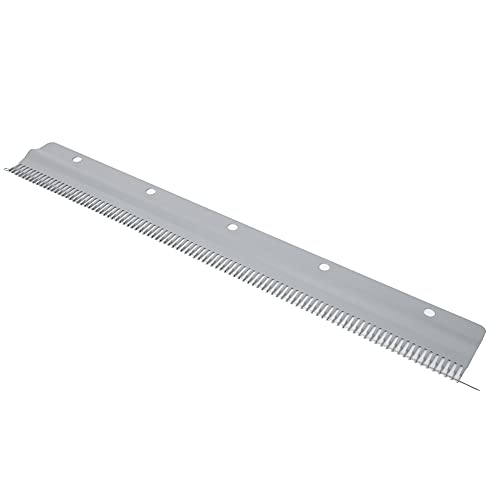
Silver Reed’s SRP60N comb is often praised for its seamless integration with the SRP60N ribber attachment. It is engineered to handle a wide variety of yarn types, from delicate acrylic blends to sturdy cottons.
What sets this comb apart is its precision-engineered wire spacing, which aligns perfectly with the needle beds. When you are knitting a complex rib pattern, this alignment ensures that the tension remains uniform across the entire width of the piece.
However, be mindful that this comb can feel a bit light if you are knitting with very heavy or "draggy" wools. You may find that adding a few extra weights to the ends of the comb is necessary to achieve that crisp, professional look.
Passap Automatic Cast-On Comb for Duo 80
The Passap system is an entirely different beast compared to Japanese-style machines, and the Duo 80 cast-on comb reflects that unique engineering. It is designed to facilitate an automatic cast-on, which is a massive time-saver for those who knit multiple garments in a row.
This comb utilizes a specific locking mechanism that grips the yarn securely from the start. For knitters who struggle with the "fiddly" nature of manual cast-ons, this tool provides a level of stability that is hard to replicate by hand.
The tradeoff is the learning curve; you must ensure your yarn is properly tensioned before engaging the mechanism. Once you master the rhythm, the efficiency gains are undeniable.
Brother KR-850 Ribber Comb for Fine Gauge
If you are working on a fine gauge machine, the KR-850 is essentially the gold standard. It is designed to handle the smaller needle spacing and finer yarns that would otherwise slip out of a standard gauge comb.
Using this comb requires a delicate touch, as the wires are finer and more susceptible to bending. It is ideal for lace-weight projects or fine merino knits where you need to maintain a very tight, even gauge to prevent the fabric from looking "holey."
Always store this comb in a flat, protected case when not in use. A single bent wire on a fine gauge comb can ruin the tension of your entire row, leading to unsightly ladders in your finished garment.
Silver Reed SRP50 Ribber Transfer Comb
The SRP50 transfer comb is a specialized tool that simplifies the process of moving stitches between the main bed and the ribber. It is less about the cast-on and more about the versatility of your ribbing transitions.
For knitters who enjoy creating decorative edges or transitioning from a 1×1 rib to a full-width stockinette, this tool is indispensable. It allows you to shift stitches without the risk of dropping them, which is a common frustration when using standard transfer tools.

Keep in mind that this is a precision instrument. It requires a steady hand and a clear understanding of your machine’s needle-to-needle alignment to avoid damaging the transfer tips.
KnitKing Ribber Comb for Standard Machines

KnitKing combs are essentially the professional-grade cousins of the Brother line, often featuring slightly more robust construction. They are highly sought after by collectors and experts who appreciate the heavier gauge metal used in the comb body.
This extra weight is a significant advantage when knitting with high-friction fibers like mohair or alpaca. The natural "stickiness" of these fibers often causes them to hang up on the needles, but the added mass of the KnitKing comb helps pull the stitches down effectively.
If you can find one in good condition, it is a worthwhile investment for your studio. Just ensure the wires are straight and free of rust, as even minor surface oxidation can snag delicate yarns.
Understanding Ribber Comb Weight and Tension
Ribber comb weight is the primary factor in determining the "hand" of your finished ribbing. Too little weight, and your stitches will be loose and uneven; too much weight, and you risk snapping the yarn or bending your needles.
- Lightweight Combs: Best for delicate, fine-gauge fibers.
- Medium-Weight Combs: The standard for everyday fingering and sport-weight yarns.
- Heavy-Weight/Weighted Combs: Essential for high-friction fibers like mohair or thick wools.
Always start with the manufacturer’s recommended weight and adjust based on your specific yarn’s elasticity. If you notice your ribbing is "smiling" or bowing, you likely need to add more weight toward the center of the comb.
Tips for Even Cast-Ons on Ribbing Attachments
Achieving a professional cast-on starts with the tension dial and the way you thread the comb. If your first row is too tight, the entire ribbing will pull inward, creating a constricted edge that ruins the drape of the garment.
Try using a slightly looser tension setting for the cast-on row than you plan to use for the body of the ribbing. This allows the stitches to bloom and sit comfortably without being strangled by the comb’s initial grip.
Furthermore, ensure the comb is perfectly level before you begin the carriage pass. If one side is hanging lower than the other, the tension will be uneven, leading to a slanted or warped edge that is impossible to block out later.
Maintaining Your Metal Ribber Comb Integrity
Your ribber comb is a precision tool that requires regular cleaning and maintenance. Over time, metal combs can accumulate lint, oil, and wax from the yarn, which increases friction and can cause the comb to drag.
Wipe down the wires with a soft, lint-free cloth after every major project. If you notice any surface rust, use a very fine-grit polishing cloth to remove it, but avoid harsh chemicals that could leave a residue on your yarn.

Never force a comb onto the needles if it feels like it is catching. If you feel resistance, stop immediately and check for a bent wire or a misaligned needle. Forcing the tool will only lead to permanent damage to both the comb and your machine.
Troubleshooting Common Ribber Tension Issues
If you find that your ribbing is consistently dropping stitches, the problem is rarely the machine itself. Most often, it is a combination of insufficient weight and a tension setting that is too tight for the yarn fiber.
- Check for "Laddering": This usually means your ribber tension is too loose.
- Check for Dropped Stitches: This often indicates the comb isn’t heavy enough to pull the stitch off the needle.
- Check for Uneven Loops: This is frequently caused by a comb that is not balanced horizontally.
When in doubt, perform a test swatch using the exact yarn and tension you intend to use for the project. Adjust the weight on the comb in small increments until the stitches look uniform and the carriage moves smoothly across the bed.
Mastering the ribber comb is a journey of trial and error, but the results in your finished knitwear are well worth the effort. By understanding the relationship between comb weight, fiber friction, and machine tension, you can elevate your work from "homemade" to truly professional. Remember that even the best tools require a watchful eye and regular maintenance to perform at their peak. Keep experimenting with your tension settings, and don’t be afraid to add a little extra weight to your comb when the project demands it.