
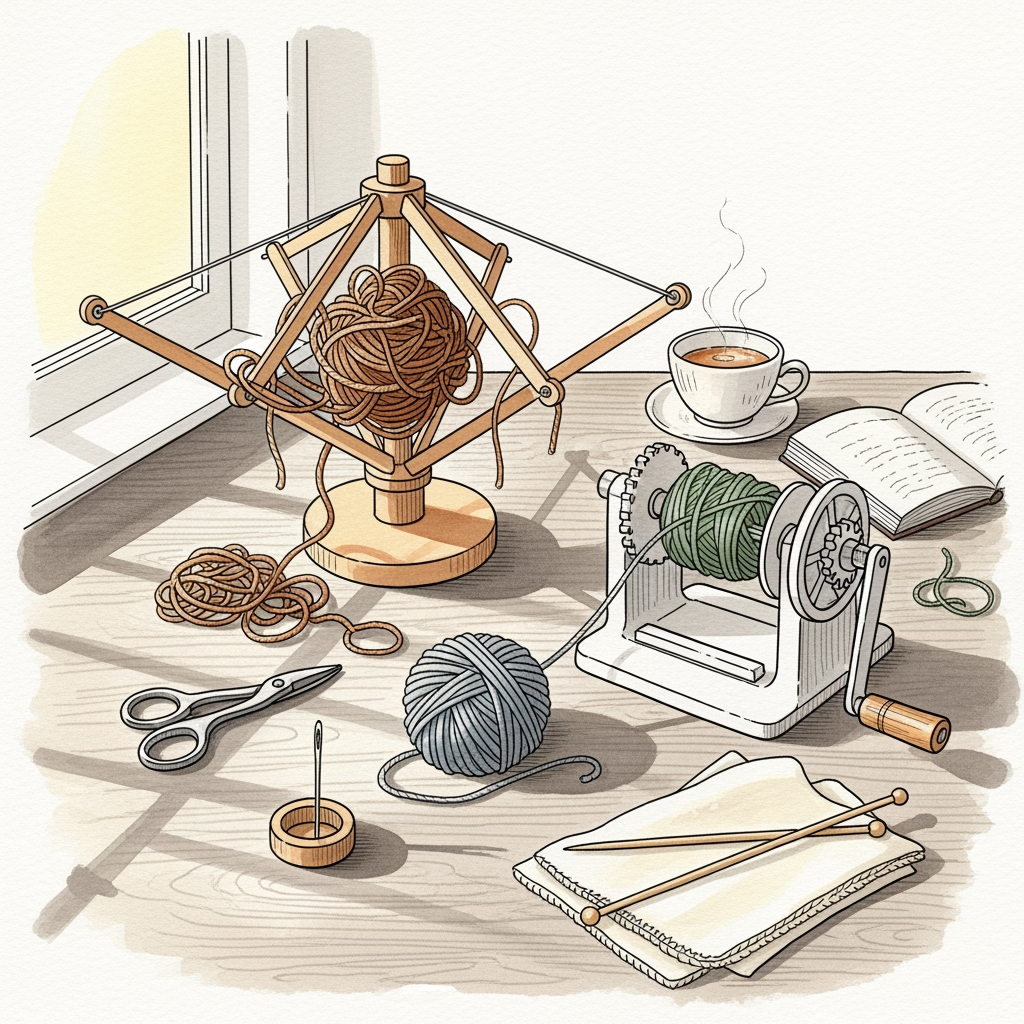
6 Best Yarn Swift Pegs For Adjustable Sizes
Find the perfect fit with our top 6 adjustable yarn swift pegs. Learn how these essential tools ensure tangle-free winding for every skein size and project.
Few things in a knitter’s life are as frustrating as a skein of hand-dyed merino collapsing into a tangled heap because a swift peg failed. Whether you are winding a delicate lace-weight cobweb or a robust superwash wool, the stability of your swift relies entirely on those small, unassuming pegs. Choosing the right replacement pegs ensures your yarn maintains proper tension, preventing the dreaded "yarn barf" that stops a project before it even begins. This guide explores the best options to keep your yarn flowing smoothly from hank to ball.

Stanwood Needlecraft Umbrella Swift Pegs
Stanwood has long been the gold standard for heavy-duty swift construction, and their replacement pegs reflect that reputation for reliability. These pegs are designed specifically for their robust metal-and-wood umbrella swifts, offering a precise fit that eliminates the wobbling often found in generic replacements.
If you frequently wind large, heavy hanks of bulky-weight yarn, these pegs are a necessary investment. Their structural integrity ensures that the swift arms remain perfectly spaced, preventing the uneven tension that can lead to inconsistent cake density.
Be aware that these are proprietary; they are engineered for Stanwood frames and may not seat correctly in other brands. If you own a Stanwood swift, stick with their official pegs to maintain the factory-standard performance.
Lacis Wooden Umbrella Swift Replacement Pegs
Lacis offers a more traditional approach, favoring turned wood that feels organic and gentle against fine fibers. These pegs are an excellent choice for those who prefer a classic aesthetic and a slightly "grippier" surface compared to metal or plastic alternatives.
The wood provides a subtle friction that can be beneficial when winding slippery fibers like silk or bamboo blends. Because these materials have a lower coefficient of friction, they can easily slide off a slick metal peg; wood offers just enough resistance to keep the yarn loop securely in place.
Keep in mind that wooden pegs require occasional care. If you notice the surface becoming rough, a quick pass with fine-grit sandpaper will prevent the wood fibers from snagging your delicate yarn.
KnitPicks Yarn Swift Replacement Peg Set

KnitPicks is a staple in many stash-heavy households, and their replacement pegs are designed for the budget-conscious knitter who needs a quick fix. These pegs are generally universal enough to fit a variety of standard umbrella swifts, making them a great "just in case" item to keep in your knitting bag.
They are particularly useful if you have an older, off-brand swift where the original pegs have gone missing. Having a set of these on hand means you won’t have to pause your winding process when a peg inevitably rolls under the sofa.
While they are highly functional, they may lack the tight tolerances of brand-specific hardware. If you find they are loose, a tiny wrap of painter’s tape around the base can create a snug, custom fit.

Amish Style Swift Handcrafted Wooden Pegs
Amish-style swifts, which sit horizontally on a table, operate on a completely different mechanical principle than umbrella swifts. The pegs on these swifts act as adjustable towers, and choosing the right ones is critical for accommodating different hank circumferences.
Handcrafted wooden pegs for these swifts are often longer and sturdier, allowing you to stack them or adjust the diameter with ease. This is essential when transitioning from a small, 40-inch lace hank to a massive 60-inch sweater-quantity hank.
Look for pegs that feature a smooth, rounded top to ensure the yarn doesn’t catch during the rotation. A well-turned wooden peg will allow the yarn to glide off the tower without creating the "snag and pull" that ruins delicate mohair or angora.
Ashford Umbrella Swift Accessory Peg Kit
Ashford is a legendary name in spinning and weaving, and their swift accessories are engineered to handle the rigors of heavy, continuous use. Their peg kit is designed for those who want a long-term solution that won’t warp or degrade over time.
These pegs are exceptionally smooth, which is a major advantage when winding high-twist yarns that are prone to kinking. If your yarn is prone to "doubling back" on itself, the finish on these pegs helps maintain the necessary tension to keep the strands parallel.
Because these are precision-engineered, they provide a very satisfying "click" into place. This tactile feedback is reassuring, letting you know the swift is balanced and ready for a long winding session.
Strauch Fiber Equipment Swift Peg System
Strauch is the "luxury" tier of fiber tools, and their peg system is designed for the serious production knitter. If you are a professional indie dyer or a knitter who winds hundreds of hanks a year, these are the gold standard for durability.
The material quality is superior, often featuring reinforced components that resist the lateral pressure exerted by heavy woolen hanks. While they are a more significant upfront investment, the longevity of these pegs makes them a one-time purchase.
They are designed to work seamlessly with the Strauch swift’s unique geometry, providing the most stable winding experience possible. If you are tired of your swift tipping over or shifting during a wind, upgrading to this system is the practical solution.
Why Swift Peg Material Quality Matters Most
The material of your peg isn’t just about looks; it dictates how the yarn interacts with the tool. Metal pegs are durable and slick, which is excellent for speed, but they can be unforgiving if your swift isn’t perfectly balanced.
Plastic pegs are lightweight and inexpensive, but they can become brittle over time, especially if stored in a cold room or basement. Wooden pegs are the most versatile for natural fibers, as they provide a gentle, non-slip surface that respects the integrity of the yarn.
Always consider your most common fiber type. If you work primarily with greasy, untreated wool, wood is excellent. If you work with slick, high-sheen synthetics or plant fibers, a smoother, polished metal or high-density plastic peg will serve you better.
How to Measure Your Swift for Proper Peg Fit
Before buying any replacement, you must measure the diameter of the hole in your swift’s arms. A peg that is too thin will lean and cause uneven tension, while a peg that is too thick will eventually crack the wooden or plastic arm of the swift.
Use a pair of digital calipers for the most accurate measurement. If you don’t have calipers, a standard drill bit index can act as a gauge; test which bit fits snugly into the hole to determine the required diameter.

Don’t guess based on brand names alone. Manufacturing tolerances can change over the years, and a swift made ten years ago might have slightly different dimensions than a current model.
Troubleshooting Common Yarn Swift Peg Issues
The most common issue is the "leaning peg," where the hole has become enlarged due to wear. If you cannot replace the arm, you can often stabilize the peg by inserting a small piece of heat-shrink tubing over the base of the peg.
If your yarn is constantly catching on the top of the peg, check for nicks or burrs. A small piece of fine-grit sandpaper or even a nail file can smooth out these imperfections in seconds, saving your yarn from unnecessary fraying.
If the pegs are falling out during rotation, the tension fit is likely too loose. A simple, non-permanent fix is to apply a tiny amount of beeswax to the base of the peg; this adds just enough grip to keep the peg seated while still allowing for easy removal.
Essential Tips for Yarn Swift Maintenance
Treat your swift pegs like your knitting needles: keep them clean and free of debris. Dust and lanolin buildup can make the surface sticky, which causes the yarn to drag and creates inconsistent tension in your yarn cakes.

Store your pegs in a dedicated tin or small bag when not in use. It is a universal law of knitting that a loose peg will vanish the moment you have a beautiful new skein of luxury yarn waiting to be wound.
Once a year, inspect the swift arms for signs of stress or cracking near the peg holes. A little bit of wood glue or a reinforcing washer can prevent a minor issue from becoming a total tool failure during your next big project.
Investing in quality swift pegs is one of those small, practical decisions that pays off every time you sit down to wind a fresh skein. By understanding the nuances of material and fit, you protect your yarn and ensure your winding process is as smooth as your knitting. Keep your tools maintained, choose the material that suits your fiber habits, and you will spend far less time untangling and more time creating. Happy winding, and may your yarn cakes always be perfectly tensioned.
