
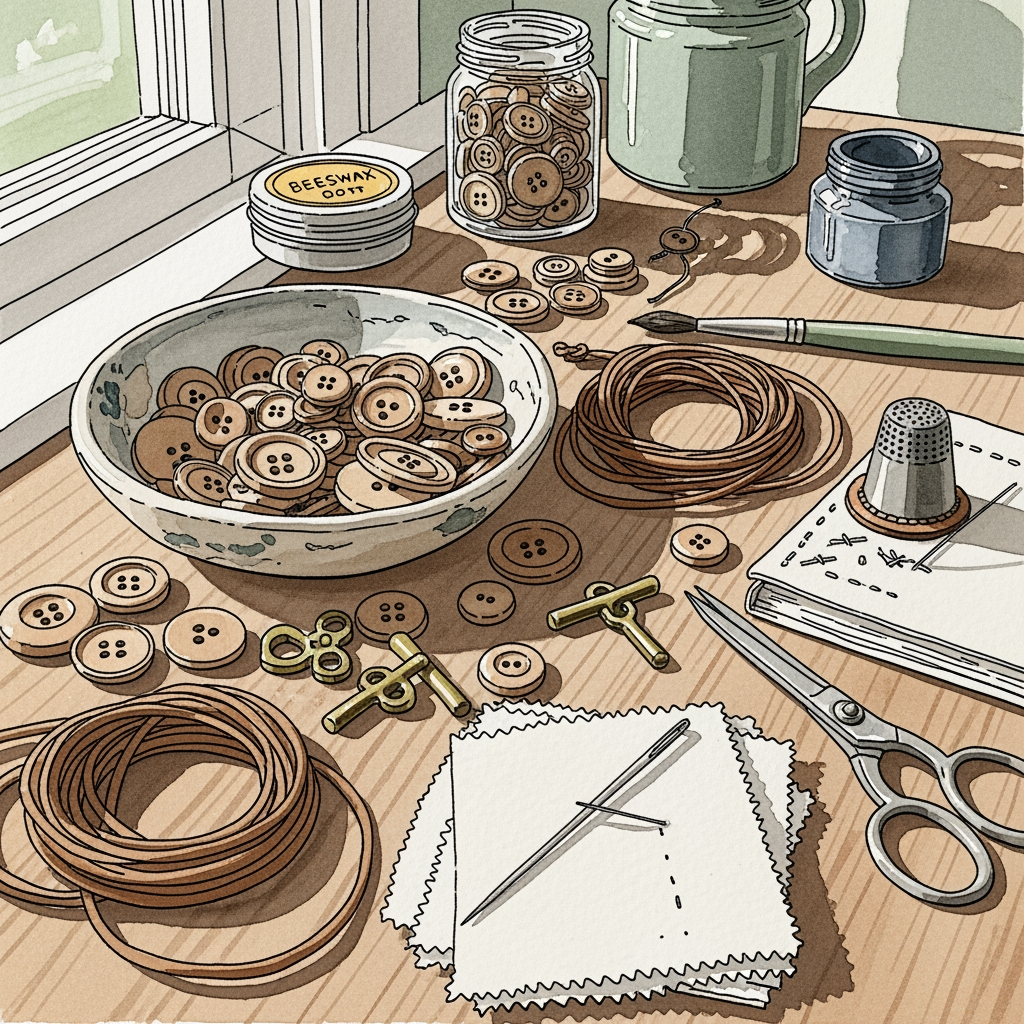
7 Best Leather Punch Tools For Custom Tags to Own
Discover the top 7 leather punch tools for creating custom tags. This guide evaluates precision, durability, and ease of use to help you perfect your craft.
Adding a custom leather tag to your hand-knitted garments is the final touch that elevates a project from a homemade craft to a professional-grade heirloom. Choosing the right punch tool is essential to ensure your tags are clean, symmetrical, and ready for sewing onto delicate fibers. With over two decades in the fiber arts, I have learned that the quality of your hardware is just as important as the quality of your yarn. Here are the seven best leather punch tools to help you achieve that perfect, polished finish on every sweater, hat, and pair of socks you create.
1. Fiskars Rotary Leather Punch: Best for Beginners


If you are just starting to experiment with leather branding, the Fiskars Rotary Leather Punch is an incredibly approachable entry point. Its design mimics the familiar feel of household scissors, making it intuitive for those who are already comfortable with sewing notions.
The primary benefit for a beginner is the ease of rotating the head to select your hole size. When you are working with varying thicknesses of leather—from thin garment-weight lambskin to sturdy vegetable-tanned cowhide—this tool handles the transitions without complex adjustments.
However, keep in mind that this tool is designed for light to moderate use. If you are planning to produce dozens of tags for a craft fair inventory, you may find the hand-fatigue sets in faster than with professional-grade lever tools.
2. Tandy Leather Craftool Revolving Punch: Best Top Choice

The Tandy Leather Craftool is a staple in the leatherworking world for a reason, and it is my go-to recommendation for serious knitters. It provides a clean, crisp cut that won’t leave frayed edges on your leather, which is vital when you are stitching them onto high-end wool.
What I love about this tool is the precision of the punch tubes. They are sharp enough to pierce through even the densest leather without requiring excessive force, which saves your hands for more important tasks—like finishing that intricate lace shawl.
While it is a bit of an investment, the longevity of this tool is unmatched. It is a "buy it once" item that will serve you through years of knitting projects and tag-making sessions.
3. General Tools 72740 Heavy Duty Punch: Best Value

For the knitter who wants functionality without the high price tag, the General Tools 72740 is a reliable workhorse. It features a sturdy construction that feels substantial in the hand, giving you confidence when you are prepping a batch of tags for a gift.
The mechanism is simple and straightforward, which is ideal if you don’t want to fiddle with complex settings. It creates a consistent hole size, ensuring that your sewing needle passes through with ease every single time.

The trade-off here is the grip comfort; it lacks the ergonomic padding found in more expensive models. If you have any hand sensitivity or arthritis, you might want to add a bit of grip tape to the handles to make it more comfortable for extended sessions.
4. Kylo 6-Size Revolving Leather Punch: Best Versatile

The Kylo 6-Size punch is fantastic if you like to experiment with different attachment methods, such as using rivets versus traditional sewing thread. Having six distinct hole sizes allows you to switch between a small needle-sized hole and a larger opening for metal hardware.
This versatility is a huge asset if you work with a wide range of yarn weights. For example, if you are attaching tags to a chunky-weight cowl, you might want larger holes to accommodate thicker, decorative yarn, which this tool handles with ease.
Be aware that with more moving parts, it requires a bit more maintenance to keep the punch tubes aligned. Ensure you check the tension of the revolving head periodically to maintain that perfect, circular hole.
5. Sinland Professional Leather Punch: Best Precision
Precision is the hallmark of the Sinland Professional Leather Punch, which uses a high-leverage design to minimize the effort required to pierce the leather. This is particularly useful when you are working with thicker, stiffer leather that usually demands a hammer and a drive punch.
The standout feature is the sharpness of the punch heads, which ensures that the leather doesn’t "pull" or distort during the cutting process. A clean hole means your tag will lay flat against your knitting, preventing that annoying "puckering" effect that can ruin the drape of a finished garment.
This tool is ideal for the perfectionist knitter. If you are selling your items or gifting them to people who appreciate fine detail, the clean finish provided by this punch will make a noticeable difference in your presentation.
6. Uxcell Revolving Hole Puncher: Best for Small Tags
When you are working with small, delicate tags for items like socks or baby hats, you need a tool that doesn’t overwhelm the material. The Uxcell punch is compact and maneuverable, making it perfect for smaller leather scraps.
The smaller profile of this tool allows for better visibility when you are lining up your punch. This is crucial when you are trying to center a hole on a tag that is only an inch wide; you don’t want to accidentally punch off-center and waste your leather.
Because it is smaller, it may struggle with very thick, heavy leathers. Stick to using this with garment-weight or medium-weight leather to get the best results and protect the integrity of the punch tubes.
7. C.S. Osborne No. 223 Punch: Best Professional Pick

The C.S. Osborne No. 223 is the gold standard for those who treat their fiber arts business like a professional venture. It is built to last a lifetime and offers a level of mechanical consistency that is simply rare in mass-market tools.
This tool is heavy, sturdy, and cuts through leather like a hot knife through butter. It is the kind of tool you pass down to the next generation of makers in your family.
While it is the most expensive on this list, the performance is unparalleled. If you are at a stage where you are producing tags in bulk, the time and frustration you save by using a professional-grade tool will pay for itself very quickly.
8. Essential Features for Custom Knitting Tag Punches
When shopping for a punch, look for a tool that offers a variety of hole sizes, as your needs will change based on the project. You need a small hole for standard sewing thread and a larger hole if you plan to use leather lacing or metal rivets.
Ergonomics should be your second priority. If you plan to punch tags while sitting in your favorite knitting chair, look for handles that are padded or spring-loaded to reduce strain on your wrists and hands.
Finally, consider the material of the punch tubes. Hardened, heat-treated steel is non-negotiable; cheap metals will dull quickly, leading to jagged holes that can actually damage the delicate fibers of your finished knit.
9. How to Properly Care for Your Leather Punch Tools
Leather punch tools are precision instruments, and they require a bit of TLC to stay sharp. Always use a sacrificial surface, like a piece of scrap wood or a dedicated cutting mat, underneath the leather when punching to prevent the tubes from hitting a hard surface and dulling.
Keep your tools clean by wiping them down with a light machine oil after each use to prevent rust. This is especially important if you live in a humid climate, as rust can compromise the sharpness of the cutting edges over time.
Periodically check the alignment of the revolving head. If the punch tube doesn’t line up perfectly with the anvil, it will cause uneven cuts and potentially damage the tool. A quick tighten of the central screw usually fixes this issue.
10. Tips for Attaching Leather Tags to Finished Knits
When attaching your tag, always use a sewing needle that is appropriate for the yarn weight to avoid splitting the plies. I recommend using a durable, waxed thread or a matching wool yarn to ensure the tag stays secure through multiple washings.
Position the tag where it won’t interfere with the garment’s stretch or drape. On a sweater, the hem or the sleeve cuff are ideal spots, as these areas are less likely to be subjected to the constant tugging that happens at a neckline.
Remember to block your garment before attaching the tag. If you sew the tag on first, it might shift or pucker during the blocking process, which is the last thing you want after spending hours working on your project.
Investing in a quality leather punch is a small but significant step toward professionalizing your knitting practice. By choosing the right tool for your specific needs—whether you’re a casual hobbyist or a dedicated artisan—you ensure that every tag you attach reflects the care you put into your stitches. Take the time to practice on scrap leather first, and you will find that these tools become an indispensable part of your knitting kit. Happy crafting, and may your tags always be perfectly centered and beautifully finished.