6 Best Wool Yarns For Dense Pompom Construction
Achieve perfectly dense pompoms with our top six wool yarn picks. We analyze fiber structure and loft to help you select the best materials for full results.
Achieving that perfectly spherical, dense pompom is often more about the fiber you choose than the tool you use. Many makers struggle with limp, sparse results because they select slippery acrylics or uneven novelty yarns. By prioritizing high-loft wool, you can create professional-grade pompom toppers that hold their shape for years. Here are the top six wool yarns that guarantee a lush, satisfying finish for your next project.
Cascade 220: The Gold Standard for Full Pompoms
Cascade 220 is the workhorse of the knitting world, and for good reason when it comes to pompoms. Its consistent worsted weight ensures that every wrap around your pompom maker is uniform, leading to a balanced, symmetrical sphere.
Because it is a non-superwash wool, the fiber has a slight "tooth" or grip. This texture is vital because it prevents the individual strands from sliding out of the center tie once the yarn is cut.

If you are a beginner, start here. The price point is approachable, and the massive color palette means you can match your pompom to any hat or accessory perfectly.
Patons Classic Wool: Best Value for Bulk Projects
When you are planning a market stall or making gifts for the entire family, Patons Classic Wool offers the best cost-to-volume ratio. It is a sturdy, reliable fiber that stands up well to the aggressive trimming required to get that "perfect ball" look.
Some knitters find this yarn slightly itchy for garments, but that characteristic is actually a benefit for pompoms. The slight coarseness helps the pompom maintain its structural integrity, ensuring it doesn’t flop over after a few wears.
It is a true worsted weight that fills a maker very quickly. If you want a dense, heavy pompom that feels substantial in the hand, this is your go-to choice.
Brooklyn Tweed Shelter: For Textured, Matte Finish
Shelter is a woolen-spun yarn, which means it is incredibly lofty and lightweight despite its size. When you use this for a pompom, you get a softer, fuzzier aesthetic that looks almost like a small animal.
Because it is so airy, it fills the space of a pompom maker with fewer wraps than a tightly twisted plied yarn. This makes it an excellent choice if you want a large, impressive pompom that doesn’t add significant weight to the top of your hat.
Be aware that because it is a single-ply, delicate yarn, you must be careful when pulling your center tie tight. Use a strong, non-stretchy cord like waxed dental floss for the tie to avoid snapping the yarn.

Malabrigo Worsted: Best for Luxurious Softness

If your hat is destined for someone with sensitive skin, use Malabrigo Worsted. This single-ply merino is exceptionally soft, creating a pompom that feels like a cloud.
The trade-off here is durability. Because merino is a finer fiber, it doesn’t have the same "spring-back" as the heartier wools mentioned above. It will look beautiful on day one, but it may require a quick "fluffing" session after being packed in a bag or worn in the rain.
The hand-dyed colors are the real selling point. You can create a variegated, artistic pompom that adds a high-end, custom look to even the simplest rib-knit hat.
Jamieson’s Shetland Spindrift: Best for Colorwork

Sometimes you want a custom, multi-colored pompom to match a stranded colorwork project. Jamieson’s Shetland Spindrift is the gold standard for this, as it comes in a vast array of subtle, heathered shades.
Because it is a fingering weight, you will need to wrap your pompom maker many more times to achieve the same density as a worsted weight. However, the resulting pompom is incredibly dense and tight, which is perfect if you are aiming for a smaller, more refined look.
Mixing three or four colors of Spindrift together while wrapping creates a beautiful, blended effect. It is the ultimate choice for the knitter who wants their pompom to be a cohesive part of their color palette.
Brown Sheep Lamb’s Pride: Durable and High Loft

Lamb’s Pride is a blend of wool and mohair, which gives it a unique, slightly fuzzy halo. This halo acts as a "filler," making your pompom look much fuller than it actually is.
The mohair content adds a surprising amount of strength to the yarn. You can pull your center tie as tight as humanly possible without worrying about the yarn breaking, which is the secret to a pompom that never sheds.
This yarn is best for those who want a "rugged" look. It holds its shape beautifully through winter storms and heavy use, making it ideal for children’s winter gear.
Why Wool Fiber Density Matters for Pompom Volume
Density is the secret ingredient in a professional-looking pompom. If your yarn is too thin or too smooth, the pompom will look sparse, and you will see the center tie through the strands.
Wool fibers have natural crimp and scales that help them "grip" each other. When you pack these fibers tightly into a pompom maker, they interlock, creating a solid core that holds the sphere’s shape.
- High-loft wool: Creates a larger, fluffier pompom with fewer wraps.
- Tight-twist wool: Creates a more defined, dense pompom that is easier to trim.
- Slippery fibers (like acrylic): Often result in "bald spots" because the strands slide away from the center.
How to Select the Ideal Yarn Ply for Your Pompom
The "ply" of a yarn refers to how many individual strands are twisted together to create the yarn. For pompoms, a 3-ply or 4-ply yarn is usually superior to a single-ply.
A multi-ply yarn is more resistant to snapping when you perform the "death grip" tie-off. It also creates a more uniform texture when you trim the pompom, as the plies help the yarn stand up straight rather than laying flat.
If you are using a single-ply yarn, you must compensate by wrapping more layers to ensure the core is secure. Always aim for a yarn that feels "bouncy" when you squeeze the ball; that bounce translates to a pompom that springs back into shape.
Essential Tools for Trimming Perfect Pompoms
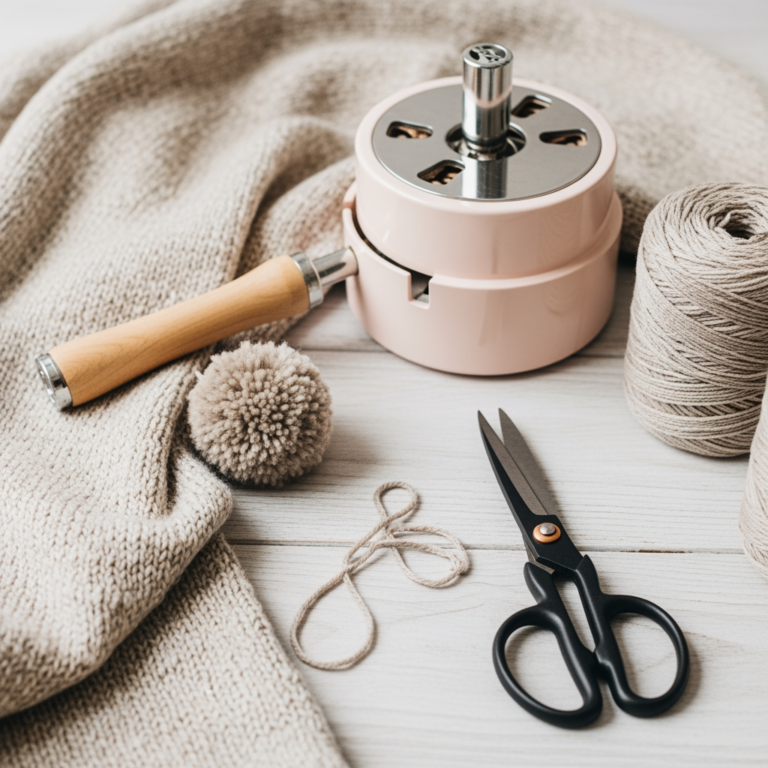
Never use your standard sewing scissors to trim a pompom. You need a pair of sharp, short-bladed embroidery or craft scissors to get the precision required for a perfect sphere.

A long-bladed scissor will catch on the yarn and create uneven "gouges" in your pompom. Short blades allow you to rotate the pompom in your hand while making small, controlled snips.
- Sharpness: Dull blades will chew the yarn, leading to a fuzzy, messy appearance.
- Control: A smaller scissor allows you to reach into the center of the pompom.
- Maintenance: Keep a dedicated pair of scissors for yarn only; cutting paper will dull them instantly.
Troubleshooting Common Pompom Thinness Issues
If your pompom looks thin, the most common culprit is a loose center tie. If the tie isn’t tight enough, the strands will migrate, creating a gap in the center of the pompom.
Another issue is under-wrapping. Beginners often stop when the maker looks "full," but you should keep wrapping until the yarn is difficult to push through the slots.
If you find your pompom is still thin, try using a slightly thicker yarn or doubling your strand while wrapping. Remember, you can always trim away excess, but you cannot add more volume once the pompom is tied and cut.
Creating the perfect pompom is a skill that rewards patience and the right choice of materials. By choosing high-loft, grippy wools and investing in sharp trimming tools, you can elevate your knitwear from handmade to heirloom quality. Don’t be afraid to experiment with color and texture to give your projects a distinct, professional flair. Happy crafting, and may your pompoms always be perfectly round.