7 Best Weight Hangers For Tension Control To Try
Discover the 7 best weight hangers for precise tension control. This guide evaluates top tools to help you optimize your routine with safety and efficiency.
Achieving consistent tension is the single biggest hurdle between a handmade garment and a professional-looking piece. Weight hangers act as the "third hand" every knitter needs to maintain steady downward pull on their stitches. Without proper weighting, you will inevitably deal with dropped stitches, uneven loops, and erratic gauge. Investing in the right tools transforms your knitting process from a struggle into a rhythmic, reliable craft.
The Addi Express Weight Set: Best for Machines


If you own a circular knitting machine, you know that the "dropped stitch" is your greatest enemy. These weights are designed specifically to provide the consistent, centered pull required for the Addi Express’s unique needle geometry.
Because the machine relies on a precise mechanical path, these weights ensure the yarn stays seated deep in the needle hook. They are lightweight enough to prevent snapping the plastic needles, yet heavy enough to clear the gate.
These are not heavy-duty weights for dense wools, but rather precision tools for delicate work. If you are using slippery acrylics or thin cottons, these weights act as the necessary anchor to prevent the yarn from jumping out of the track.
Silver Reed KA-8210 Claw Weights: Top Pick
The Silver Reed claw weights are the gold standard for flatbed knitting machines. Their ergonomic, hook-style design allows them to bite into the fabric edge without distorting the stitch structure, which is vital when working with fine-gauge yarn.
These weights are incredibly versatile, allowing you to chain them together as your fabric grows longer. This modularity is a lifesaver when you are working on a full-length sweater panel and need to shift the weight distribution to keep the tension even across the needle bed.
The gripping power of the claws is superior, meaning they won’t slip off even when you are working with slick fibers like silk or bamboo. If you only buy one set of weights, make it these.
Brother Knitting Machine Claw Weights: Essential
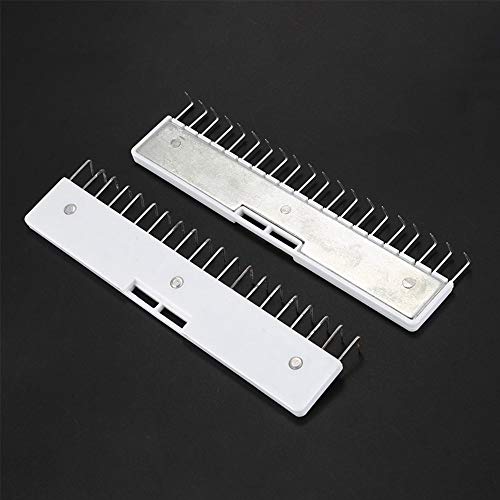
Brother machines are legendary for their durability, and their original claw weights are built to match that longevity. They feature a distinct, weighted base that provides a steady, non-bouncing pull, which is crucial for maintaining a uniform gauge throughout a project.
Many knitters try to substitute these with DIY weights like washers or coins, but the physics of a proper claw weight is different. The balance point of a Brother weight is engineered to keep the fabric hanging perfectly vertical, preventing the "skewing" that often ruins colorwork patterns.
Always ensure your claw teeth are free of lint before attaching them. A clean claw prevents snagging, which is essential when working with delicate, high-twist merino wools.
Sentro 48 Needle Machine Tension Weights

Using a Sentro machine often feels like a balancing act between speed and stitch security. These specific tension weights are designed to hang from the fabric edge, preventing the common issue where the machine "eats" the yarn due to slack.
Because the Sentro is often used by beginners, these weights provide the stability needed to learn the rhythm of the machine. They are particularly effective when using worsted weight yarns that might otherwise be too bulky for the machine’s internal tension dial.
If you find your fabric is bunching up near the center of the machine, add these weights incrementally. The goal is just enough pull to keep the stitches taut, not so much that you strain the machine’s internal gears.
KnitKing Professional Claw Weight Set

KnitKing weights are prized by those who work with intricate, fine-gauge lace or complex cables. The weight distribution is exceptionally precise, which helps prevent the "puckering" that often occurs when working with varied stitch densities.
These weights are heavier than standard hobby-grade options, making them ideal for dense, heavy fibers like wool-alpaca blends. When you are working on a complex project, the last thing you want is for your tension to fluctuate as the weight of the fabric increases.
The build quality is substantial, offering a level of tactile feedback that helps you "feel" the tension of your work. For the serious machine knitter, they are a professional-grade necessity.
Passap Automatic Tension Weights: Durable
Passap machines are known for their double-bed capabilities, and their weights are engineered to handle the intense, dual-layer tension required. These are heavy-duty, robust tools that can withstand years of daily use without losing their grip.
The design is slightly different from standard claw weights, often using a more secure locking mechanism. This is essential when working with double-bed projects where the fabric is under constant, high-pressure tension from both sides.
If you are working with heavy, non-superwash wools that have a lot of "memory," these weights provide the necessary force to keep the fabric from curling. They are an investment in the longevity of your machine work.
ChiaoGoo Claw Weights for Hand Knitting
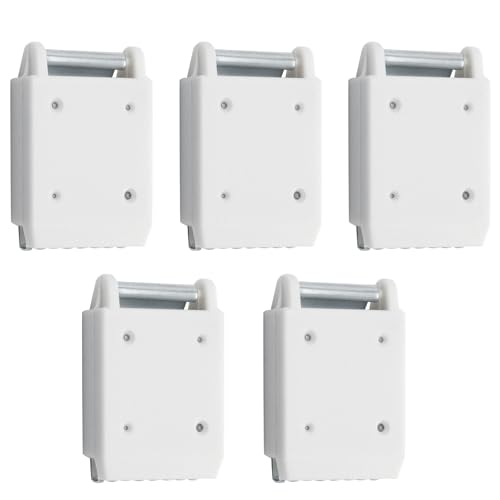
While weights are primarily associated with machines, hand knitters working on large, heavy blankets or complex lace can benefit from these small claw weights. They act as a stabilizer for the bottom edge of your work, keeping your tension consistent as the project grows.
They are particularly useful when you are working on a long-term project where the fabric weight changes daily. By adding a small weight, you can mimic the tension of a finished, blocked piece, which helps you maintain your gauge.
Don’t over-rely on them; they are a tool for stability, not a crutch for poor technique. Use them to keep your work from pulling on your wrists during long knitting sessions.
Why Weight Hangers Improve Your Stitch Quality
Weight hangers solve the problem of gravity working against your needles. As you knit, the weight of the fabric naturally pulls down, but it does so unevenly, which leads to varying stitch sizes.
By adding a constant, calibrated force, you ensure that every loop is pulled to the same depth. This is the secret to achieving that "store-bought" look where every stitch is a perfect, uniform size.
Furthermore, they prevent "dropped stitch" accidents by keeping the yarn seated firmly in the needle. Whether you are working on a machine or by hand, consistent downward force is the foundation of professional-grade tension.
How to Balance Tension for Even Fabric Growth
Balancing tension is about understanding the relationship between your yarn weight and the amount of pull required. Heavier yarns require more weight to keep the loops uniform, while lighter, more delicate yarns require a gentle touch.
Always start with the minimum amount of weight and add more only if you see the stitches becoming loose or uneven. If your fabric is pulling too hard, you risk stretching the fibers, which can permanently distort your garment.
Monitor your fabric as it grows. As the weight of the finished fabric increases, you may actually need to remove some of your manual weights to maintain the perfect balance.
Troubleshooting Common Weight Hanger Mistakes
The most common mistake is using too much weight, which can lead to snapped needles or distorted, "thinned-out" fabric. If your stitches look elongated or feel brittle, you are likely applying too much tension.
Another frequent error is attaching weights unevenly across the fabric bed. This causes the fabric to pull to one side, leading to a slanted hem or a lopsided garment.
Always distribute your weights symmetrically. If you are using a single weight, keep it centered; if you are using multiple, place them in pairs at equal distances from the center.
Mastering the use of weight hangers is a journey of trial and error, but the results are well worth the effort. By providing consistent tension, you elevate your work from hobbyist to professional quality. Remember to listen to your yarn and observe how your fabric reacts to the pull. With the right tools and a bit of patience, your knitting will achieve a level of uniformity you once thought impossible.