7 Best Weighted Tension Clips For Consistent Stitches
Achieve professional embroidery results with our top 7 weighted tension clips. Discover how these essential tools ensure consistent, high-quality stitching.
Achieving consistent stitch gauge is the hallmark of a polished knitter, yet even experts struggle with tension variations when switching between different yarn fibers or needle materials. Weighted tension clips and yarn guides serve as mechanical assistants, helping to regulate the flow of yarn from your ball to your needles. By stabilizing the delivery of your yarn, these tools reduce the physical strain on your hands and ensure your purls match your knits perfectly. Selecting the right tensioner can transform a frustrating, uneven project into a meditative and uniform experience.
Clover Knitting Tension Regulator: Best Overall
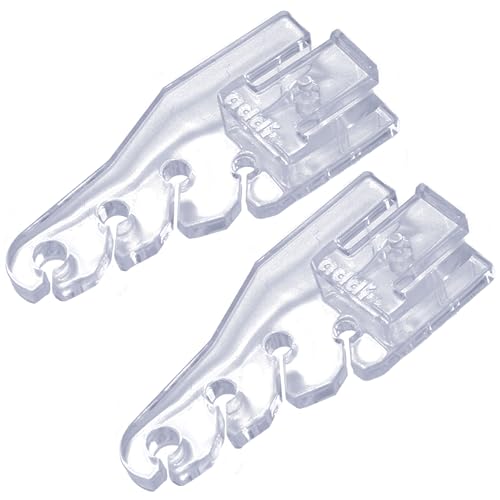

The Clover Knitting Tension Regulator is a staple in many project bags because it strikes a perfect balance between simplicity and effectiveness. It clips directly onto your knitting needle, acting as a fixed point that forces the yarn to travel through a controlled path before reaching your fingertips.
This tool is particularly helpful when working with slippery fibers like silk or bamboo blends, which often slide off the needle or grow loose as you work. Because it is lightweight, it doesn’t shift the balance of your needles, making it a reliable choice for long-term projects like sweaters or blankets.
However, it may take a few rows to get used to the physical presence of the clip on your needle. If you are a fast knitter, you might find the added friction slightly slows your pace, but the trade-off is significantly more uniform fabric.
Prym Ergonomic Yarn Guide: Best for Beginners
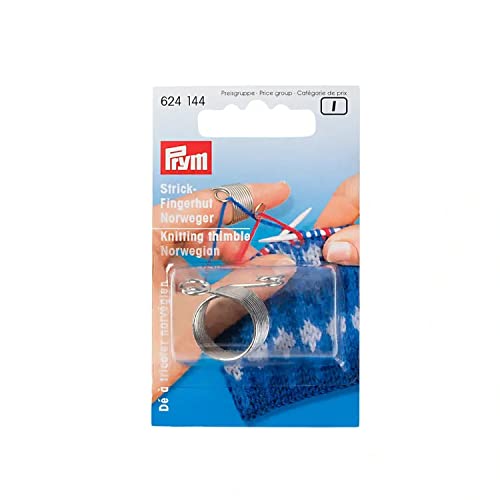
If you are just starting your knitting journey, the Prym Ergonomic Yarn Guide is an excellent way to learn how to hold your yarn consistently without cramping your hands. It clips onto your finger, creating a dedicated track for the yarn that prevents it from tangling or looping around your knuckles.
Beginners often struggle with "death grip" tension, where they pull the yarn too tightly out of fear of dropping stitches. This guide gently enforces a loose, steady flow, which helps new knitters develop the muscle memory needed for even stitches.
Keep in mind that this guide is designed for standard yarn weights; it may feel bulky or ineffective with very thin lace-weight mohair or extremely thick, chunky roving. It is a fantastic learning tool, though you may eventually outgrow it as your natural tension becomes more intuitive.
Tulip Etimo Tension Ring: Best for Precision

The Tulip Etimo Tension Ring is a sophisticated piece of equipment for those who demand absolute perfection in their stitch geometry. Unlike clip-on guides, this ring features a specialized wire loop that keeps the yarn at a precise, elevated angle as it feeds toward the needle.
This is a game-changer for intricate stranded colorwork or complex cables where tension must remain identical across multiple colors. By keeping the yarn elevated, it prevents the "puckering" that often occurs when working with two different yarn sources simultaneously.
The price point is higher than plastic alternatives, reflecting the high-quality materials and ergonomic design. It is an investment piece for the serious knitter who wants to eliminate the fatigue associated with holding multiple strands of yarn.
Koh-I-Noor Adjustable Tensioner: Best Value
The Koh-I-Noor Adjustable Tensioner is a no-frills, highly functional tool that does exactly what it promises without unnecessary aesthetic flourishes. It is a simple, adjustable mechanism that allows you to dial in the exact amount of resistance you need for your specific project.
This is ideal for knitters who switch frequently between different yarn types, such as moving from a tightly spun wool to a loosely plied alpaca. You can quickly adjust the tensioner to accommodate the "drag" of different fibers, ensuring your gauge remains consistent regardless of the material.
While it lacks the ergonomic bells and whistles of more expensive models, its durability is hard to beat. It is a workhorse tool that belongs in every knitter’s kit, especially for those who value utility over style.
Addi Knitting Thimble Guide: Best for Speed

Addi is renowned for their high-speed needles, and their Knitting Thimble Guide follows that same philosophy. It is designed to keep your yarn flowing rapidly, making it the top choice for knitters who prioritize productivity and speed.
The thimble design allows for a smooth, uninterrupted feed, which is essential when you are trying to power through long stretches of stockinette stitch. It is particularly effective for continental knitters who hold the yarn in their left hand, as it keeps the strand aligned perfectly with the needle tip.
Because it is designed for speed, it offers slightly less "grip" than other tensioners. If you are working with very slick, high-twist yarns, you might find that the yarn slips through the guide a bit too quickly, requiring a slight adjustment to your finger positioning.
Susan Bates Yarn Tensioner: Best for Comfort

The Susan Bates Yarn Tensioner is designed with the knitter’s physical comfort at the forefront, featuring a contoured shape that sits naturally against the finger. It is lightweight and unobtrusive, making it an excellent choice for knitters who suffer from hand fatigue or joint pain.
By distributing the tension across the finger rather than pulling directly on the tip, it helps prevent the soreness that often accompanies long knitting sessions. This is a massive benefit if you are knitting socks on 2.25mm needles for hours at a time, where even small amounts of strain can add up.
The trade-off for this comfort is that it provides a lighter tension than some of the more rigid, mechanical guides. If you are a very loose knitter who needs significant help tightening up your stitches, you may find this model offers a bit less assistance than you require.
Knitter’s Pride Tension Ring: Best for Lace

Knitter’s Pride has created a tension ring that is uniquely suited for the delicate work of lace knitting, where stitch definition is paramount. The ring features small, precise grooves that catch the yarn just enough to prevent it from slipping, ensuring that every YO (yarn over) and SSK (slip, slip, knit) is perfectly formed.
Lace requires a delicate touch, and this ring provides the stability needed to keep stitches from becoming uneven or distorted. It is also quite elegant, making it a pleasant accessory to wear while you work on a complex shawl or heirloom project.
Be aware that the ring size is fixed, so it is important to choose one that fits your finger comfortably. If the ring is too loose, it will rotate while you work, which can be distracting and cause your tension to fluctuate rather than stabilize.
Why Weighted Clips Improve Your Stitch Gauge
Weighted clips and tensioners work by creating a consistent path for the yarn, which effectively "pre-tensions" the fiber before it hits the needle. In standard knitting, your tension is dictated entirely by how you hold the yarn, which can change based on your mood, fatigue, or the weight of the yarn ball.
- Consistency: By creating a mechanical constant, you minimize the impact of human error.
- Fiber Management: Different fibers have different levels of "memory" and elasticity; a tensioner helps control these variables.
- Gauge Accuracy: Consistent tension is the only way to ensure your finished project matches the dimensions of your swatch.
Many knitters believe that tensioners "do the work for them," but this is a misconception. Instead, they act as a guide that allows you to focus on your stitch pattern and rhythm, rather than constantly micro-adjusting your grip.
How to Properly Attach Tensioners to Yarn
Proper attachment is the difference between a helpful tool and a frustrating snag. Most tensioners should be placed far enough from the working area that they don’t interfere with your needle movement, but close enough to maintain control.
- Check for Snags: Ensure the yarn path is free of burrs or rough edges that could split the plies of your yarn.
- Test the Drag: Before starting a row, pull a few inches of yarn through the guide to ensure it moves smoothly without excessive resistance.
- Adjust for Fiber: If you are using a sticky wool, you may need to loosen the tension slightly to avoid breaking the fiber.
If you find that your yarn is snapping or fraying, your tensioner is likely set too tight or the path is too sharp. Always perform a quick test swatch when introducing a new tensioner to your workflow to ensure the yarn is being treated gently.
Troubleshooting Tension Issues in Knitting
Even with the best tensioner, you may encounter issues if your underlying knitting technique is inconsistent. If your stitches are still uneven, check your needle material first; if you are using slick metal needles, the yarn may be sliding too much, regardless of the tensioner.
If you find your purl rows are looser than your knit rows—a common issue known as "rowing out"—try focusing on pulling the yarn slightly tighter on the first stitch of every row. A tensioner can help mitigate this, but it cannot fix a fundamental difference in how you form a knit versus a purl stitch.
Finally, remember that blocking is your best friend. Even if your tension isn’t perfectly uniform, a good soak and block can often even out slight variations in stitch size. Tensioners are tools to help you get closer to perfection, but they shouldn’t replace the joy of the handmade process.
Finding the right tensioner is a personal journey that depends as much on your unique knitting style as it does on the yarn you choose. Whether you need the precision of a ring or the simple support of a clip, these tools are designed to make your craft more enjoyable and your results more professional. Don’t be afraid to experiment with different types until you find the one that feels like an extension of your own hand. Happy knitting, and may your stitches always be as even as your passion for the craft.