6 Best Tapestry Looms For Integrated Fringe Projects
Explore the 6 best tapestry looms for integrated fringe projects. Learn how these specific frames simplify complex weaving techniques for cleaner results.
Weaving integrated fringe into your tapestry projects transforms a simple wall hanging into a tactile, professional-grade piece of art. Selecting the right loom is the first step in ensuring your warp tension remains consistent while you manipulate those delicate end threads. Whether you are a seasoned fiber artist or a curious knitter looking to expand your toolkit, the following looms offer the stability and design necessary for seamless fringe integration. Let’s explore the equipment that will elevate your next weaving adventure.
Schacht Cricket: Best Loom for Integrated Fringe
The Schacht Cricket is a rigid heddle loom that excels at managing warp tension, which is the secret to a clean, integrated fringe. Because the rigid heddle keeps your warp threads perfectly spaced, you can easily pull extra lengths of yarn through the shed to create loops that become your fringe.
This loom is particularly forgiving for those transitioning from knitting to weaving. If you are used to the rhythm of a knitting needle, the Cricket’s steady, mechanical action will feel intuitive. Its open-sided design allows you to see exactly how your fringe is interacting with the fell line, preventing the dreaded "uneven edge" look.
The primary trade-off here is the shed size, which is smaller than a dedicated floor loom. If you intend to weave very thick, bulky fringe, you may find yourself needing to manually assist the shed. For consistent, professional-looking fringe on smaller projects, the Cricket is an unparalleled workhorse.
Ashford SampleIt: Compact Choice for Beginners
If you live in a space where every square inch counts, the Ashford SampleIt is your best friend. It is incredibly lightweight and portable, making it the perfect choice for a "weaving station" that can be tucked away on a bookshelf when not in use.
Don’t let the small size fool you; this loom is designed specifically for sampling and small-scale tapestry work. Because it is so manageable, you are much more likely to experiment with fringe techniques like rya knots or soumak stitches without the intimidation factor of a massive frame.
The trade-off is that the warp width is limited, meaning large-scale wall hangings aren’t its primary purpose. However, for learning how to anchor fringe securely into a weft, this loom provides the perfect tactile feedback. Start here if you want to master the basics without committing to a piece of furniture-sized equipment.
Mirrix Big Sister: Precision for Fine Weaving


The Mirrix Big Sister is a professional-grade loom that operates more like a vertical tapestry frame than a traditional rigid heddle loom. It uses a shedding device that allows for incredible precision, which is vital when you are weaving intricate fringe patterns that require tight, uniform spacing.
This loom is ideal for the knitter who treats their fiber work like a fine art project. If you are used to working with lace-weight yarns or intricate colorwork, the Mirrix allows you to maintain the high tension necessary to keep your fringe from slipping or distorting the fabric.
Be aware that the learning curve is steeper than a standard table loom. You will need to spend time understanding the shedding mechanism and tensioning system. If you prioritize structural integrity and professional finishing over ease of setup, the Mirrix is the gold standard.
Leclerc Penelope: Versatile Tabletop Standard

The Leclerc Penelope is a sturdy, traditional table loom that offers a wider weaving width than most portable options. This extra space is a lifesaver when you are planning a piece with fringe on both sides, as it gives you room to maneuver your hands without bumping into the frame.
Its construction is classic, relying on proven mechanics that have been used by weavers for decades. Because it uses a traditional beater, you get a very crisp, clean fell line, which makes integrating fringe into the final row much more secure.
The trade-off is weight; this is not a loom you want to be moving from room to room daily. It is a stationary tool that demands a dedicated spot in your studio. Choose the Penelope if you want a reliable, "buy-it-for-life" piece of equipment that handles complex fringe projects with ease.
Harrisville Designs 22-Inch: Sturdy Wood Frame
Harrisville Designs is legendary in the fiber arts community for a reason: their wood frames are built to last through generations of use. This 22-inch loom provides a generous working area that feels substantial and solid under your hands.
For weavers who prefer a more organic, tactile experience, the wood frame of the Harrisville provides a natural grip that metal looms often lack. This is especially helpful when you are knotting fringe, as the frame itself can act as a secondary anchor point for your hands.
The main consideration is the assembly and maintenance of the wood. You will need to occasionally wax the moving parts to keep them smooth. If you value traditional craftsmanship and a loom that feels like a permanent part of your creative process, this is the one.
Beka 20-Inch Weaving Loom: Best Value Option
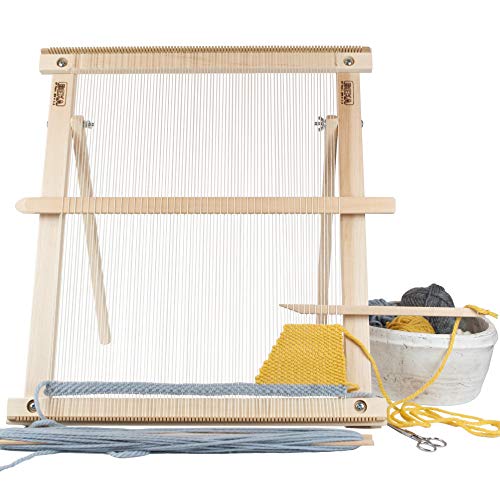
The Beka 20-inch loom is an excellent entry point for makers who want a high-quality frame without the price tag of a professional production loom. It is straightforward, durable, and gets the job done without unnecessary bells and whistles.
This loom is particularly good for projects where you want to incorporate "found object" fringe, such as roving, ribbons, or hand-spun art yarns. Its open design makes it very easy to tie off fringe at the end of the project without having to remove the entire piece from the loom first.
While it lacks the sophisticated shedding devices of the Mirrix or the precision of the Schacht, it offers the best value for the money. If you are on a budget but refuse to sacrifice quality, the Beka is a reliable, no-nonsense choice.
How to Secure Warp Ends for Durable Fringe
Securing your fringe is not just about aesthetics; it is about ensuring your hard work doesn’t unravel the moment it is taken off the loom. The most reliable method is the overhand knot placed directly against the last row of weft.
- The Rya Knot: Best for voluminous, decorative fringe.
- The Soumak Stitch: Best for creating a firm, decorative edge that locks your warp threads in place.
- Twisting: Use two warp threads and twist them in opposite directions before knotting to create a clean, rope-like finish.
Always leave at least 4 to 6 inches of excess warp if you intend to create fringe. Trying to "stretch" your warp to save yarn will only result in a loose, unstable edge that is prone to fraying.
Essential Tools for Finishing Woven Edges
Beyond the loom, your finishing kit should include a few specific items to handle fringe with care. A tapestry needle with a bent tip is essential for weaving in ends that aren’t part of the fringe.

- Sharp embroidery scissors: To get a clean, straight cut across your finished fringe.
- A weaving comb: To pack the weft tightly against your fringe knots.
- A steamer or spray bottle: To block the final piece and help the fringe threads hang straight.
Never pull your fringe threads tight after cutting them; let them "rest" for 24 hours after taking the piece off the loom. This allows the tension to equalize, preventing the fringe from looking wavy or uneven.
Choosing the Right Warp Yarn for Fringe Work
The warp is the skeleton of your project, and for fringe, it needs to be strong and non-stretchy. If you use a yarn that has too much "give," your fringe will sag over time.
- Cotton: The gold standard for warp; it is strong, stable, and comes in many weights.
- Linen: Extremely durable and holds a knot well, though it can be harder on the hands.
- Wool/Nylon Blends: A good middle ground if you want something softer, but ensure it is high-twist to prevent breakage.
Avoid using novelty yarns or soft, single-ply wools for your warp. They will snap under the tension required to keep your fringe securely anchored.
Troubleshooting Common Tapestry Loom Issues
The most common issue weavers face is uneven tension, which often manifests as "bubbles" in the fringe. If you notice one side of your fringe is longer than the other, check your warp tension immediately.
- Uneven Shed: If your shed isn’t opening fully, your fringe will be pinched and difficult to insert. Check your heddle alignment.
- Slipping Knots: If your fringe knots are coming undone, you are likely using a yarn that is too slick. Try a slightly thicker warp or a double-knot technique.
- Frame Flex: If your loom frame is bowing, your center warp threads will be tighter than your edge threads. This is common in cheaper frames; reinforce the tension only until the frame stops moving.
Always perform a "tension check" every few inches of weaving. It is much easier to adjust a loose warp thread while the project is on the loom than it is to fix a saggy edge once the piece is finished.
Integrating fringe into your tapestry is a rewarding way to add texture and movement to your fiber art. By choosing a loom that fits your specific needs—whether it’s the precision of a Mirrix or the portability of an Ashford—you are setting yourself up for a successful project. Remember that the quality of your fringe is directly tied to the stability of your warp and the care you take during the finishing process. Happy weaving, and may your edges always be as beautiful as the center of your work.