6 Best Workbench Mats For Non-slip Fiber Processing
Discover the top 6 workbench mats for fiber processing. Our guide highlights non-slip options that ensure stability, precision, and workspace protection.
Whether you are blocking a delicate lace shawl or meticulously sorting hand-dyed wool, your workspace is the foundation of your craft. A shifting, sliding mat can turn a meditative knitting session into a frustrating battle against gravity and mess. The right surface anchors your tools, protects your delicate fibers, and keeps your project exactly where you need it. Here are the best workbench mats to ensure your fiber processing remains precise and stress-free.
Gorilla Grip Extra Large Silicone Craft Mat


This mat is a powerhouse for those who spread out their entire stash or work on large-scale blocking projects. Its sheer size provides a massive, uninterrupted surface that keeps your yarn cakes and notions from skittering off the table.
The silicone material is naturally high-friction, meaning your metal circular needles or wooden DPNs (double-pointed needles) won’t slide away if you set them down for a moment. It is also heat-resistant, which is a lifesaver if you use a steam iron to block your finished garments.
However, keep in mind that its "extra-large" footprint requires a spacious desk. If you are working in a cramped corner, the edges might curl up or hang off the side, which defeats the purpose of a flat, stable surface.
Fiskars Non-Slip Rotating Cutting Mat
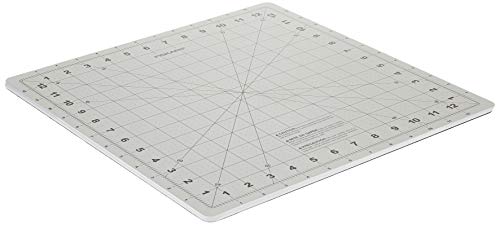
Rotating mats are a game-changer for fiber artists who also dabble in sewing or need to trim yarn ends with precision. The ability to spin your work without moving your hands is invaluable when you are cutting long lengths of yarn for fringe or tassels.
The non-slip backing is incredibly effective, gripping even the slickest laminate tabletops. When you are trimming a heavy wool fringe, you need that stability to ensure your cuts are uniform and your tension remains consistent.
The trade-off here is the seam in the middle of some rotating models, which can catch on delicate mohair or fine silk fibers. If you primarily work with fuzzy, high-halo yarns, ensure you choose a high-quality model where the rotating mechanism is perfectly flush with the base.
ArtBin Super Satchel Series Craft Mat

ArtBin is a staple in the fiber arts world for a reason: they understand the need for modular organization. This mat often integrates into a larger system, making it ideal for the knitter who keeps their stitch markers, tapestry needles, and measuring tapes in specific, labeled compartments.
The surface is durable and resists the occasional snag from a sharp needle tip or a stray cable needle. It is designed to withstand the wear and tear of daily use, which is essential if you are constantly moving projects from your lap to your desk.
While it is excellent for organization, it lacks the "tackiness" of pure silicone. If you are working on a project with very slick nickel-plated needles, you might find them sliding more than you would on a softer, rubberized mat.
Creative Grids Non-Slip Quilting Ruler Mat

Don’t let the "quilting" label fool you; this is a secret weapon for knitters who value precise measurements. The grid lines are perfect for checking your gauge or ensuring that your sweater blocks to the exact dimensions specified in your pattern.
The non-slip coating on the bottom is engineered for high-accuracy work, providing a rock-solid foundation. When you are pinning out a sweater to block, you need a surface that won’t shift while you are measuring the width and length of your pieces.
The downside is that these mats are often rigid rather than flexible. You cannot roll them up to toss them in your knitting bag, so they are best suited for a permanent, dedicated fiber-arts workbench.
Maped Creativ Silicone Crafting Surface
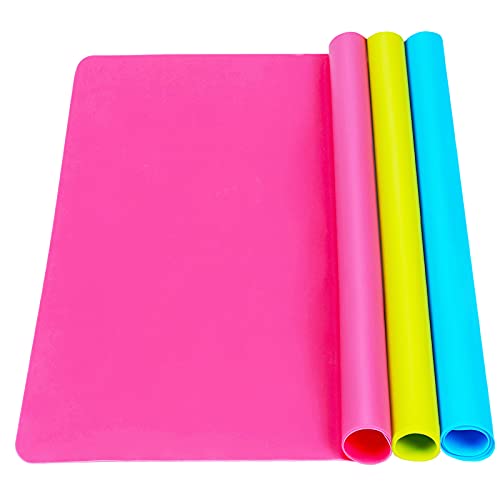
This mat is a fantastic entry-level choice for beginners who want to protect their dining room table from dye spills or damp wool. It is lightweight, easy to clean, and provides just enough grip to keep your yarn bowl from sliding around during a long knitting session.
The silicone is soft enough that it won’t damage your bamboo or wooden needles if they accidentally drop. It also has a slightly raised edge on some models, which is excellent for containing loose bits of fiber or runaway stitch markers.
Because it is thinner than industrial-grade mats, it may not provide as much cushioning for your wrists during long hours of knitting. It is a functional, no-nonsense tool that prioritizes utility over heavy-duty protection.
Martha Stewart Crafts Non-Stick Work Mat

This mat is known for its smooth, non-stick finish, which is excellent if you are working with adhesives for fiber crafts or blocking lace that requires a delicate touch. It is incredibly easy to wipe clean, which is a blessing if you are working with hand-dyed yarns that might bleed color.
The grip is moderate, providing enough friction to keep your project steady without being so sticky that it attracts every piece of lint in the room. This is a major advantage when working with dark-colored wool, as it won’t become a magnet for stray fibers.
The trade-off is the surface texture; it is not as "grippy" as a heavy-duty silicone mat. If your primary goal is to keep your needles from rolling off the table, you might prefer a mat with a more textured finish.
Why Fiber Artists Need Non-Slip Work Surfaces
A non-slip surface is not just about convenience; it is about ergonomics and precision. When you are working on a complex cable pattern or a multi-color stranded project, your focus should be on your stitches, not on chasing your tools across the floor.
Stability is critical when you are dealing with slippery fibers like silk or bamboo blends. These yarns have a tendency to slide off surfaces, taking your needles with them, which can lead to dropped stitches and lost progress.
Furthermore, a dedicated mat protects your furniture from the moisture involved in wet-blocking. By creating a barrier, you ensure that your wood or glass surfaces remain pristine while your fiber projects dry to their final, beautiful shape.
Key Features to Consider for Fiber Processing
When shopping for a mat, look for features that specifically address the unique needs of knitting and crochet. You want a balance between grip, durability, and ease of cleaning.
- Heat Resistance: Essential if you use a steam iron for blocking delicate wools.
- Surface Texture: Needs to be smooth enough to avoid snagging, but grippy enough to hold tools.
- Size: Should accommodate your largest project, such as a full-sized adult sweater.
- Portability: Consider if you need to store the mat away or if it will stay on your desk permanently.
Maintaining Your Workbench Mat for Longevity
To keep your mat in top condition, wipe it down after every project with a damp cloth. Avoid using harsh chemicals that could degrade the silicone or rubber, as these can leave a residue that might transfer to your fine-quality yarn.
If your mat loses its grip over time, it is often just a buildup of dust and fiber debris. A quick wash with mild soap and warm water will usually restore its original tackiness and keep it performing like new.
Always store your mat flat if possible. Folding or tightly rolling a high-quality mat can cause permanent creases, which will create uneven spots when you are trying to block a flat piece of knitting.
Comparing Silicone vs. Rubber Mat Materials
Silicone is the gold standard for fiber artists because it is naturally non-slip, heat-resistant, and chemically inert. It won’t react with your yarn or dyes, and it is incredibly easy to sanitize after a messy project.
Rubber mats, while often cheaper and very durable, can sometimes have a strong odor that may linger on your yarn. They are also prone to drying out or cracking over time if exposed to direct sunlight or fluctuating temperatures.
Ultimately, if you are investing in your workspace, silicone is almost always the better long-term choice. It provides the consistent, reliable grip that makes the difference between a frustrating project and a joyful one.
Choosing the right workbench mat is a quiet investment in the quality of your knitting. By prioritizing stability and surface protection, you create a professional environment that respects the time and effort you put into every stitch. Whether you choose a large silicone mat or a specialized grid surface, your future self will thank you every time your needles stay exactly where you left them. Happy knitting, and may your gauge always be spot on.