6 Best Row Markers For Lace Repeats To Keep Track
Struggling with complex lace? Discover the 6 best row markers to track your repeats effortlessly, ensuring your pattern remains perfectly aligned every time.
Lace knitting is a beautiful, meditative practice, but one dropped yarn-over or missed decrease can derail an entire project. Using row markers to delineate your pattern repeats is the single most effective way to maintain your sanity while working complex charts. These small tools act as essential guardrails, ensuring that every section of your lace remains perfectly aligned as you work. By placing markers strategically, you turn a daunting, massive chart into manageable, bite-sized segments.
Cocoknits Colorful Nylon Ring Stitch Markers


These markers are a staple in my kit because they are incredibly lightweight and flexible. Unlike rigid plastic, the nylon construction means they won’t snag on delicate mohair or fine silk yarns.
The vibrant colors allow you to color-code your repeats, which is a lifesaver when you have a chart with multiple sections. If you are working a complex shawl with a border, a center panel, and a lace motif, assigning a specific color to each section keeps your brain from fatiguing.
Because they are thin, they sit comfortably on your needles without distorting your stitches. The bottom line: these are the best "set it and forget it" markers for lace projects that don’t require frequent moving.
Clover Locking Stitch Markers for Lace Work

When you need to mark a specific point in a row that isn’t a simple repeat, these locking markers are indispensable. They function like tiny safety pins, allowing you to attach them directly into a stitch rather than sliding them along the needle.
I often use these to mark the beginning of a chart row or to highlight a "nuisance" stitch that requires a double yarn-over. They are particularly helpful if you are prone to putting your knitting down mid-row, as they stay anchored exactly where you left them.
Be aware that the plastic clasp can occasionally catch on very fuzzy, high-halo yarns like brushed alpaca. If you use these, ensure they are fully snapped shut to avoid snagging your delicate lace fibers.
Knitter’s Pride Rainbow Metal Ring Markers

If you find that plastic markers feel too "sticky" against your needles, these metal rings are a fantastic upgrade. They have a smooth, polished finish that allows them to glide effortlessly across both bamboo and nickel-plated needles.
The weight of the metal is a subtle but helpful indicator; you can feel them pass through your fingers, providing a tactile reminder that you’ve reached the end of a repeat. This is especially useful for late-night knitting sessions when your eyes might be getting tired of staring at a chart.
Because they are rigid, they are best suited for smaller needle sizes where they won’t accidentally slip between stitches. Choose these if you want a durable, long-lasting marker that won’t warp over time.
Dritz Decorative Bulb Shaped Safety Pins

These are the unsung heroes of the lace knitter’s notions bag. Their bulb shape prevents the yarn from getting caught in the coil of the pin, which is a common frustration with standard office-supply safety pins.
They are perfect for marking "life lines"—a length of waste yarn threaded through your stitches—or for securing a tricky lace motif to your blocking mat. I keep a stash of these specifically for when I need to mark a repeat that spans several inches of fabric.
They are quite thin, making them ideal for fingering or lace-weight yarns. Use these when you need a versatile, low-profile marker that won’t add bulk to your work.
Tulip Heart Shaped Locking Stitch Markers
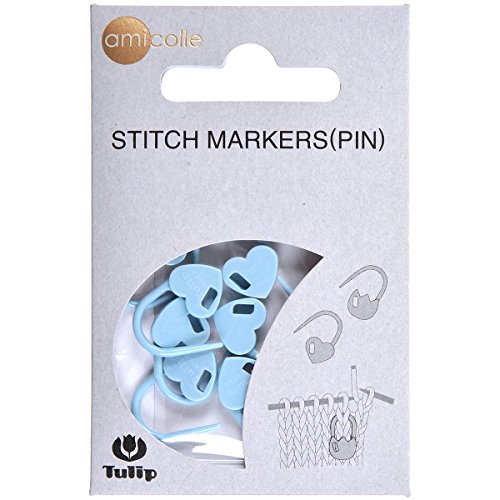
Beyond their charming appearance, these markers are engineered with a very smooth, snag-free closure. The heart shape isn’t just for show; it makes them easy to grip and open, even if you have stiff fingers or limited dexterity.
These are excellent for beginners who might struggle with the tiny, stiff clasps on other locking markers. They are lightweight, so they won’t pull on your lace or distort the tension of your yarn-overs.
Because they are slightly larger than standard locking markers, they are highly visible against dark-colored yarns. They are a great choice if you prefer tools that are both functional and aesthetically pleasing.
Susan Bates Split Ring Markers for Repeats

Split ring markers are the fastest to move because they simply hook onto the needle. They are ideal for quick, repetitive lace patterns where you might be moving the markers every few rows.
Because they don’t have a locking mechanism, they are completely snag-free. You don’t have to worry about the "gate" of a locking marker catching on your yarn while you are working a complex lace decrease.
The trade-off is that they can occasionally slip off the needle if you are knitting very loosely or if you handle your work roughly. Use these for stable, flat lace projects where speed and ease of use are your top priorities.
Why Row Markers Are Essential for Lace Knitting
Lace knitting relies on the precise count of stitches between increases and decreases. If you miss a single yarn-over, the error will cascade through the entire row, making it impossible to complete the next repeat correctly.
Markers act as a visual "reset" button. By placing a marker at the end of every repeat, you isolate the error to a small section of the row. If your count is off, you only have to tink—or unknit—a few stitches rather than the entire row.
Ultimately, markers allow you to knit with more confidence and less anxiety. They turn the process of lace knitting from a high-stakes guessing game into a structured, reliable rhythm.
How to Choose the Right Marker Size for Needles
The golden rule of marker selection is that the marker should be slightly larger than the needle diameter. If the marker is too tight, it will drag against the needle, causing you to knit more tightly than intended.
If you are working with large needles, such as those used for a lace-weight mohair shawl, you need a marker with a larger circumference. Conversely, if you are using tiny 2.0mm needles for intricate sock lace, you need a very small, thin marker to avoid stretching the stitch.
Always test your marker on your needle before you cast on. If you feel a "hitch" as you slide the marker from the left needle to the right, it is too small and will likely cause tension issues.
Tips for Preventing Marker Snags in Fine Lace
Snagging is the enemy of fine lace, especially when working with high-twist wool or delicate silk blends. The most common culprit is a marker with a sharp edge or a poorly closed locking mechanism.
To prevent snags, avoid using markers with decorative beads or charms while working with mohair or angora. These fibers are notorious for catching on anything with a protrusion.
If you must use a locking marker, always double-check that the "gate" is fully flush with the body of the marker. If you find a marker is consistently catching, retire it immediately, as a snagged stitch can quickly become a dropped stitch or a broken yarn.
Troubleshooting Common Lace Pattern Repeat Errors
Even with markers, mistakes happen. When you reach a marker and realize your stitch count is wrong, don’t panic. The first step is to count your stitches within that specific repeat to see if you are over or under.
If you are short a stitch, it is likely a missed yarn-over or an accidental "knit two together" instead of a single knit stitch. If you have an extra stitch, you may have accidentally created a yarn-over where one wasn’t called for.
My best advice is to embrace the "tink" (unknitting stitch by stitch). It is tedious, but it is the only way to ensure your lace pattern remains consistent throughout the project.
Investing in the right row markers will fundamentally change your lace knitting experience for the better. By choosing tools that suit your yarn weight and needle size, you reduce the risk of snags and tension issues. Remember that these markers are your partners in the craft, designed to keep your stitches in order so your creativity can flourish. Take the time to find the ones that feel best in your hands, and you’ll find that even the most complex lace charts become a joy to navigate.