6 Best Knitting Markers For Pattern Tracking To Use
Struggling to keep your place? Discover the 6 best knitting markers for pattern tracking to simplify your projects and improve your accuracy. Shop our top picks!
Stitch markers are the unsung heroes of a successful knitting project, turning complex charts into manageable, bite-sized tasks. Without them, a simple lace shawl or a dense sweater yoke can quickly descend into a frantic counting exercise. Choosing the right tool for the job is not just about aesthetics; it is about ensuring your rhythm remains unbroken and your stitch count stays accurate. These six markers represent the gold standard for navigating the common pitfalls of pattern tracking.
Clover Lock Ring Markers: Best for Versatility


These markers function like tiny safety pins, allowing them to be opened and closed directly within the fabric. Because they can be removed or relocated at any time, they are the ideal choice for tracking row counts or marking specific increases and decreases.
The plastic construction is lightweight and gentle on delicate fibers like alpaca or mohair. Unlike metal alternatives, these are unlikely to leave permanent indentations in springy yarns or snag on loose plies.
The primary trade-off is the closure mechanism. With extensive use, the tiny plastic hinge can eventually fatigue or snap, making it a recurring consumable item rather than a lifetime tool.
Cocoknits Precious Metal Markers: Best for Lace
Fine lace work often requires thin, snag-free markers that do not interrupt the flow of delicate stitches. These thin metal loops are designed to slide effortlessly over needles, ensuring that the transition from one stitch to the next remains seamless.
The magnetized nature of these markers is a brilliant practical inclusion. When paired with a magnetic wearable or tray, they are much harder to misplace during a knitting session, saving time otherwise spent hunting for dropped accessories.
Because they are made of steel, they are exceptionally durable and thin, which is vital when working with high-twist lace weight yarns. They will not distort the tension of your work, though users should be mindful that they can feel colder to the touch than plastic alternatives.
Susan Bates Split-Lock Markers: Best Budget Pick

For the knitter who requires a high volume of markers for large-scale projects like blankets or oversized garments, these offer excellent value. The design is simple, robust, and performs exactly as expected for basic stitch counting.
The split-ring design allows them to be slipped onto a needle or hooked directly into the work. They are remarkably easy to manipulate, even for those with limited dexterity, making them a staple in many project bags.
These markers are slightly thicker than high-end alternatives, which can cause minor spacing issues if you are knitting at a very tight gauge. If you are using needles smaller than 3.0mm, these may feel slightly bulky between the stitches.
Tulip Gourd-Shaped Markers: Most Snag-Free Pick

The unique shape of these markers prevents the yarn from getting caught in the opening mechanism. They glide over the needle and through the yarn fibers with a smoothness that is noticeably superior to standard safety-pin style markers.
The smooth finish is particularly beneficial when working with hand-dyed yarns that may have uneven twist or slightly fuzzy textures. The design minimizes the risk of accidental snagging or pulling, which is essential when working with luxury fibers like silk or cashmere.
The higher price point reflects the precision engineering required for the smooth closure. These are best reserved for special projects where fiber protection is the highest priority.
KnitPicks Numbered Markers: For Complex Repeats

Complex colorwork or lace charts often involve multiple repeating sections that can be difficult to track manually. Numbered markers act as an external memory, ensuring you know exactly which portion of the chart you are currently addressing.
These are particularly effective for modular knitting or projects with multiple cable patterns occurring simultaneously. By placing a specific number at the beginning of each repeat, you eliminate the need to constantly reference your paper chart for orientation.
The trade-off is that they are generally larger than standard rings, which can be distracting if used in dense, small-gauge work. Reserve these for larger projects where the ability to distinguish sections outweighs the need for a low-profile tool.
Katrinkles Wooden Markers: Most Fun & Decorative

Knitting is a creative hobby, and adding a touch of personality to your needles can make the process more enjoyable. These laser-etched wooden markers are as beautiful as they are functional, often serving as a conversation starter in group settings.
Beyond the aesthetics, the wood provides a slight, pleasant texture that can be easier to grip than slick plastic or metal rings. They are also incredibly lightweight, ensuring they do not add unwanted drag to your needlework.
Because they are made of wood, they are not suitable for all environments; they can be fragile if crushed in a tightly packed bag. Treat them as heirloom-style accessories rather than utilitarian tools to be tossed in a junk drawer.
Locking vs. Ring Markers: Which Type is for You?
Ring markers belong on the needle, sliding between stitches to denote pattern repeats or sections. They are the go-to for standard in-the-round knitting, such as hats, sweaters, and socks.
Locking markers, or bulb-style markers, are designed to be attached to the fabric itself. They are essential for counting rows, marking the start of a round in long-term projects, or holding dropped stitches to prevent them from unraveling.
When choosing, evaluate whether your pattern needs the marker to move with the stitches (rings) or stay stationary in the fabric (locking). Beginners should aim to have a mix of both in their kit to handle any pattern instruction they encounter.
Using Markers to Track Repeats and Rows Correctly
To track repeats effectively, place a distinctively shaped or colored marker at the start of every repeat in your chart. This allows you to verify your stitch count at the end of every row without re-counting the entire piece.
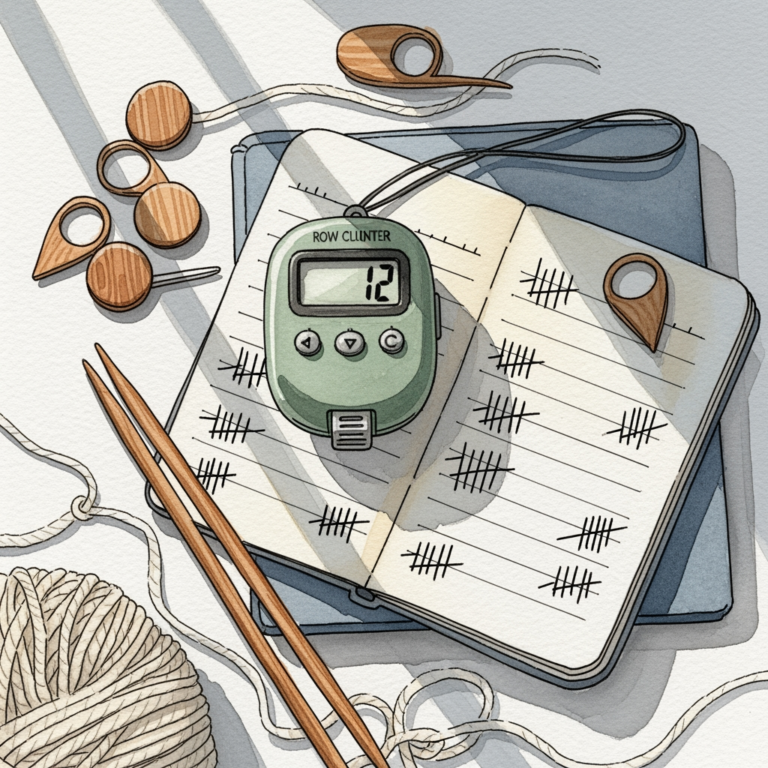
If your pattern requires row counting, attach a locking marker to the fabric every 10 or 20 rows. This eliminates the confusion caused by miscounting rows when picking up a project after a few days of rest.
Always use a different color or shape to denote the “Beginning of Round” (BOR). Mistaking a repeat marker for a BOR marker is the most common cause of errors in complex lace and colorwork.
How to Stop Your Stitch Markers from Snagging Yarn
Snagging usually occurs when the gap in the marker is not perfectly flush or when the marker material is too rough. To minimize this, prioritize metal or polished plastic markers that feature seamless, rounded designs.
If a marker consistently catches, inspect the closure for any stray burrs or rough edges left over from the manufacturing process. A quick pass with a fine-grit sandpaper or a metal file can often smooth out a sharp point that is tearing through your yarn.
Avoid using markers that are too large for your needles, as the excess space creates an opening for yarn to slide into and get wedged. Always ensure the internal diameter of your ring marker is only slightly larger than the needle size you are currently using.
When to Use Markers on Needles vs. in Your Fabric
Use markers on needles when your primary concern is maintaining stitch counts and pattern sequences across a round. This is the most efficient way to work, as the marker naturally travels with the knitting.
Use markers in your fabric when you are working flat or when the marker needs to remain in a specific location for an extended duration. This includes tracking increases on a raglan sleeve or marking the length of a hemline.
Never leave markers in your fabric while blocking, as they can cause permanent distortion or rust damage, especially with metal varieties. Remove all markers before the final soaking and pinning process to ensure your finished item remains perfectly symmetrical.
By mastering the use of these simple tools, you shift the focus from counting stitches to the joy of watching your fabric grow. Whether you choose the durability of steel or the charm of wood, the best marker is the one that allows you to knit with confidence.