7 Best Fabric Steaming Irons For Professional Finishing
Achieve crisp, professional results with our expert review of the 7 best fabric steaming irons. Explore our top-rated picks and upgrade your garment care today.
Achieving a professional finish on a knitted garment is the difference between a project that looks handmade and one that looks heirloom-quality. Proper blocking transforms uneven stitches, tightens up lace, and relaxes the tension inherent in stranded colorwork. Choosing the right tool depends entirely on the fiber content and the structural requirements of the finished piece. This guide evaluates the top steaming tools to ensure every stitch looks its best.
Rowenta DW5080 Focus: Best for Precision Seaming


The Rowenta DW5080 Focus excels where detail matters most, specifically when pressing seams on structured garments or crisping the edges of a folded collar. Its German-engineered soleplate provides exceptional glide, preventing the drag that often distorts delicate, freshly blocked stitches.
For those working with wool-blend sweaters that require sharp seam alignment, the precision tip is a distinct advantage. It reaches into tight gussets and underarms where bulky steam irons fail to maneuver.
While the heat output is impressive, exercise caution with delicate fibers like silk or alpaca. High heat combined with direct pressure can permanently flatten the loft of luxury yarns, leading to a “dead” appearance in the fabric.
Bottom line: Use this iron when you need technical precision for finishing seams, but keep a pressing cloth between the soleplate and your fiber to protect the loft.
Jiffy J-2000 Steamer: The Pro’s Blocking Choice

The Jiffy J-2000 is a staple in high-end knitwear studios for a reason: it delivers consistent, vertical steam without requiring physical contact with the garment. This makes it the gold standard for blocking sweaters that are too bulky or delicate to be laid flat.
Vertical steaming allows the fibers to relax under their own weight, which is ideal for opening up lace shawls or evening out the tension in stranded colorwork. Because the steam head never touches the yarn, there is zero risk of crushing the stitch definition or leaving an iron-shaped imprint on the fabric.
Some users find the footprint a bit large for a small home studio, but the longevity of the components justifies the space. It is a workhorse designed to handle large-scale projects like heavy cables or multi-piece garments.
Bottom line: If the primary goal is to relax fibers and open up stitch patterns without damaging the surface texture, this steamer is the superior choice.
Oliso ProPlus Smart Iron: For the Safest Studio

The Oliso ProPlus features unique “iTouch” technology that lifts the iron automatically when the handle is released. This eliminates the repetitive motion of standing the iron upright, significantly reducing wrist strain during long blocking sessions.
This feature is a massive benefit for those who block multiple pieces or larger items like afghans. By removing the need to tip the iron, it also minimizes the risk of accidental steam burns or scorched tabletops, making the studio environment safer.
The iron maintains an incredibly steady temperature, which is vital for synthetic blends or superwash wools that may react unpredictably to heat spikes. Reliability in temperature control ensures that the blocking remains consistent across the entire project.
Bottom line: Choose this iron if ergonomic comfort and safety are the top priorities during long periods of project finishing.
CHI Steam Iron 13102: Smoothest on Delicate Fibers
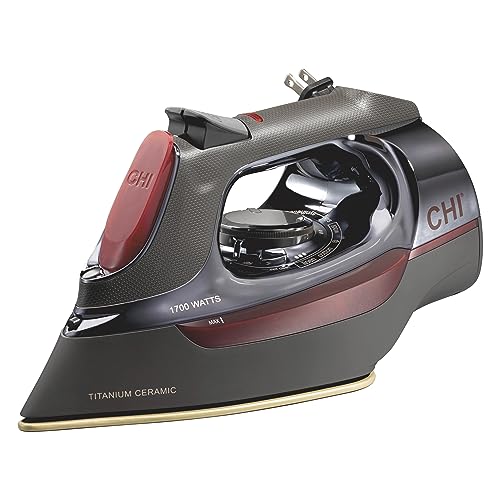
The CHI 13102 utilizes the same ceramic technology found in their professional hair tools, resulting in an exceptionally smooth soleplate. This smooth surface is essential when working with plant fibers like linen or cotton, which are notorious for catching on standard metal irons.
The steam distribution is remarkably even, preventing “wet spots” that can cause some natural fibers to lose shape or felt prematurely. For delicate fibers that have been worked on slippery needles, this iron provides the glide needed to set the shape without dragging the stitches out of alignment.
While it lacks the heavy-duty industrial steam power of dedicated steamers, its ability to produce a refined finish on fine-gauge yarn is unmatched. It is the perfect tool for finishing lightweight summer tops and intricate lace accessories.
Bottom line: This is the premier choice for fine-gauge knitting and plant-based fibers that require a gentle, snag-free touch.
Reliable Maven 140IS: For Serious Steam Power

The Reliable Maven 140IS is a professional-grade iron that offers significantly higher steam pressure than standard household models. This pressure allows steam to penetrate deep into thick, multi-ply wools, which is critical for fully relaxing dense fabric structures.
If you are a knitter who frequently works with heavy, woolen-spun yarns, this iron will save significant time. The high-velocity steam effectively “sets” the yarn, ensuring that the finished garment maintains its shape long after the blocking process is complete.
Because the steam output is so high, it is easy to over-saturate a garment if you are not careful. Always start with a lower setting and build up the steam volume as needed to avoid turning your project into a damp, heavy mess.
Bottom line: If you frequently knit with thick, high-twist, or dense wool yarns, the power of this iron is essential for achieving a thorough, long-lasting block.
Sunbeam Steammaster: A Solid Budget-Friendly Pick
The Sunbeam Steammaster is a reliable, no-nonsense tool that provides adequate steam and heat for general blocking needs. It serves as an excellent entry-level option for beginners who are not yet ready to invest in high-end studio equipment.
While it may not offer the precision of more expensive models, it handles basic tasks like blocking scarves and sweaters perfectly well. Its lightweight frame makes it easy to maneuver, even for those who may struggle with heavier professional-grade irons.
Be mindful that the steam control may require more manual adjustment than premium models. Check the water reservoir frequently, as heavy use can deplete the tank faster than expected, potentially leading to spits of water if the steam is not managed correctly.
Bottom line: This iron is a reliable, functional choice for the occasional project, offering the essential features needed for effective blocking at a lower price point.
Conair Handheld Steamer: Best for Travel & Small Knits
The Conair Handheld Steamer is designed for portability, making it perfect for quick touch-ups on garments worn to fiber festivals or workshops. It is small enough to fit in a project bag, yet powerful enough to freshen up a hat or a pair of socks that have become wrinkled.
This tool is not intended for the initial, thorough blocking of a full-sized sweater. Instead, it serves as a maintenance tool to revitalize fibers between washes or to smooth out small areas where stitches have gone slightly askew during wear.
It is particularly useful for delicate accessories like silk cowls, where you want to add a bit of moisture and drape without the weight of a full-sized iron. Its simplicity makes it the most accessible option for knitters who find the prospect of heavy ironing equipment intimidating.
Bottom line: Use this for maintenance and small-scale touch-ups, not as a replacement for a full-sized iron or steamer for large-scale projects.
How to Choose a Steamer or Iron for Fabric Arts
Choosing the right tool depends on your most common project type. If you primarily knit structured, seamed sweaters, a high-quality iron with a precision tip is non-negotiable. Conversely, if you focus on lace shawls or delicate, oversized wraps, a standing steamer is far more effective at achieving the necessary drape.
Consider the fiber content of your stash as well. Plant fibers like cotton and linen generally tolerate, and often benefit from, higher heat and more consistent steam. Animal fibers, particularly luxury blends like cashmere or angora, require a “soft touch” approach where steam is used to influence shape without the risk of heat damage.
Assess your physical comfort during the finishing process. If you find yourself avoiding the blocking stage because of the physical strain of moving equipment, prioritize ergonomic features like automatic lifting or lightweight designs. The best tool is the one that you actually feel inclined to use.
Steam Blocking vs. Wet Blocking: Which to Choose?
Wet blocking involves soaking the garment in water and gently squeezing it out, then pinning it to the desired dimensions. This method is the gold standard for reshaping, as it allows every single stitch to relax fully and re-align in a saturated state. Use wet blocking for new, finished garments to ensure the tension is perfectly balanced.
Steam blocking is faster and relies on heat and moisture to soften the fibers enough to be gently nudged into shape. This is an excellent method for quick touch-ups or for fibers that don’t react well to full submersion. Steam is also the preferred choice for colorwork that might bleed dye if soaked.
Be careful not to confuse “steaming” with “ironing.” Steam blocking should generally avoid direct contact with the fabric, while ironing involves pressing the soleplate onto the material. Always opt for wet blocking for the first wash of a new garment to establish its permanent shape, reserving steam for maintenance and minor adjustments.
How to Safely Steam Different Types of Yarn Fibers
Understanding the thermal limits of your yarn is critical for successful steaming. Always perform a test swatch using the exact yarn from your project before applying any heat.
- Superwash Wool: These fibers are treated to resist felting but can still stretch significantly under high heat and steam. Keep the steamer moving and do not pull on the fabric.
- Plant Fibers (Cotton, Linen, Bamboo): These are generally heat-tolerant and often benefit from the higher pressure of a steam iron. However, they can lose their “bounce,” so avoid over-stretching while they are damp and warm.
- Silk and Luxury Blends: Use the lowest possible setting. Direct heat is rarely necessary; let the ambient steam do the work from a distance of at least two inches.
- Synthetic Fibers (Acrylic, Nylon): Use extreme caution. These materials have a “melting point” and can fuse if hit with too much direct heat, leaving a permanent shiny patch or a melted texture. Keep the steam low and moving constantly.
Proper blocking is the final, essential step in any knitting project, turning individual stitches into a cohesive, professional garment. Whether you choose a precision iron for seaming or a steamer for draping, the right equipment makes the process efficient and effective. With the right technique, your projects will not only look better immediately but will hold their shape through years of wear.