
6 Best Wool Carders For Maintaining Fiber Alignment
Discover the top six wool carders for superior fiber alignment. This guide compares essential tools to help spinners achieve smooth, consistent results.
Transforming raw, tangled fleece into smooth, consistent roving is the meditative foundation of every great handspun yarn. Whether you are prepping a delicate Merino top or a rustic Highland wool, the right carders ensure your fibers are aligned for a seamless spin. Investing in quality tools prevents the frustration of neps and slubs that can ruin the stitch definition of your finished sweater. This guide explores the best carding options to elevate your fiber prep from a chore to a craft.
Strauch Petite Carders: Best Overall Performance
The Strauch Petite carders are widely considered the gold standard for fiber enthusiasts who prioritize ergonomic comfort without sacrificing efficiency. Their smaller size makes them incredibly manageable, preventing the wrist fatigue that often sets in during long sessions of processing a full fleece.
These tools excel at creating a light, airy batt that is a joy to spin from the fold. If you are working with fine fibers like Alpaca or high-quality wool, the precise tooth density ensures you aren’t overworking the fiber, which can lead to breakage.
The tradeoff here is cost; they are a significant investment compared to entry-level options. However, for the knitter who plans to spend years spinning their own yarn, the build quality and performance make them a permanent fixture in your fiber studio.
Ashford Hand Carders: Best for Wool Beginners
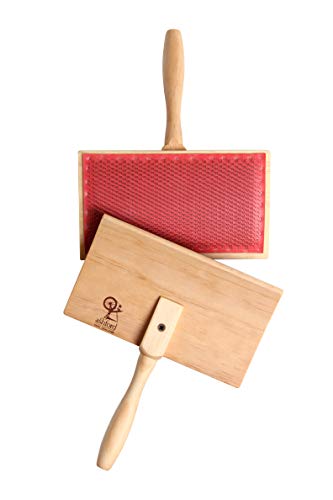

Ashford hand carders are the reliable workhorses you will find in almost every guild hall and fiber workshop. They offer a straightforward, no-nonsense approach to learning the mechanics of fiber alignment.
They are particularly forgiving for those just starting to develop their "flick" and "swipe" technique. Because they are widely available and durable, you don’t have to worry about treating them with kid gloves while you master the basics of opening up a lock of wool.
Keep in mind that their standard cloth is designed for general-purpose wool. If you attempt to process very fine, slippery silk blends or extremely coarse rug wool, you may find they require more passes to achieve the desired smoothness.
Howard Brush Co. Carders: Best Professional Set
When you reach the stage where you are processing entire fleeces for a specific project—like a cabled cardigan that requires consistent, long-staple yarn—Howard Brush Co. tools are the professional choice. Their craftsmanship is legendary, offering a level of precision that is immediately noticeable in the hand.
These carders are built to withstand heavy, continuous use without the teeth bending or the backing pulling away from the wood. They are the tools you buy when you are ready to stop "making do" and want gear that matches your growing skill level.
The primary consideration is weight and size; they are substantial tools. If you have smaller hands or limited space, ensure you are comfortable with a larger surface area before committing to this professional-grade set.
Pat Green Carders: Best for Heavy Duty Fiber

Pat Green carders are engineered for the knitter who isn’t afraid of a bit of grit in their fiber. If you frequent sheep and wool festivals and come home with raw, greasy fleeces, these are the tools that will handle the heavy lifting.
The carding cloth on these units is exceptionally robust, designed to grab and align coarse, thick, or matted fibers that would simply clog up finer carders. They excel at blending different textures, allowing you to incorporate mohair or silk neps into a wool base with ease.
Be aware that because they are so effective at grabbing fiber, they can be aggressive. You must use a lighter touch when working with delicate, soft wools to avoid snapping the fibers and creating unwanted short bits.
Brother Drum Carder: Best for Large Batts
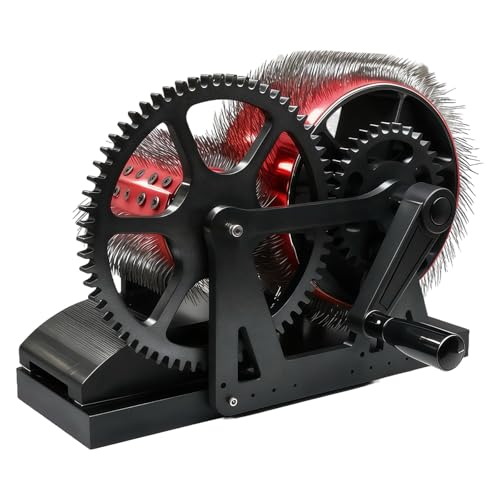
Sometimes, hand carders simply aren’t enough when you need to produce a large volume of fiber for a multi-skein project. The Brother Drum Carder allows you to feed in large amounts of fiber quickly, producing a wide, uniform batt in minutes.
This is a game-changer if you are planning a colorwork sweater and need to blend several shades of wool to achieve a specific gradient. The mechanical advantage of the drum ensures that every fiber is pulled into perfect alignment, resulting in a consistent, smooth yarn that spins like a dream.
The space requirement is the main tradeoff; a drum carder is a stationary tool that needs a dedicated spot on your table. It is an essential upgrade once your hobby evolves from spinning small batches to producing your own sweater-quantity yarn.
Clemes & Clemes Carders: Best Hand-Crafted Tool
Clemes & Clemes tools are the "heirloom pieces" of the fiber arts world. Each set is meticulously hand-crafted, often from beautiful hardwoods, making them as much a pleasure to look at as they are to use.
Beyond the aesthetics, the geometry of their carders is optimized for a smooth, sweeping motion. This design helps reduce the physical strain on your hands and shoulders, which is a major factor if you suffer from occasional tension or joint discomfort after a long day of fiber prep.
Because they are artisan-made, they are often in high demand and can have longer lead times. If you prioritize craftsmanship and want a tool that will last for generations, the wait is well worth it.
Understanding Carding Cloth TPI and Fiber Types
TPI stands for "teeth per inch," and it is the most critical factor in how your carders interact with your fiber. A higher TPI is meant for fine, delicate fibers, while a lower TPI is intended for coarser, thicker wools.
- Fine TPI (72-120): Perfect for Merino, Alpaca, and Angora.
- Medium TPI (54-72): The "all-rounder" for standard wool breeds like Corriedale.
- Coarse TPI (36-54): Best for rug wool, long-staple fibers, and raw, unwashed fleece.
Choosing the wrong TPI can lead to excessive waste. If you use coarse carders on fine wool, you will tear the fiber; if you use fine carders on coarse wool, you will never get the locks to open properly.
Hand Carders vs. Drum Carders: Which to Choose
Hand carders offer intimacy and control. They allow you to feel the fiber through the teeth, helping you identify and remove vegetable matter or "second cuts" that might make your yarn scratchy or uneven.
Drum carders offer speed and volume. They are the clear winners for blending colors or creating large, consistent batts for a big project. However, they can sometimes mask the quality of the fiber, as the machine does the work for you.
Many seasoned spinners own both. Use hand carders for small-batch sampling or delicate processing, and reserve the drum carder for when you have a clear vision for a large project and need to prep a significant amount of fiber efficiently.
Essential Maintenance for Your Carding Tools
A carder is only as good as the condition of its teeth. Over time, fiber oils and dust will build up between the teeth, reducing their ability to grab and align the wool.
Use a dedicated carder cleaner or a stiff brush to remove residual fiber after every session. Never leave your carders sitting out in a dusty room, as the teeth can easily collect debris that will end up in your next batch of yarn.
If the teeth become bent, use a small, flat tool or a specialized "carder comb" to gently nudge them back into alignment. Proper care ensures your tools remain effective and prevents the frustration of "clumpy" fiber that won’t draft smoothly.

How to Properly Align Your Fiber for Spinning
Fiber alignment is the secret to a strong, smooth yarn. When you card, you want the fibers to lay parallel to one another, which minimizes the amount of twist needed to hold them together.
Start by placing a small amount of fiber on one carder and using the other to gently "flick" the tips. Gradually work your way through the lock, moving from the ends toward the center, until the fiber looks like a soft, uniform cloud.
Avoid the temptation to overload your carders. Working in small, manageable amounts ensures that the teeth can fully penetrate the fiber, resulting in a smooth, tangle-free batt that will make your spinning feel effortless and professional.
Selecting the right carders is a deeply personal process that depends on the fibers you love and the projects you dream of creating. By understanding the nuances of TPI, tool mechanics, and proper maintenance, you ensure that your fiber prep is as enjoyable as the knitting itself. Remember, the quality of your yarn starts long before it hits your needles. Happy spinning, and may your fiber always be perfectly aligned.
