6 Best Crochet Row Counters For Circular Work Tested
We tested six top crochet row counters for circular projects. Discover which tools offer the best accuracy and comfort for your next seamless round creation.
Keeping track of rounds in circular knitting is the difference between a perfectly symmetrical sweater sleeve and a frustrating session of ripping back your work. When working in the round, the lack of a "front" and "back" makes it incredibly easy to lose your place in a complex stitch pattern or increase sequence. These six tools represent the most reliable ways to ensure your row count stays accurate from the cast-on to the final bind-off. Whether you prefer tactile mechanical clicks or modern digital interfaces, there is a solution here to suit your unique knitting rhythm.
Clover Kacha-Kacha: The Best Ergonomic Choice
The Clover Kacha-Kacha is a staple in many project bags because of its satisfying, tactile "click" mechanism. It features a large, easy-to-press button on top that requires very little force, making it ideal for knitters prone to hand fatigue or those working with heavy wools that tire the muscles.


Because it is a mechanical counter, you never have to worry about batteries dying in the middle of a complex lace round. The sturdy clip allows you to attach it directly to your knitting bag or even your clothing, keeping it within arm’s reach at all times.
However, the size can be a bit bulky if you prefer a minimalist setup. If you are working on something delicate like fine-gauge lace, the weight of the counter hanging from your work might feel distracting.
Knitters Pride SmartStix Row Counter Ring

This ring-style counter is a game-changer for knitters who find themselves constantly reaching for their project bag to track their rounds. By wearing the counter on your finger, you keep your tracking tool exactly where your hands are already working.
The rotating dial is smooth, allowing you to advance the count with a quick flick of your thumb. It is particularly useful when you are working on double-pointed needles or a small-circumference circular project where you don’t want to set your needles down.

The trade-off here is the sizing; if your fingers are particularly thin or thick, the ring might feel slightly loose or restrictive. It is a fantastic tool for those who prioritize flow and don’t want to break their rhythm while managing a complex pattern.
Cocoknits Maker’s Keep Magnetic Bracelet
The Maker’s Keep is less of a row counter and more of a command center for your entire knitting process. It uses a magnetic slap bracelet to hold your stitch markers, needles, and a small, separate row counter in one convenient location.
For circular work, this is brilliant because you can keep your counter magnetically attached to your wrist while you work. You don’t have to hunt for the counter on the couch cushions or worry about it sliding off your lap.
While it is a higher investment than a simple clicker, the organizational benefits are immense. It is best suited for knitters who regularly work on projects with multiple stitch markers and complex color changes.
Boye Digital Row Counter: Best Value Pick

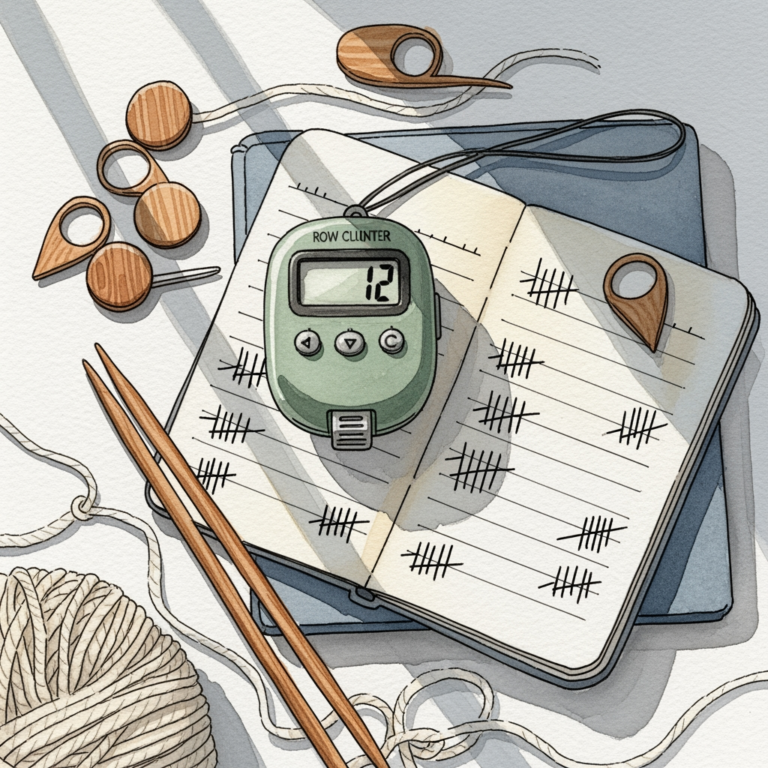
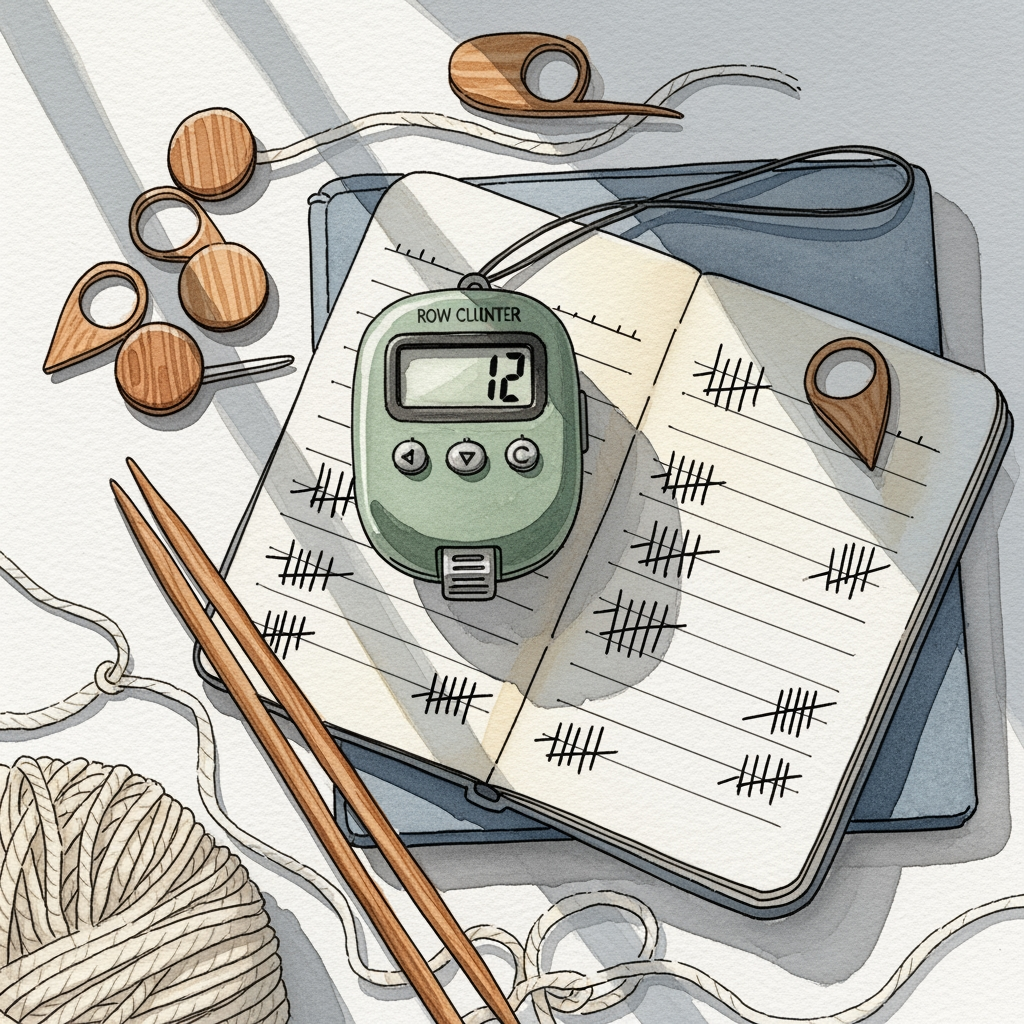
The Boye Digital Row Counter is the definition of "no-frills" efficiency. It is a small, lightweight plastic device that sits comfortably in your palm or can be tucked into your project bag without adding any significant weight.
The digital display is bright and clear, which is a massive help if you are knitting with dark-colored yarns or working in low-light conditions. It is an affordable entry point for beginners who aren’t ready to invest in high-end accessories.
The main downside is the button placement, which can sometimes be triggered accidentally if you toss it into a crowded bag. Always double-check your count before you start a new round if the device has been jostling around in your project bag.
Susan Bates Digital Finger Row Counter
This counter is designed to be worn like a watch, featuring an adjustable strap that fits almost any finger size. It is incredibly lightweight, meaning you will likely forget you are even wearing it after a few minutes of knitting.
It is particularly effective for circular knitting because it stays out of the way of your yarn tension. You can easily tap the button with your opposite hand without ever letting go of your needles or your yarn.
Because it is a digital device, it does rely on a small battery. Keep a spare battery in your notions tin, as these devices have a habit of going dark right when you are in the middle of a critical increase round.
Row Counter App: The Best Digital Solution
If you always have your phone or tablet nearby, a row counter app is often the most powerful tool in your arsenal. Many of these apps allow you to save multiple projects simultaneously, so you never lose track of where you are on your sweater, socks, and shawl.
Apps often include features like voice activation, which is a dream for knitters who find tapping a button interrupts their concentration. You can simply say "next" to advance your count while your hands stay busy with your needles.
The risk, of course, is the "distraction factor" of having a phone in your lap. If you find yourself checking social media instead of knitting, a dedicated physical tool might be a better choice for your productivity.
Why Accurate Row Counting Matters for Circles
In circular knitting, there is no visual cue of a "wrong side" to help you gauge your progress. If you miss a round in a lace chart or an increase sequence, the mistake is often not visible until you have worked several inches of fabric.
Accurate counting is essential for maintaining symmetry in garments like socks or sleeves. If you are working on a pair of socks, you need to ensure both are identical in length and pattern placement, which is impossible without a reliable count.
Ultimately, a row counter acts as a safety net. It allows you to focus on your tension and stitch quality rather than using your mental energy to keep a tally of where you are in the pattern.
How to Choose a Counter for Circular Projects
When choosing a tool, consider your personal knitting environment and your physical comfort. If you are prone to wrist strain, avoid heavy tools that hang off your needles and opt for a finger-worn or tabletop counter instead.
Think about the complexity of your patterns as well. If you are working on a simple stockinette cowl, a basic clicker is sufficient. If you are working on complex cables or stranded colorwork, an app that tracks your chart progress is worth the investment.
- For portability: Choose a finger-worn digital counter.
- For complex charts: Opt for a tablet-based app.
- For tactile satisfaction: Go with a mechanical clicker.
Common Mistakes When Tracking Round Progress
The most common mistake is forgetting to click the counter before you start the next round. Make it a habit to click the counter the moment you complete the final stitch of the round, before you even move your yarn to the next position.
Another mistake is relying on your memory rather than the tool. Even if you think you only have two rows left, always check your counter; our brains often "fill in" the gaps when we are tired or distracted.
Lastly, don’t forget to reset your counter when you start a new project. It sounds obvious, but many of us have started a new pair of socks only to realize halfway through the leg that we were still counting from a sweater we finished last month.
Tips for Maintaining Your Row Counting Tools
Keep your digital counters in a small, protective pouch to prevent the buttons from being pressed accidentally. If you use a battery-powered device, remove the battery if you plan to store the tool for an extended period to prevent corrosion.
Mechanical counters should be kept away from excessive dust or lint, which can sometimes clog the internal gears. A quick wipe with a microfiber cloth is usually enough to keep the exterior clean and the buttons responsive.
Treat your row counter with the same care you give your needles. When you take care of your tools, they will reliably support your knitting journey for years, ensuring every round is counted and every project stays on track.
Finding the right row counter is a personal journey that depends as much on your knitting style as it does on the project in your lap. Whether you choose the tactile click of a Clover or the digital convenience of an app, the goal is to reduce stress and increase your enjoyment. Don’t be afraid to try a few different methods until you find the one that feels like a natural extension of your hands. Happy knitting, and may your counts always be accurate.