7 Best Row Counter Clickers For Benchtop Use Reviewed
Discover the 7 best benchtop row counter clickers. We review top models for accuracy, durability, and ease of use to help you find the perfect tool today.
Keeping track of your rows is the difference between a perfectly symmetrical sweater and a frustrating night of frogging your hard work. Whether you are working through complex cable repeats or simple stockinette, a reliable counter acts as your project’s memory. Finding the right tool for your benchtop setup can transform your knitting rhythm from chaotic to meditative. Let’s look at the best options to ensure your rows are always accounted for.
Clover Kacha-Kacha: Best Overall Benchtop Tool
The Clover Kacha-Kacha is a staple in many knitting bags for a reason: it is remarkably consistent and satisfying to use. The large, audible "kacha" sound provides immediate feedback, letting you know the count has registered without you needing to look down.
This tool sits perfectly on a side table or a crowded project tray. Because it is mechanical, you never have to worry about batteries dying in the middle of a lace chart. It is the reliable workhorse for those who want a tactile experience.
However, the size is slightly larger than digital alternatives, which might be a drawback if your workspace is limited. If you value a sturdy, mechanical feel that won’t roll off your table, this remains the gold standard.
Knitters Pride Counter: Best Digital Precision


Digital counters offer a level of precision that mechanical versions sometimes struggle to match, especially when dealing with high-row-count blankets. The Knitters Pride digital counter features a clear LCD screen that is easy to read even in low-light conditions.
This counter is ideal for knitters who suffer from eye strain after long sessions with dark-colored yarns. The buttons are responsive but firm enough to prevent accidental clicks when you set it down on your bench.
One trade-off with digital tools is the battery dependency. Always keep a spare button cell battery in your notions tin so you aren’t left stranded during a late-night knitting marathon.
Cocoknits Maker’s Keep: Best Wearable Hybrid
If you find yourself constantly losing your counter under a pile of yarn cakes or pattern printouts, the Maker’s Keep is a game-changer. It is essentially a magnetic slap bracelet that holds your stitch markers and a small, sliding counter.

This tool is brilliant for knitters who move around their house or take their knitting to public spaces. You have everything you need attached directly to your wrist, keeping your benchtop clear for your needles and scissors.
It is particularly useful for those working on complex patterns where you need to track multiple things at once. The magnetic surface is strong enough to keep your needles from rolling away, too.
Addi Click Counter: Best Ergonomic Design

Addi is renowned for its high-quality needles, and their click counter follows that same tradition of German engineering. It fits comfortably in the palm of your hand, making it perfect for knitters who prefer to keep their counter tucked away while they work.
The ergonomic shape is designed to minimize hand fatigue, which is a major consideration if you have arthritis or tend to knit for hours on end. The button click is soft and unobtrusive, perfect for knitting in a quiet room or while watching a movie.
While it lacks the heavy-duty weight of a benchtop-only tool, its portability is unmatched. It is a fantastic choice for those who want a tool that feels like an extension of their hand.
Susan Bates Hand Counter: Best Budget Choice
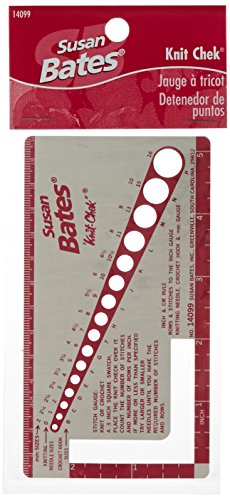
Sometimes the simplest tool is the most effective, and the Susan Bates hand counter proves that you don’t need fancy electronics to get the job done. It is a classic, no-nonsense mechanical counter that has been around for decades.
This is the perfect "starter" counter for someone just learning to track their rows. It is incredibly affordable, meaning you can keep one in every project bag you own without breaking the bank.
Don’t let the low price fool you into thinking it’s fragile. These counters are surprisingly durable and can survive being tossed into a heavy knitting bag for years of service.
Row Counter Ring: Best Minimalist Option
The row counter ring is a unique solution for the knitter who hates breaking their flow to reach for a tool. You wear this directly on your finger, allowing you to advance the count with a quick flick of your thumb.
This is an excellent option for those who knit continental style, as you can easily keep your hand in position. It removes the "reach and click" motion that can sometimes disrupt your tension.
Because it is so small, it can be a bit fiddly to operate if you have larger hands or limited dexterity. It is best suited for simple, repetitive projects rather than complex lace where you need to track multiple stitch repeats.
Pony Mechanical Counter: Best Sturdy Build
The Pony mechanical counter feels substantial in the hand, offering a robust construction that stands up to heavy daily use. It is a classic benchtop tool that is heavy enough that it won’t slide around your workspace when you press the button.
This is a great choice for knitters who prefer a physical, mechanical action over a digital button. The numbers are bold and high-contrast, making them easy to read at a glance.
If you are working with heavy, rustic wools that require a lot of focus, having a sturdy tool that stays put is a huge benefit. It is a reliable, no-frills companion for any long-term project.

How to Choose the Best Counter for Your Needs
When selecting a counter, consider your knitting environment and the type of projects you favor. If you are a "desk knitter" who keeps a clean, organized space, a heavier mechanical benchtop counter is ideal.
If you are a traveler or a "sofa knitter," look for something wearable or compact. Think about your physical needs as well; if you struggle with fine motor movements, a larger button or a wearable ring might be more comfortable.
- Project Complexity: High-repeat patterns require a counter that is very easy to advance.
- Workspace: Do you have room for a benchtop tool, or does it need to stay on your person?
- Lighting: Digital counters are superior if you often knit in dim light.
- Durability: Mechanical counters generally last longer and don’t require battery changes.
Mechanical vs Digital Counters: Key Differences
Mechanical counters rely on gears and physical clicks, which provide a satisfying, tactile confirmation. They are generally more durable in the long run but can be bulkier and require more force to operate.
Digital counters are silent and often offer features like multiple memory slots or backlighting. They are sleek and modern, but they do require you to monitor battery levels.
Ultimately, the best choice is the one you actually remember to use. If you find a digital screen distracting, go mechanical. If you find the noise of a mechanical click annoying, go digital.
Tips for Staying Consistent With Your Counting
The biggest hurdle for most knitters is remembering to click the counter at the end of every row. Try to make it a part of your closing ritual for each row; click the counter immediately after you finish your last stitch but before you put your needles down.
If you find yourself forgetting, try placing your counter on top of your project when you take a break. This forces you to move it before you can start your next row, reminding you to check your count.
Finally, don’t be afraid to use a secondary method, like a row-tracking app or a simple tally mark on a piece of paper, for very complex patterns. Redundancy is the knitter’s best friend when you are working on a project that takes months to complete.
Investing in a quality row counter is a small step that pays off in the quality of your finished garments. Whether you prefer the satisfying click of a mechanical tool or the silent precision of a digital display, the right choice will help you stay focused on your stitches. Choose the tool that fits your personal knitting style, and you will find your rhythm becoming more consistent than ever. Happy knitting!