6 Best Row Counting Rings for Tactile Feedback
Discover the top 6 row counting rings for knitters. Our guide evaluates tactile feedback, ease of use, and durability to help you track stitches effortlessly.
Keeping track of your rows shouldn’t be the most exhausting part of your knitting project. Whether you are working through a complex cable repeat or simply tracking the length of a stockinette sleeve, a reliable row counter is essential for maintaining your sanity. The best tools offer tactile feedback that allows you to log your progress without ever taking your eyes off your stitches. Here are the top six row counting rings that bring precision and comfort to your knitting rhythm.
Cocoknits Method Row Counter: Best Overall Pick
The Cocoknits ring is a masterclass in minimalist design, favoring a simple, intuitive interface over complex digital menus. It sits comfortably on your finger, allowing you to advance the count with a gentle flick of your thumb.
This tool shines because it requires zero effort to integrate into your muscle memory. When you are deep into a lace chart, you don’t want to stop and fiddle with a tiny button; this ring lets you keep your flow state uninterrupted.
The trade-off here is the size; while it is lightweight, those with very slender fingers might find it feels a bit bulky during intricate work. However, for most knitters, the mechanical reliability makes it the gold standard for daily use.
Knitter’s Pride Mindful Collection Counter Ring


The Mindful Collection is designed with a focus on ergonomics and aesthetic calm. This ring features a smooth, rotating mechanism that feels deliberate and satisfying, much like the smooth glide of high-quality stainless steel needles.
Because the counter is integrated into a sleek, jewelry-like band, it doesn’t snag on delicate fibers like mohair or silk. If you’ve ever had a plastic counter catch on a loose ply and ruin a row, you will immediately appreciate this snag-free design.
It is a fantastic choice for knitters who appreciate tools that feel as good as they look. Just be aware that the numbers are small, so if you struggle with close-up vision, you might need to hold your hand a little closer to your face to verify the count.
Clover Kacha-Kacha Clicker Ring for Precision
"Kacha-kacha" is the Japanese onomatopoeia for a clicking sound, and this ring delivers exactly that. It provides the most distinct, audible click of any counter on the market, which is perfect for knitters who need sensory confirmation that the count has actually changed.
If you are working with dark, high-twist yarns where it is difficult to see your stitches, having that audible "click" provides the reassurance that your progress is recorded. It removes the doubt that often leads to "counting anxiety."
The construction is robust, though it is slightly larger than some of the newer, thinner rings. It is an honest, utilitarian tool that prioritizes function over fashion every single time.
The Row Counter Ring by Thread & Maple Design
Thread & Maple has created a beautiful, functional piece that feels more like a refined accessory than a piece of plastic hardware. It uses a rotating dial system that is virtually silent, making it ideal for knitting in quiet spaces like libraries or during a movie.
The design is incredibly low-profile, which is a major benefit when you are working on tight, dense projects like colorwork mittens. You won’t find yourself bumping it against your needles or the yarn cake while you work.
Because it is so subtle, you do have to be mindful to check it regularly. It lacks the aggressive tactile "snap" of a clicker, so it is best suited for the knitter who prefers a smooth, fluid experience over a mechanical one.
KnitPicks Metal Clicker Ring for Daily Use

This metal counter is a workhorse that handles the rigors of being tossed into a project bag alongside sharp needles and metal scissors. It is durable, reliable, and offers a straightforward push-button mechanism that is easy to operate even if your hands are a bit stiff.
The metal construction gives it a satisfying weight, which helps it stay in place on your finger without sliding around. It is particularly great for beginners who are still learning how to manage their tension and might be a bit rougher on their tools.
The only downside is that the paint on the numbers can eventually wear off with heavy, years-long use. Even then, the mechanical function remains rock solid, making it a reliable staple for any knitter’s kit.
Digital Finger Counter: Best Budget Option
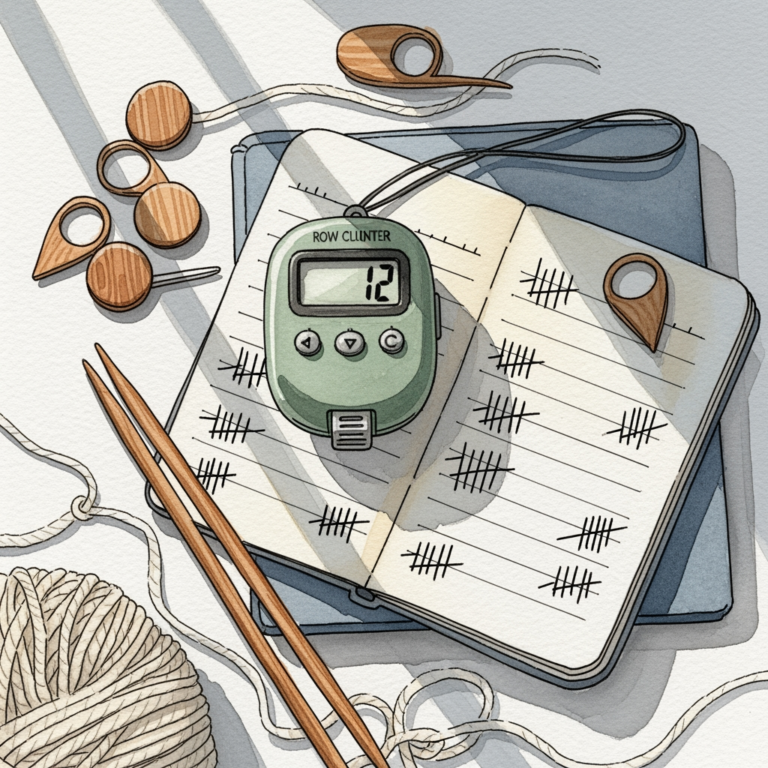
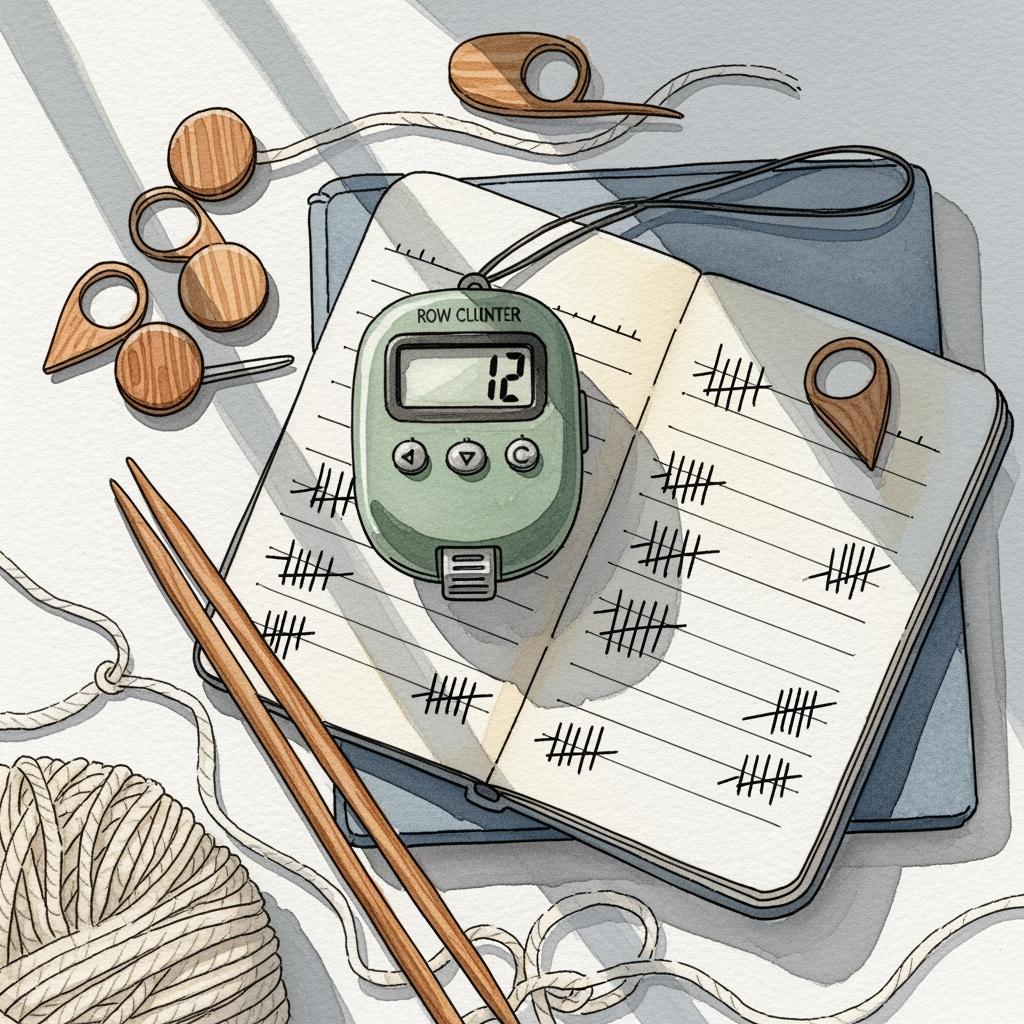
Digital counters are the "set it and forget it" option for the modern knitter. These small, wearable devices feature a simple screen and a large button, making them the most accessible choice for those who want to track multiple projects at once.
The biggest advantage here is the memory function; many of these can store your count even if you turn them off. If you are a serial multi-project knitter, being able to pick up a sweater, check the count, and put it back down without resetting is a game-changer.
They are made of plastic, so they aren’t as "heirloom quality" as metal rings, but they are incredibly affordable. If you tend to lose your tools in the couch cushions, buying a pack of these is a very practical insurance policy.
Why Tactile Feedback Matters in Row Counting
Tactile feedback is the difference between knitting by feel and knitting by frustration. When you can feel the mechanical shift of a counter, your brain registers the action as complete, allowing you to move immediately to the next stitch.
Without this feedback, you are forced to stop and visually verify your count, which breaks your rhythm. In projects with complex increases or decreases, a broken rhythm is where most mistakes are born.
Ultimately, tactile feedback creates a rhythmic loop. You knit, you click, you breathe, and you repeat; this is the meditative state that makes knitting so rewarding.
How to Choose the Right Size Row Counter Ring
A row counter ring that is too large will spin around your finger, making it difficult to find the button when you need it. Conversely, a ring that is too tight will cause hand fatigue, which is the last thing you want after a long session of cabling.
- Measure your finger: Use a piece of string to find your size, then compare it to the manufacturer’s chart.
- Consider the season: Fingers can swell slightly in the summer heat or after a long day of knitting.
- Test the rotation: Make sure you can comfortably reach the button with your thumb without straining your hand.
If you are between sizes, always opt for the slightly larger size. You can easily add a small ring adjuster or a piece of medical tape to the inside to get a perfect, non-slip fit.
Maintaining Your Counter for Long-Term Use
Even the best mechanical counters need a little love to keep them running smoothly. Avoid dropping your counter on hard surfaces, as the internal gears are precise and can become misaligned by a sudden impact.
If your clicker starts to feel "gummy" or slow, it is likely just a bit of stray fiber or lint caught in the mechanism. Use a small, soft-bristled brush to gently clean around the button or the rotating dial.
For digital counters, keep a spare battery tucked inside your notions pouch. Nothing is more annoying than reaching the end of a long row and finding a blank screen staring back at you.
Troubleshooting Common Row Counter Issues
If your counter skips numbers, it is usually because the button isn’t being pressed with enough intent. Ensure you are pressing the center of the button rather than the edge to engage the gear fully.
If the ring is slipping, try wearing it on a different finger, such as your index or middle finger, where the base is slightly wider. This can often provide a more secure anchor point.
Finally, if you find yourself constantly forgetting to click, try attaching a small "reminder" charm to your project bag. Once you make the act of clicking part of your "finish the row" ritual, it will become as natural as casting on.
Finding the right row counter is a personal journey that depends entirely on your knitting style and sensory preferences. Whether you choose the audible snap of a mechanical clicker or the silent precision of a dial ring, the goal remains the same: to keep your project moving forward without stress. Invest in a tool that feels natural to your hand, and you will find your knitting rhythm becoming more consistent and enjoyable. Happy knitting, and may your counts always be accurate.