6 Best Row Counters For Long Lace Repeats To Try
Keep track of complex lace patterns with ease. We review the 6 best row counters, focusing on reliability and usability for your most intricate projects.
Tackling a complex lace shawl with hundred-row repeats is a test of patience that often ends in heartbreak without the right tracking system. Relying on memory or counting yarn-overs on the needle is a recipe for an uneven motif that won’t align after blocking. These six tools offer different ways to stay on track, ensuring your hard work results in a professional, symmetrical finish. Choosing the right method is the difference between enjoying your lace project and needing to rip back twenty rows.
Knitter’s Pride Rainbow Knitter’s Counting Ring


This clever tool sits directly on your finger, keeping your row count within your immediate line of sight. It is perfect for those who find themselves putting down their work and forgetting exactly where they left off in the middle of a complex chart.
The rotating dial allows for quick adjustments between stitches, meaning you don’t have to break your knitting rhythm. Because it is worn like a ring, it stays with you even when you move from the couch to the kitchen.
However, the sizing can be a bit tricky if you have larger or smaller fingers. If you find the ring slides around too much, it can become a distraction rather than a help.
Bottom line: It is an excellent, low-tech solution for knitters who want a constant visual reminder of their progress without needing a separate gadget.
Clover Kacha-Kacha Click Counter for Precision

The "Kacha-Kacha" is a staple in many knitting bags because of its satisfying, tactile click. It provides an audible confirmation that your row has been recorded, which is invaluable when you are working on lace that requires intense focus.
The locking mechanism prevents the count from accidentally changing if the counter gets bumped inside your project bag. This is a massive upgrade over cheaper, non-locking counters that can easily reset themselves to zero.
The primary trade-off is that it is a handheld device, which means you have to physically pick it up to register a row. If you are the type of knitter who enters a "flow state," you might occasionally forget to reach for it.
Bottom line: Use this if you value auditory and tactile feedback and want a durable tool that won’t reset mid-transit.
Cocoknits Maker’s Keep Magnetic Row Counter
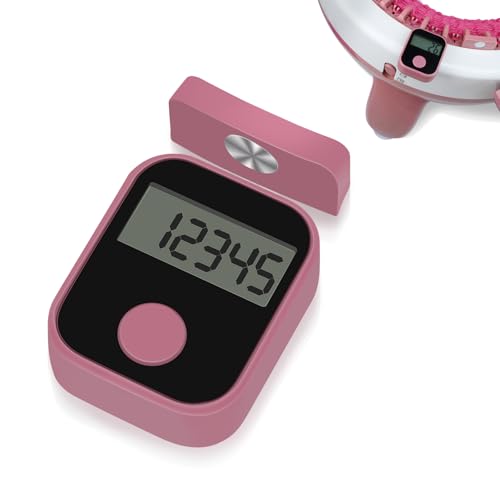
This is less of a standalone counter and more of a comprehensive system for the organized knitter. The wearable magnetic bracelet holds the counter securely, keeping it accessible without cluttering your workspace.
The magnetic design allows you to stick your stitch markers or a darning needle right onto the wrist cuff. For intricate lace projects where you are constantly swapping markers to denote pattern repeats, this is a game-changer.
The system is a higher investment than a simple plastic counter, and the magnetic pull can sometimes be strong enough to be annoying if you are working with very fine, delicate needles.
Bottom line: It is the best choice for the organized knitter who wants to keep all their lace-tracking tools in one centralized, wearable location.
Susan Bates Digital Finger Ring Row Counter

Digital counters offer the benefit of a clear, backlit, or high-contrast display that is easy to read even in low light. This specific model fits over your finger, allowing you to tap a button to increment your count.
Because it is digital, it often includes a memory function that saves your count even if the device powers down. This is ideal for long-term lace projects that might sit in a project bag for weeks at a time.
The buttons on digital counters can sometimes be sensitive; a stray brush against your sleeve might accidentally add a row. Always double-check your count against your chart before you start a new sequence.
Bottom line: Ideal for those who prefer digital precision and want to be able to see their row count at a quick glance without squinting.
The Row Counter App for Digital Lace Tracking
Using an app on your phone or tablet transforms your device into a sophisticated project management tool. Many lace-specific apps allow you to import your PDF chart and tap the screen to track rows as you work.
The biggest advantage is the ability to track multiple repeats simultaneously. If you have a lace chart with a 20-row repeat and a 50-row shawl length, a good app handles both counters at once.
You must be comfortable having your phone or tablet out while you knit. If you prefer to keep your knitting space free of electronics, this might feel like an intrusion on your craft.
Bottom line: This is the ultimate tool for complex lace where you need to track multiple variables, such as pattern repeats and total project length, in one place.
KnitPicks Mechanical Row Counter for Projects
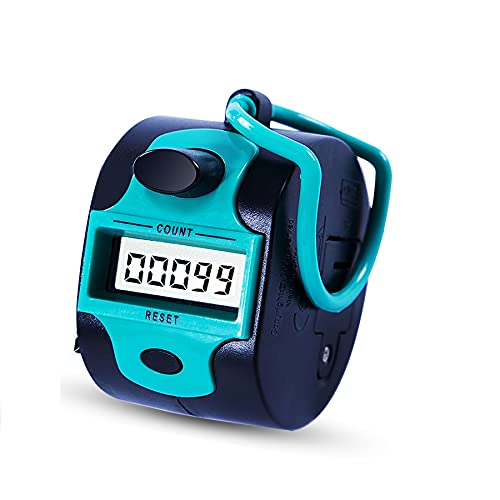
Mechanical counters that attach to your needle are a classic, reliable choice for many knitters. They are unobtrusive and don’t require you to change your hand position to record a row.
They are particularly useful for circular knitting, where you are constantly working in the round and don’t want to stop to reach for a gadget. You simply click the dial at the end of each round.
The downside is that they can add weight to one side of your needle, which might be noticeable if you are using very thin, lightweight carbon fiber or wooden needles. They also don’t lock, so keep them away from loose yarn that might snag the dial.
Bottom line: A solid, no-nonsense mechanical option for knitters who want a counter that stays attached to their work at all times.
How to Track Long Lace Repeats Without Errors
Tracking long lace repeats requires more than just a counter; it requires a system of "checkpoints." Use stitch markers to physically divide your pattern repeats on the needle so you can visually verify your progress.
If you are working a 30-row repeat, place a locking stitch marker every 10 rows on your fabric. This creates a physical history of your work, making it much easier to spot where a mistake occurred.
Never rely solely on your counter. Always cross-reference your row count with the physical appearance of the lace, checking for the characteristic "holes" created by yarn-overs.
Bottom line: Combine physical markers with your counter to create a fail-safe system that catches mistakes before they compound.
Why Digital Counters Outperform Manual Options
Digital counters generally offer a higher level of reliability, especially regarding battery life and memory storage. They eliminate the "human error" of miscounting clicks or accidentally bumping a manual dial.
For complex lace, digital options often allow you to save multiple projects. You can switch between a simple stockinette sweater and an intricate lace shawl without losing your place in either.
However, they do require batteries, which can die at the worst possible moment. Always keep a spare on hand if you are embarking on a long-term project.
Bottom line: Choose digital if you are managing multiple complex projects and need a reliable way to store progress data over long periods.
Essential Features for Complex Lace Knitting
When choosing a counter for lace, look for a "lock" feature to prevent accidental resets. Lace is notoriously difficult to "tink" (un-knit) back if you lose your place, so security is paramount.
Visibility is another key factor. You should be able to read your counter without moving your eyes away from your needles for more than a split second.
Finally, consider the weight and ergonomics. If you are knitting for four hours at a time, a heavy counter on your needle will eventually cause hand fatigue.
Bottom line: Prioritize locking mechanisms and ease of reading to ensure your focus stays on the delicate lace stitches rather than the tool itself.
Tips for Managing Multiple Repeats Seamlessly
If your lace pattern has nested repeats, use a "master" counter and a "sub" counter. The master tracks the total row count of the shawl, while the sub tracks the individual repeat.
Use different colored stitch markers to denote the start of a new repeat versus the start of a new row. This visual hierarchy helps your brain process the chart faster.
If you find yourself stuck, stop and place a lifeline. A lifeline is a piece of scrap yarn threaded through your stitches that allows you to rip back to a safe point without losing your work.
Bottom line: Layer your tracking methods to create a safety net, ensuring that even if you lose your count, you haven’t lost your project.
Finding the right row counter is a personal journey that depends as much on your knitting style as it does on the project at hand. Whether you prefer the tactile click of a mechanical counter or the high-tech precision of a mobile app, the best tool is the one that you actually remember to use. Start by evaluating your current frustrations and choose a method that addresses your specific pain points. With the right system in place, you can stop worrying about the math and get back to the meditative joy of creating beautiful lace.