6 Best Loom Stitch Markers For Pattern Repeats
Master your loom projects with these 6 top-rated stitch markers. Learn how to track complex pattern repeats easily and maintain perfect tension every time.
Mastering complex stitch patterns on a loom requires more than just patience; it demands a reliable way to keep your place. Stitch markers act as your project’s roadmap, preventing the common frustration of losing count mid-row. Whether you are working on a simple hat or a complex cable-knit blanket, these tools are essential for maintaining your rhythm. This guide breaks down the best options to ensure your pattern repeats stay perfectly aligned from cast-on to bind-off.
Cocoknits Colorful Nylon Stitch Markers


These markers are a staple in my knitting bag because of their smooth, snag-free nylon construction. They glide effortlessly over loom pegs without catching on the yarn, which is a common issue with cheaper plastic alternatives.
The nylon material is soft and flexible, meaning they won’t warp or snap if you accidentally pull on them while adjusting your work. Because they come in a variety of bright colors, you can use them to color-code different sections of a complex pattern, such as marking the start of a lace repeat versus a cable twist.
The main tradeoff is that they are closed rings, meaning you must slide them onto the peg before you begin your row. If you forget to place them, you’ll have to wait until you complete the round to add them, which can be annoying if you’ve already started your pattern.
Clover Locking Stitch Markers for Looms

Clover’s locking markers are essentially tiny safety pins designed specifically for fiber arts. They are incredibly versatile because they can be opened and closed, allowing you to attach them to a specific stitch at any point in your project.
I recommend these for loom knitters who often realize they’ve made a mistake several rows back. You can use them to "anchor" your work or to mark a specific stitch that needs to be moved or corrected later.
Be aware that the locking mechanism can sometimes snag on delicate, single-ply yarns or mohair blends. If you are working with a fuzzy or loosely spun yarn, handle these markers with care to avoid pulling at the fiber.
Dritz Knitting Notions Split Ring Markers

Split ring markers are the middle ground between closed rings and locking pins. They feature a small gap in the circle, allowing you to slip them onto a peg or a specific stitch without the need for a complex latch.
They are fantastic for quick adjustments while you are in the middle of a row. If you are working on a long project like a scarf and need to mark your progress after every ten inches, these are quick to snap on and off.
However, because they are open-ended, they can sometimes slip off the loom peg if you are working with very bulky, slippery yarn. They work best with medium-weight, high-friction yarns like wool that have a bit of "grab" to them.
Tulip Heart-Shaped Locking Stitch Markers
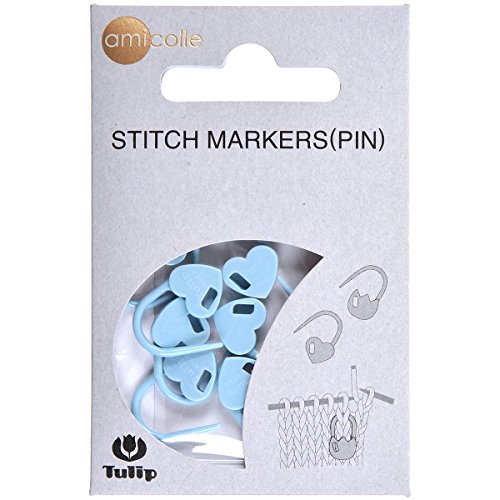
Tulip is known for precision engineering, and these heart-shaped markers are as functional as they are charming. The locking mechanism is exceptionally smooth, which significantly reduces the risk of snagging your yarn.
The heart shape isn’t just for aesthetics; the point of the heart makes it easy to identify the "front" of the marker. This is particularly helpful when you are working on intricate patterns where you need to track the orientation of your stitches.
They are a bit of an investment compared to bulk packs of plastic markers, but the durability is unmatched. If you are tired of markers that pop open unexpectedly or break after a few uses, these are a reliable upgrade.
Katrinkles Wooden Stitch Marker Collection

Wooden markers bring a tactile, natural feel to the knitting experience that plastic simply cannot replicate. Katrinkles offers beautiful, laser-etched designs that are lightweight and gentle on the hands.
Because they are made from wood, they are incredibly quiet. If you knit in public or while watching television, you won’t have the constant "clinking" sound that metal or hard plastic markers make against the loom pegs.
The one downside is that they are generally thicker than nylon or metal markers. If you are working on a very tight gauge where the pegs are close together, these might feel a bit bulky or cause the yarn to sit higher on the peg than intended.
Susan Bates Crystalites Split Ring Markers

These translucent, plastic split-ring markers are a classic for a reason: they are incredibly lightweight and highly visible. The bright, jewel-toned colors make them easy to spot against even the darkest yarns.
Their lightweight nature is a major benefit for long-term projects. When you have hundreds of markers on a large loom project, heavy metal markers can actually cause the fabric to sag or distort, whereas these stay virtually weightless.
They are quite flexible, which is a double-edged sword. While they won’t break if you step on them, they can occasionally lose their shape over time, making them slide off the pegs more easily.
Why Loom Knitters Need Dedicated Markers
Loom knitting is unique because your stitches are held by rigid pegs rather than flexible needles. Without markers, it is incredibly easy to lose track of where one pattern repeat ends and the next begins.
Dedicated markers provide a visual "fence" that keeps your brain from having to count every single stitch manually. This reduces mental fatigue, allowing you to focus on the rhythm of your knitting rather than the arithmetic of the pattern.
If you don’t use markers, you are likely to experience "count creep," where you accidentally add or drop a stitch at the end of a row. Once that happens, your entire pattern repeat will be misaligned, often requiring you to rip out hours of work to fix it.
How to Track Pattern Repeats on a Loom
To track repeats effectively, place a marker at the start of every sequence defined in your pattern. For example, if your pattern calls for a 12-stitch cable repeat, place a marker every 12 pegs around your loom.
Use different colored markers to signify different sections, such as a red marker for the start of a cable and blue markers for the transition stitches between sections. This visual hierarchy helps you anticipate upcoming changes in the pattern.
Don’t be afraid to move your markers as your project grows. If you find that a certain marker is in your way, don’t just ignore it; move it up a few rows to a freshly knitted stitch so it remains visible and useful.
Choosing Between Locking and Ring Markers
The choice between locking and ring markers depends entirely on your project’s complexity and the type of yarn you are using. Ring markers are best for "set it and forget it" situations where you need to mark a repeat that will stay in the same place for the duration of the project.
Locking markers are essential for troubleshooting or for patterns that require you to move markers frequently. If you are a beginner, I suggest starting with a variety pack so you can test both styles and see which feels more natural in your hands.
Consider the "snag factor" of your yarn as well. If you are working with a delicate silk or a yarn with a lot of halo (fuzz), avoid locking markers with sharp edges and stick to smooth, closed nylon rings.
Tips for Organizing Your Knitting Notions
Keeping your markers organized is just as important as the knitting itself. I recommend using a small, clear tackle box with individual compartments to separate your markers by type, size, and color.
If you are a frequent traveler, consider a magnetic tin. Many stitch markers are made of or contain metal, and a magnetic base will keep them from spilling into the bottom of your project bag.
Finally, always keep a few extra markers in your notions pouch. It is a universal truth of knitting that you will inevitably lose at least one marker under the couch, and having a backup ensures your rhythm remains uninterrupted.
Finding the right stitch markers is a small investment that pays massive dividends in your knitting confidence and speed. By selecting tools that match your yarn weight and project requirements, you remove the guesswork from your pattern repeats. Remember that your choice of tools should always serve your comfort and the integrity of your stitches. Happy looming, and may your rows always stay perfectly counted.