6 Best Metal Picks For High Tension Loom Work
Master high tension loom work with our expert guide to the 6 best metal picks. Enhance your weaving precision and durability today—read the full review here.
High-tension loom work demands tools that can withstand significant force without flexing, bending, or snapping under pressure. When working with fine warps or dense tapestry projects, the choice of a pick determines whether the weave remains uniform or suffers from accidental distortions. Metal tools offer a structural integrity that wood or plastic simply cannot match, providing the precise leverage needed to manipulate individual threads. Selecting the right implement transforms a frustrating struggle against high tension into a rhythmic, efficient process.
Schacht Stainless Steel Pick: Best All-Purpose


The Schacht Stainless Steel Pick is the gold standard for weavers who require a balance of rigidity and finesse. Its slender profile allows it to slide into tight sheds with minimal resistance, which is essential when the warp is pulled taut to its limit.
Because it is crafted from high-grade stainless steel, this pick will not rust or discolor delicate white linen or silk warp threads. The weight of the tool provides a natural, steady hand feel, allowing for consistent pressure when pushing down weft yarns.
Bottom line: If a weaver only owns one metal tool, this is the most versatile investment for a wide range of loom widths and tension levels.
Lacis Steel Weaving Needle Set: Best for Detail
When working on intricate pick-up patterns or delicate lace weaves, standard beaters are often far too blunt for the task. The Lacis Steel Weaving Needle Set provides a variety of gauges that allow for surgical precision when picking individual warp ends.
These needles are especially useful for repairing snagged threads or tucking in floating selvedges without disturbing the surrounding structure. They function much like a tapestry needle but with a hardened steel composition that prevents the tip from dulling during repetitive use.
Takeaway: Choose this set if the current project involves complex pickup sticks, intricate pattern drafting, or fine-gauge materials that require a needle-like point.
Ashford Metal Beater Fork: Best for Heavy Beating
Heavy beating requires a tool that distributes force evenly across the warp to maintain a square, consistent fell line. The Ashford Metal Beater Fork features robust tines that prevent the tool from skipping or twisting when the warp is under extreme tension.
This tool is indispensable for rug weaving or heavy-duty tapestry work where the weft must be packed down firmly to hide the warp. Unlike wooden forks, which can splinter over time when used with high-tension metal harnesses, this steel tool is built for longevity.
Bottom line: For projects requiring a dense, firm structure, this beater provides the necessary mechanical advantage without the risk of tool fatigue.
SE 3-Piece Probe Set: Best Budget Multi-Pack
The SE 3-Piece Probe Set offers a range of tip shapes—angled, hooked, and straight—that cover almost every contingency in loom maintenance. These are often categorized as dental or electronics tools, but their hardened steel tips are perfectly suited for the rigors of the loom.
The hooks are particularly effective for pulling warp ends through heddles or checking for tangled threads in the reed. They represent the most cost-effective way to stock a loom-side toolkit with professional-grade stainless steel implements.
Bottom line: Invest in this set to ensure there is always a specific tool shape available for clearing snags or adjusting individual warp tension.
Clover Bent Tip Awl: Best Ergonomic Handle
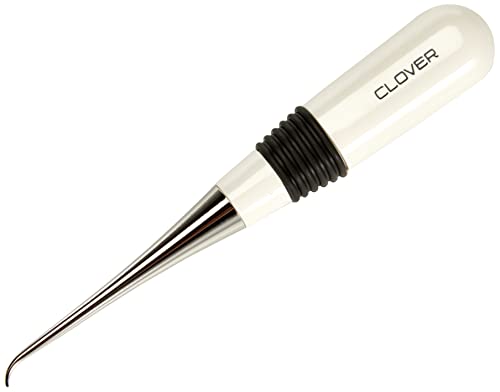
The Clover Bent Tip Awl bridges the gap between industrial utility and hand comfort. The handle design is engineered to fit naturally in the palm, reducing hand strain during long weaving sessions where multiple adjustments are required.
The bent tip allows for superior leverage when lifting warp threads, as it offers an intuitive angle that keeps the wrist in a neutral position. This is a critical consideration for weavers prone to repetitive strain or those who work for several hours at a time.
Takeaway: This tool is the premier choice for weavers who value ergonomic support as much as tool performance.
Tissage Hand-Forged Pick: Best Artisan Option
Hand-forged tools possess a unique balance and density that factory-manufactured items often lack. The Tissage Hand-Forged Pick is designed for the weaver who views their equipment as a lifelong companion rather than a disposable commodity.
These picks typically feature a slight taper that is calibrated by hand, offering a feel that is exceptionally responsive to the weaver’s touch. The slight texture inherent in the forging process can actually provide a better grip than mass-produced, high-polish steel.
Bottom line: Purchase this tool if the goal is to support master craftsmanship and obtain a piece of equipment that will likely outlive the loom itself.
How to Choose the Right Metal Pick for Your Loom
Selecting the correct pick begins with assessing the weight of the warp and the required density of the final fabric. If the project uses high-tension cotton or linen, a thinner, needle-like pick is necessary to avoid stretching the warp during shed manipulation.
Consider the following factors before purchasing: * Warp Sensitivity: Fine silks and rayons snag easily; choose tools with a high polish to prevent fiber fraying. * Tool Weight: Heavier tools reduce the amount of physical force required for beating but can cause hand fatigue. * Handle Grip: Rubberized or ergonomic handles are superior for high-tension work, as they prevent the tool from slipping when force is applied.
Bottom line: Always prioritize the friction profile of the tool; the slicker the surface, the safer it is for delicate warp fibers.
Using a Metal Pick Without Damaging Your Warp
The primary risk of metal-on-thread work is the accidental snagging of individual plies, which can lead to breakage. Always insert the pick into the shed at a slight angle, using the smooth side of the metal to glide against the warp threads rather than the sharp point.
Never force a pick through a congested shed; if resistance is felt, back the tool out and re-evaluate the shed opening. When using a hook or bent tip, ensure the hook is facing away from the sensitive fibers to prevent unwanted loops or snags.
Bottom line: Technique is just as important as the tool; move slowly and let the tool slide against the threads rather than stabbing into the warp.
Caring for Metal Tools to Prevent Rust and Snags
Even stainless steel can succumb to environmental moisture, especially in rooms with active humidifiers for fiber storage. Keep tools dry, and periodically wipe them down with a light coating of mineral oil if they will be stored for extended periods.

Inspect the tips of all picks regularly for microscopic burrs or nicks. If a pick becomes nicked, it will act like a microscopic serrated blade, shredding any yarn it touches.
Bottom line: Use a fine-grit emery board to smooth out any rough spots immediately upon discovery; never put a damaged metal tool back into the weaving shed.
Metal vs. Wood Picks: Which Is Right for You?
Metal picks offer unmatched durability and a thinner profile, making them the superior choice for high-tension work. Wood picks are generally thicker, which can force a shed wider than necessary, leading to increased strain on the warp ends.
However, wood is gentler on the hands and provides a warmer, more tactile experience. Use metal for the heavy lifting and precise adjustments, while reserving wood tools for tasks where fiber gentleness is the absolute priority.
Bottom line: Rely on metal tools for their structural superiority in high-tension environments, but keep wood tools on hand for delicate finishing work.
The right metal pick is a small but vital extension of the weaver’s hand, capable of transforming the tedious aspects of loom work into a fluid and precise craft. By understanding the specific tension and texture requirements of each project, the right tool can ensure that every thread is placed with intent and security. Choosing a quality steel implement is an investment in both the longevity of the loom and the consistency of the woven cloth. With a well-maintained set of metal tools, the limits of high-tension weaving are defined only by the weaver’s imagination.