7 Best Merino Wool Yarns For Luxury Scarves To Try
Elevate your winter accessories with these 7 premium merino wool yarns. Discover top-tier fibers that offer unmatched softness, warmth, and luxury for scarves.
Choosing the right yarn is the single most important decision you make before casting on a luxury scarf. A high-quality merino wool transforms a simple project into a cherished heirloom that feels incredible against the skin. With the right fiber, your stitches will sing, and your drape will be nothing short of professional. Here are seven exceptional merino yarns that I trust for creating pieces that stand the test of time.
Malabrigo Mechita: Best Hand-Dyed Fingering Choice


Malabrigo Mechita is a staple in my stash for one reason: the depth of color. This single-ply, superwash merino yarn captures dye in a way that creates a subtle, watercolor-like effect across your fabric.
Because it is a single-ply yarn, it lacks the structural integrity of a multi-ply twist, which means it can pill more easily if rubbed against rough surfaces. However, the trade-off is an unmatched, cloud-like softness that makes it perfect for scarves worn directly against the neck.
If you are planning a project with complex color changes, be aware that the hand-dyed nature of this yarn means no two skeins are identical. Always alternate skeins every two rows to avoid sudden color shifts in your finished scarf.
Madelinetosh Tosh Merino Light: The Color Leader
Tosh Merino Light is the gold standard for knitters who prioritize a vast, sophisticated color palette. The yarn has a tight, high-twist construction that provides excellent stitch definition, making it ideal for textured stitches like cables or lace.
The superwash treatment makes this yarn remarkably durable for a fingering weight, though it can feel slightly "slicker" than non-superwash wools. I recommend using wood or bamboo needles if you find the yarn slipping off your metal tips too easily.
Because this yarn is so popular, it is easy to find, but keep in mind that dye lots can vary significantly. Always buy enough for your entire project at once to ensure color consistency across your scarf.
Rowan Fine Lace: Best For Delicate Merino Blends
When you want a scarf that is gossamer-thin and incredibly elegant, Rowan Fine Lace is a brilliant choice. It blends superfine merino with mulberry silk, resulting in a fabric that has a subtle, sophisticated sheen.
This yarn is significantly thinner than standard fingering weight, requiring smaller needles to achieve a dense, warm fabric. If you are a loose knitter, you may find yourself needing to drop down a needle size to keep your stitches from looking too open.
The inclusion of silk gives the yarn a lovely drape, but it also means the yarn has less "memory" than 100% wool. Your scarf will grow slightly during blocking, so always knit a gauge swatch and wash it before committing to your final stitch count.
Quince & Co. Finch: Top Choice For Crisp Stitching
If your goal is a scarf with sharp, clear geometry, Quince & Co. Finch is the yarn you need. It is a woollen-spun, non-superwash merino that has a matte finish and a "grippy" texture that holds stitches perfectly in place.
Because it is not superwash, the fiber retains the natural elasticity of wool, allowing your stitches to bloom and fill in gaps during the blocking process. This makes it an excellent choice for beginner knitters who are still mastering their tension.
Be mindful that this yarn is more rustic than the others on this list; it is soft, but it has a distinct "woolly" feel. It is the perfect choice for a classic, structured scarf that will hold its shape for years.
Shibui Knits Nest: The Ultimate Luxury Merino Mix
Shibui Knits Nest is a sophisticated blend of fine merino and alpaca. The addition of alpaca provides a slight halo—a fuzzy, soft texture—that adds warmth without adding significant weight to the finished scarf.
The yarn has a unique chainette construction, which makes it incredibly lightweight and resistant to pilling. It is a dream to work with, but because of the chainette structure, you must be careful not to split the yarn with your needle tip.
This is a premium choice for those who want a scarf that feels expensive and looks understated. It works best in simple stitch patterns like garter or stockinette, which allow the beautiful fiber blend to take center stage.
Brooklyn Tweed Loft: Best For Airy Woolen Textures
Brooklyn Tweed Loft is a breed-specific, woolen-spun merino that is lightweight and incredibly warm. Because it is woolen-spun, it contains more air than worsted-spun yarns, creating a finished fabric that feels like a warm hug.
This yarn is delicate, so it is best suited for scarves that won’t be subjected to heavy friction. It is a fantastic choice for open-work lace patterns, as the yarn’s natural loft will fill in the spaces beautifully after a wet block.
Handle this yarn gently while knitting, as it can be prone to snapping if you pull too hard. If you are a "tight" knitter, I suggest moving up a needle size to ensure the yarn has enough room to breathe and maintain its airy quality.
Manos del Uruguay Fino: Best For Soft Drape Feel
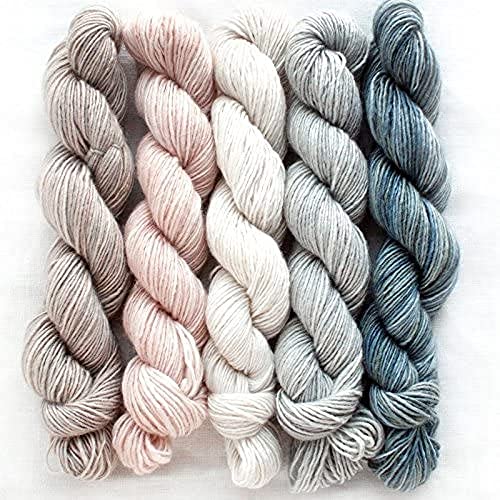
Manos del Uruguay Fino is a luxurious blend of merino wool and silk that feels like silk ribbon in your hands. The drape of this yarn is superior, making it my top recommendation for long, flowing scarves or wrap-style accessories.
The yarn is plied tightly, which gives it a smooth, rounded finish that highlights individual stitches. It is a joy to knit with, though the silk content makes it slightly heavier than a pure wool yarn.
Because of the drape, this yarn will grow quite a bit during the blocking process. I recommend pinning your scarf out to its final dimensions after washing to ensure the lace or texture patterns are fully opened.
How To Select The Perfect Merino For Your Scarf
Selecting the right merino is a balance between the project’s design and the fiber’s physical properties. Start by considering the stitch pattern: complex cables need a high-twist, smooth yarn, while simple lace patterns benefit from the "bloom" of a woolen-spun or non-superwash wool.
Consider the "drape" factor as well. If you want a scarf that hangs long and fluid, look for blends containing silk or alpaca. If you want a scarf that stands up and maintains a crisp silhouette, stick to 100% wool with a tighter twist.
Lastly, always consider your own sensitivity. If you are extremely sensitive to wool, look for yarns with lower micron counts, which indicate thinner, softer fibers that are less likely to cause irritation against the neck.
Understanding Micron Counts And Yarn Softness
Micron count is the objective measure of the diameter of the wool fiber, with lower numbers indicating a finer, softer wool. Most luxury merino yarns fall between 17 and 22 microns, which is considered "fine" to "extra-fine."
It is a common misconception that all merino is created equal; the micron count dictates how the yarn feels against the skin. A 17-micron yarn will feel like cashmere, while a 22-micron yarn will feel like a sturdy, everyday wool.
When reading labels, look for terms like "superfine" or "extra-fine" to gauge the softness. If you are knitting a gift for someone else, always aim for a lower micron count to ensure the final piece is comfortable for them to wear.
Essential Care Tips For Fine Merino Wool Scarves
Luxury merino scarves require gentle handling to maintain their beauty. Always hand wash your finished scarf in cool water with a dedicated wool wash, and never agitate the fabric, as this can lead to felting.
After washing, gently roll the scarf in a clean towel to remove excess moisture—never wring it out. Lay the scarf flat on a drying rack, shaping it to your desired dimensions, and let it air dry away from direct sunlight.
Store your scarves folded rather than hanging them, as the weight of the wool can cause the fabric to stretch out of shape over time. With these simple care steps, your hand-knitted luxury scarf will remain a beautiful part of your wardrobe for years.
Finding the right merino yarn is a journey of discovery that enhances your knitting practice and the final quality of your work. By paying attention to fiber construction, twist, and micron count, you can ensure your next scarf is as durable as it is beautiful. Trust your hands, swatch your yarn, and enjoy the process of creating something truly special. Happy knitting.