6 Best Claw Weights For Edge Stability To Try
Enhance your knitting precision with these 6 top-rated claw weights. Discover how these essential tools improve edge stability for professional-grade results.
Achieving a perfectly even stitch every time you run the carriage across your knitting machine depends almost entirely on the tension applied to the fabric. Claw weights are the silent partners in your creative process, providing the necessary downward pull to keep loops clear of the needle latches. Without the right amount of weight, your stitches will become distorted, uneven, or worse, drop entirely. Mastering the use of these weights is the bridge between frustrating mechanical errors and professional-grade results.
Silver Reed KA-8210 Claw Weights: Best Overall
The Silver Reed KA-8210 weights are the gold standard for most home machine knitters because of their consistent balance and reliable grip. They provide a moderate, predictable weight that works beautifully across a wide range of yarn weights, from light fingering to worsted.
When you are working on a standard 4.5mm gauge machine, these weights offer enough heft to keep the fabric from "riding up" during the carriage pass. They are particularly effective for stockinette panels where you need a steady, uniform pull to maintain consistent gauge.
If you find that your fabric is bunching up near the needles, these are usually the first ones I recommend. They strike the perfect middle ground between being too light to do the job and too heavy to risk distorting the stitch structure.
Brother KA-160 Claw Weights for Fine Knitting
If your passion lies in delicate lace or fine-gauge garments, the Brother KA-160 weights are a necessity. These are designed specifically for thinner yarns, providing a lighter touch that won’t stretch out your delicate stitches.
When knitting with lace-weight mohair or fine silk, heavy weights can actually pull the stitches so taut that they snap or lose their natural drape. The KA-160s allow the fabric to sit comfortably on the needles without putting undue stress on the yarn fibers.
Always remember that finer yarns have less structural integrity under tension. Using these lighter weights ensures that your intricate stitch patterns remain crisp and well-defined rather than pulled into an unrecognizable mess.
Passap Weights for Heavy Duty Tension Control


Passap machines are known for their precision and their unique dual-bed mechanics, which require a much more robust approach to weight. These heavy-duty weights are built to handle the density of double-bed knitting, where you are working both beds simultaneously.
Because Passap machines often involve complex stitch transfers and ribbing, the tension requirements are significantly higher than on a standard flat-bed machine. These weights provide the necessary gravity to keep those loops tucked firmly behind the latches during the transfer process.
If you are working with thicker, lofty wools or complex cables, don’t skimp on the weight. The extra mass here is essential for preventing the carriage from jamming when it encounters the resistance of multiple layers of yarn.
KnitKing Standard Claw Weights for Stability

KnitKing weights are highly regarded for their durability and the secure "bite" they take on the fabric edge. They are an excellent choice if you are knitting slippery synthetic fibers that tend to slide out of standard weights.
The design of the claw allows for a deep, firm grip that stays in place even when the carriage movement is rapid. This stability is crucial when you are working on long, wide panels where the fabric weight alone isn’t enough to keep the edges flat.
I often suggest these for beginners who are still learning to control their carriage speed. The added security of the grip helps prevent the "edge-drop" that often happens when a knitter hesitates during the row.
Artisan Needlecraft Weighted Edge Clamps
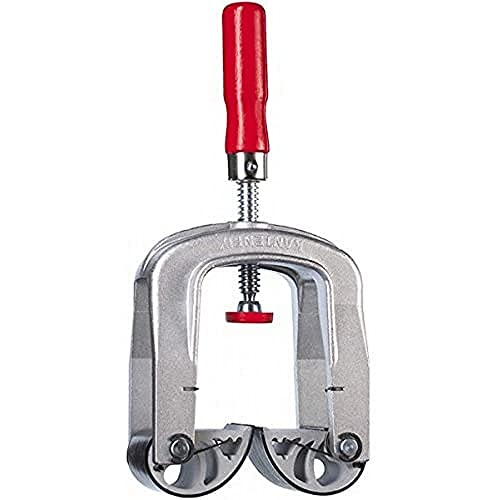
These clamps offer a different approach to stability by providing a continuous, even pull across the entire width of the knitting. Unlike individual claw weights that can create "scalloping" or uneven tension points, these clamps distribute the weight horizontally.
They are particularly useful for wide items like afghans or sweater backs where you need to maintain a perfectly straight edge. By spreading the load, you eliminate the risk of the fabric stretching more in one spot than another.
If you are tired of seeing tiny holes or "ladders" at the edges of your work, this is your solution. They turn the edge of your project into a stable, weighted line that moves smoothly with the carriage.
Creative Knitting Universal Tension Weights

Versatility is the hallmark of these universal weights, which are designed to be adjusted based on the specific needs of your project. They are a fantastic investment if you switch between different types of machines or yarn fibers frequently.
The beauty of a universal system is the ability to add or subtract weight as the project grows. As your garment gets longer, the weight of the fabric itself increases, and you can remove these weights to maintain the perfect tension balance.
Never assume that one weight setting is correct for the entire length of a project. As the fabric accumulates on the floor or in the machine’s catch-bag, it adds its own tension, which you must compensate for by adjusting your claw weights.
Why Edge Stability Matters in Machine Knitting
Edge stability is the primary factor in preventing dropped stitches and uneven selvedges. When the edge of your fabric is not properly weighted, the needles at the ends of the bed often fail to "clear" the previous row, leading to messy, loose loops.
This issue is amplified when working with highly elastic fibers like wool or nylon blends. Without downward tension, these fibers will naturally want to pull back up into the needle hooks, causing the carriage to catch and potentially damage your needles.
Consistent tension at the edges ensures that every stitch is formed with the same amount of yarn. This is the secret to achieving a professional, store-bought look that doesn’t have the tell-tale "wavy" edges of poorly tensioned machine knitting.
How to Properly Balance Weights Across the Bed
Balancing your weights is an art that requires constant observation of the knitting as it progresses. You should always aim to have more weight concentrated at the edges, where the mechanical strain is highest, and slightly less in the center.
If you are knitting a wide piece, distribute your claw weights evenly every 10 to 20 needles. This prevents the fabric from bowing in the middle, which can cause the center needles to knit too loosely compared to the edges.
A good rule of thumb is to add a weight every time you add a few inches of length to your project. By keeping the weight-to-fabric ratio consistent, you ensure that the carriage never struggles against the resistance of the yarn.
Common Mistakes When Using Claw Weights Daily
The most common mistake is waiting until the fabric is already dropping stitches to add more weight. By the time you notice a dropped stitch, the tension in the surrounding rows has already been compromised.
Another frequent error is using weights that are too heavy for the yarn, which results in "laddering" or stretched-out stitches that look thin and transparent. Always match the weight to the thickness and the "snap-back" ability of your yarn.
Finally, avoid letting your weights hang at an angle. They should always hang straight down to ensure the pull is vertical and even; if they are pulling at an angle, they will distort the stitch geometry and leave your fabric looking skewed.
Troubleshooting Uneven Tension and Dropped Stitches
If you are experiencing consistent dropped stitches, check your weights first before adjusting your tension dial. Often, the issue isn’t the machine’s settings, but simply a lack of sufficient gravity to pull the loops off the needles.
For uneven tension, look at the spacing of your weights. If you have large gaps between your claw weights, the fabric in those gaps will likely be looser than the fabric directly held by a weight.
When in doubt, add a small amount of weight and knit a few rows to see if the stitch quality improves. If the problem persists, check for bent needles or lint buildup in the needle bed, as these mechanical issues can mimic tension problems.
Investing in the right claw weights is one of the most cost-effective ways to elevate your machine knitting game. By understanding how weight distribution affects stitch formation, you gain the control necessary to tackle any project with confidence. Remember that your weights are not just accessories, but fundamental tools that dictate the quality of your finished fabric. Take the time to experiment with these options, and you will quickly see your tension issues vanish.