7 Best Magnifying Tools For Complex Fair Isle Patterns
Master complex Fair Isle knitting with our top 7 magnifying tools. Discover how these essential aids improve stitch clarity and reduce errors in your work.
Complex Fair Isle patterns are a marvel of color and geometry, but the tiny, repetitive stitches can quickly lead to eye strain and dropped motifs. When you are juggling three colors of fingering-weight wool across a circular needle, even a slight loss of focus can ruin a perfect row. Using the right magnification tool transforms these intricate charts from a source of frustration into a clear, manageable roadmap. These seven tools are designed to help you maintain your tension and accuracy for hours on end.
Daylight Company Wafer 1 Lightbox: Best Overall


When you are working with dark-colored yarns or intricate charts, the Daylight Company Wafer 1 is a game-changer. It provides an even, backlit surface that makes reading your pattern charts effortless, even in low-light conditions.
The ultra-slim profile means it sits perfectly on your lap or a side table without feeling bulky. Because it is LED-based, it stays cool to the touch, which is essential when you have delicate mohair or wool yarn draped nearby.
The key benefit here is clarity without distortion. Unlike a magnifying glass that can sometimes bend your field of vision, this lightbox illuminates your chart so you can see every single stitch symbol with absolute precision.
Carson Optical MagniVisor Deluxe Head Magnifier

If you prefer to keep your hands completely free while maintaining a close-up view of your work, a head-mounted magnifier is the professional choice. The Carson MagniVisor Deluxe allows you to switch between different lenses, so you can choose the level of magnification that suits your specific needle size.
This is particularly helpful when you are working with lace-weight yarn or tiny 2.00mm needles where the stitches start to blur together. It mimics the natural position of your head, reducing the neck strain that often comes from hunching over your knitting for hours.
Just be aware that there is a slight learning curve to adjusting your depth perception. Once you get used to the focal length, you will find it much easier to spot a dropped stitch or a misplaced color skip in your Fair Isle float.
Mighty Bright LED Floor Lamp With Magnifier
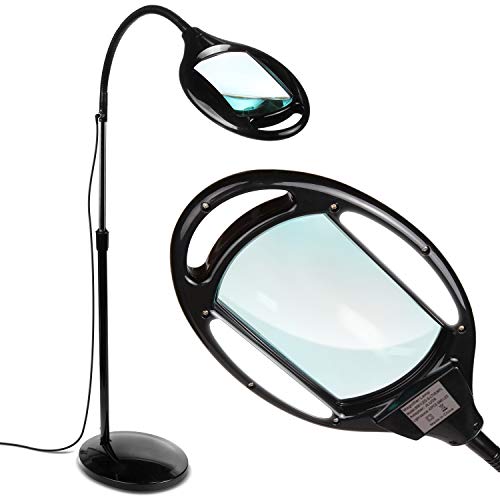
A floor lamp is the workhorse of the dedicated knitter’s studio. The Mighty Bright combines a high-quality magnifying lens with a bright, adjustable LED light, casting illumination directly onto your hands and your project.
This setup is ideal for those long marathon knitting sessions where you don’t want to move your gear around. The flexible neck allows you to position the light exactly where you need it, minimizing shadows that can hide mistakes in complex colorwork.
While it does take up floor space, the stability it offers is unmatched. It’s a permanent, reliable solution for someone who spends every evening working on stranded colorwork sweaters or intricate mittens.
Fancii LED Handheld Magnifying Glass With Light
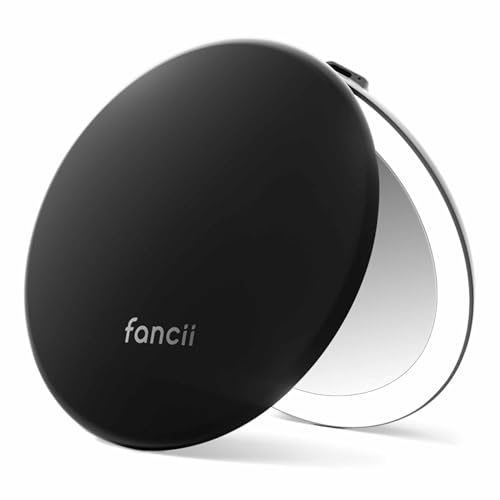
Sometimes you only need a quick boost to check a tricky section of your chart or to inspect a potential mistake. The Fancii LED handheld magnifier is perfect for those moments when you don’t want a permanent setup but need immediate clarity.
It is lightweight and portable, making it a great addition to your project bag. If you are knitting at a local coffee shop or on a commute, this provides just enough magnification to keep your momentum going without being cumbersome.
Keep in mind that handheld options require you to use one hand, which means you’ll have to pause your knitting. It is a tool for inspection, not for active, continuous work.
MagniPros 3X Large LED Page Magnifier Sheet

The MagniPros page magnifier is an excellent, low-cost solution for reading large, complex charts. Because it covers a wider area than a traditional lens, you can see several rows of your pattern at once without constantly moving the magnifier.
This is perfect for knitters who struggle with the tiny print found in many pattern books. By laying this sheet directly over your chart, you create a clear, magnified view that keeps your place in the pattern much easier.
It is made from flexible, durable material, so it won’t shatter if it happens to fall off your lap. It is a simple, no-fuss tool that prioritizes readability over high-tech features.
Brightech LightView Pro LED Magnifying Lamp
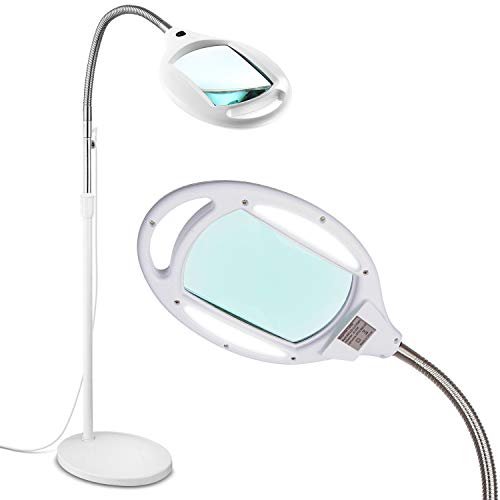
The Brightech LightView Pro offers a professional-grade lens with a clamp-on design that saves precious table space. The magnification is crisp and consistent across the entire lens, which is vital when you are tracking a Fair Isle motif across a wide row.
The color temperature of the LED is designed to mimic daylight, which is crucial for color accuracy. When you are working with subtle color gradients, you want to ensure the yarn you see under the lamp is the same color you see in natural light.
This lamp is built to last and provides a wide, stable field of view. It is an investment piece for the knitter who is serious about protecting their eyes during long-term projects.
Donegan OptiVISOR Headband Magnifier Review
The OptiVISOR is a classic in the world of precision crafts, and for good reason. It is built like a piece of industrial equipment, offering a comfortable, adjustable fit that can be worn over glasses.
The optical-grade glass lenses provide superior clarity compared to plastic alternatives. If you are extremely sensitive to visual distortion, this is the gold standard for long-term comfort and precision.
Because it is a headband, it leaves your hands entirely free to manage your yarn tension and color carries. It is the most "professional" option on this list, often favored by those who also engage in other detail-oriented hobbies like jewelry making or embroidery.
How to Choose Magnification for Fair Isle Work
Choosing the right magnification depends heavily on your personal vision and the scale of your knitting. If you are working with fingering weight yarn, you generally need a higher magnification (2.5x to 3x) to clearly see the individual plies and stitch structure.
Consider the focal distance: how far away do you naturally hold your knitting? A good magnifier should allow you to maintain your comfortable, ergonomic posture rather than forcing you to lean into the lens.
- Low Magnification (1.5x – 2x): Best for general inspection and reading charts.
- High Magnification (2.5x – 3x+): Necessary for working with fine-gauge yarn or spotting dropped stitches.
- Field of View: A wider lens allows you to see more stitches at once, reducing the need to move the tool constantly.
Lighting Tips to Reduce Eye Strain in Knitting
Magnification is only half the battle; lighting is the other. Always aim for a light source that mimics natural daylight, as this prevents color confusion and helps your eyes distinguish between dark yarns like navy and black.
Position your light source to come from the side or slightly behind you to avoid glare on your needles or your chart. Glare is a silent enemy that causes your eyes to work harder than they need to.
- Avoid blue-tinted light: It can make colors look harsh and increase eye fatigue.
- Use task lighting: Combine your general room lighting with a dedicated, focused lamp for your hands.
- Take breaks: Every 30 minutes, look at a distant object to reset your eye muscles.
Maintaining Your Magnification Tools for Longevity
Treat your magnifying tools with the same care you give your favorite needles. Use a microfiber cloth to clean lenses, as paper towels or tissues can leave tiny scratches that degrade clarity over time.
For lamps and lightboxes, keep the LED surfaces free of dust to maintain maximum brightness. If you have a battery-operated tool, remove the batteries if you are storing it for a long period to prevent corrosion.
Finally, store your tools in a dedicated case or a safe spot in your craft room. Even the best magnifier will lose its effectiveness if the lens is scratched or the frame is bent from being tossed in a project bag.
Mastering complex Fair Isle requires patience, precision, and the right equipment to support your vision. By integrating a quality magnifier and proper lighting into your routine, you can knit for hours without the fatigue that usually accompanies fine-gauge work. Choose the tool that best fits your workspace and knitting style, and watch your colorwork reach a new level of professional polish. Happy knitting, and may your floats always be perfectly tensioned.